Who Were the Most Incompetent Leaders in War?
TL;DR
Historical military leaders often displayed stark incompetence, leading to catastrophic outcomes. Notable examples include a botched torpedo attack on President Roosevelt's ship and reckless decisions by World War I generals that resulted in massive casualties. These tales underscore how hubris and poor judgment can have devastating effects on the course of history.
Transcript
biggest idiots in war history may have its fair share of Heroes but it has twice as many fools from an arrogant General who was literally told that he was walking into a trap but went there anyway to a brain dead halfwit who killed 90% of his country's male population in an unwinable War here are some of History's biggest idiots torpedo man Lon Daw... Read More
Key Insights
- 🥺 Historical military blunders frequently result from hubris and failure to heed warnings, leading to devastating consequences.
- ❓ The torpedo incident during Roosevelt's escort illustrates the importance of accountability and careful operation, even in training scenarios.
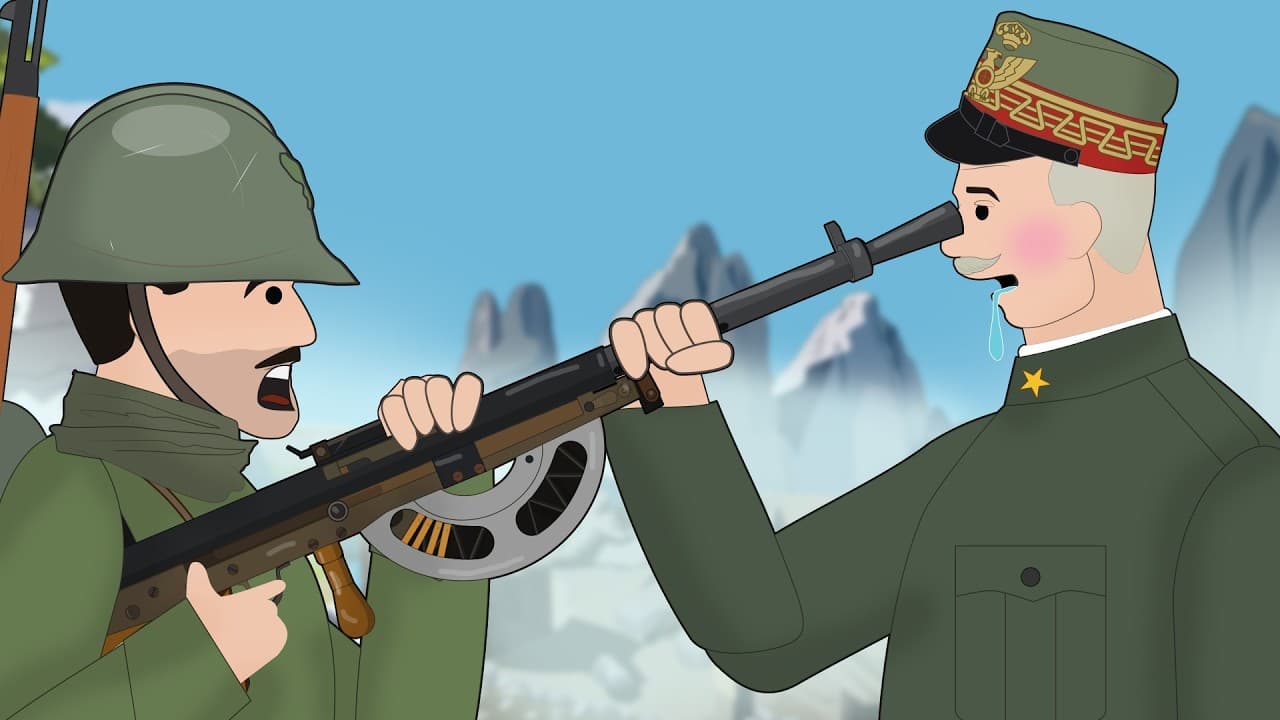
- 💀 General Cardona's relentless attacks with little planning highlight the dangers of aggressive policies without strategic insights.
- 🎖️ Varus's expedition into Germania underlines the folly of underestimating opponents and overconfidence in one's military capabilities.
- 🛟 Muhammad II’s execution of the Mongol emissary serves as a cautionary tale about diplomacy and the unforeseen consequences of rash decisions.
- 🫱 Francisco Solano Lopez’s devastating war decisions epitomize the risks of ambitious leadership without adequate resources or support.
- 💼 Each case emphasizes that understanding terrain, enemy capabilities, and maintaining communication can drastically influence outcomes in warfare.
Install to Summarize YouTube Videos and Get Transcripts
Explore YouTube Video Summarizer or Get YouTube Transcript Extractor
Questions & Answers
Q: What mistake did Lon Dawson make during the torpedo drill on the USS Iowa?
Lon Dawson failed to remove the primer from a torpedo, causing it to launch during a simulated drill. This near miss prompted a frantic effort to warn President Roosevelt aboard the USS Iowa, leading to near disaster as the torpedo approached but ultimately missed the ship by approximately 3,000 yards.
Q: Who was General Luigi Cardona and what were his notable failures in World War I?
General Luigi Cardona was the Chief of Staff of the Italian army during World War I, known for his failed offensive strategies at the Isonzo River. He ordered 11 attacks that resulted in massive casualties but only minor gains, ultimately leading to heavy losses and a disastrous retreat during the Battle of Caporetto.
Q: How did Puus Quintius Varus contribute to the Roman defeat in Germania?
Varus underestimated a tribal uprising and proceeded into Germania without preparing his troops for large-scale conflict. His arrogance led him to ignore warnings and resulted in a devastating ambush that killed three Roman legions, marking one of the most significant defeats in Roman history.
Q: What consequences did Muhammad II face for his actions towards Genghis Khan’s envoy?
After executing Genghis Khan’s diplomatic envoy, Muhammad II sparked an unprecedented military response leading to the destruction of his empire. The Mongol invasion annihilated cities and resulted in millions of deaths, showcasing the dire ramifications of his folly.
Q: What were the outcomes of Francisco Solano Lopez's decisions during the Paraguay War?
Lopez’s ambition to assert Paraguay’s dominance led to the disastrous Triple Alliance War, where he declared war on Brazil and Argentina. His strategies led to the death of an estimated 90% of Paraguayan males and the near-total destruction of his country’s population.
Q: How did Roosevelt’s reaction to the torpedo threat demonstrate his character?
Despite the imminent danger from the live torpedo, President Roosevelt remained remarkably composed, insisting on moving to the deck to witness the event, illustrating his calm demeanor in crisis situations and his commitment to leadership even in peril.
Q: What leadership lessons can be drawn from the failures highlighted in the content?
The failures of these historical figures show the importance of humility, strategic planning, and the consequences of neglecting the advice of subordinates. History teaches that arrogance and ignorance can have devastating effects on military campaigns and national integrity.
Q: How are these historical blunders reflected in modern military strategies?
Modern military strategy values intelligence, preparedness, and adaptability over blind aggression and arrogance. Learning from past mistakes advocates for thorough risk assessments and the incorporation of diverse perspectives to avoid repeating failures of history.
Summary & Key Takeaways
-
The content discusses various military figures throughout history who exhibited poor judgment and costly mistakes during conflicts, leading to significant losses.
-
It outlines specific incidents, including a surprise torpedo attack on President Roosevelt's ship and disastrous decisions made by commanders in World War I, the Roman Empire, and the Mongol invasions.
-
Concluding with the case of Francisco Solano Lopez, the narrative highlights how recklessness and arrogance led to immense loss of life, marking these figures as some of history’s greatest military fools.
Read in Other Languages (beta)
Share This Summary 📚
Summarize YouTube Videos and Get Video Transcripts with 1-Click
Try YouTube Summary with ChatGPT & Claude or YouTube Transcript Generator
Explore More Summaries from Simple History 📚

Summarize YouTube Videos and Get Video Transcripts with 1-Click
Try YouTube Summary with ChatGPT & Claude or YouTube Transcript Generator