Opium Wars | World History | Khan Academy
TL;DR
The Opium Wars were conflicts between China and Britain in the 19th century over the British attempt to open up Chinese markets to trade. Opium was used as a means to solve the trade imbalance, leading to devastating consequences for China.
Transcript
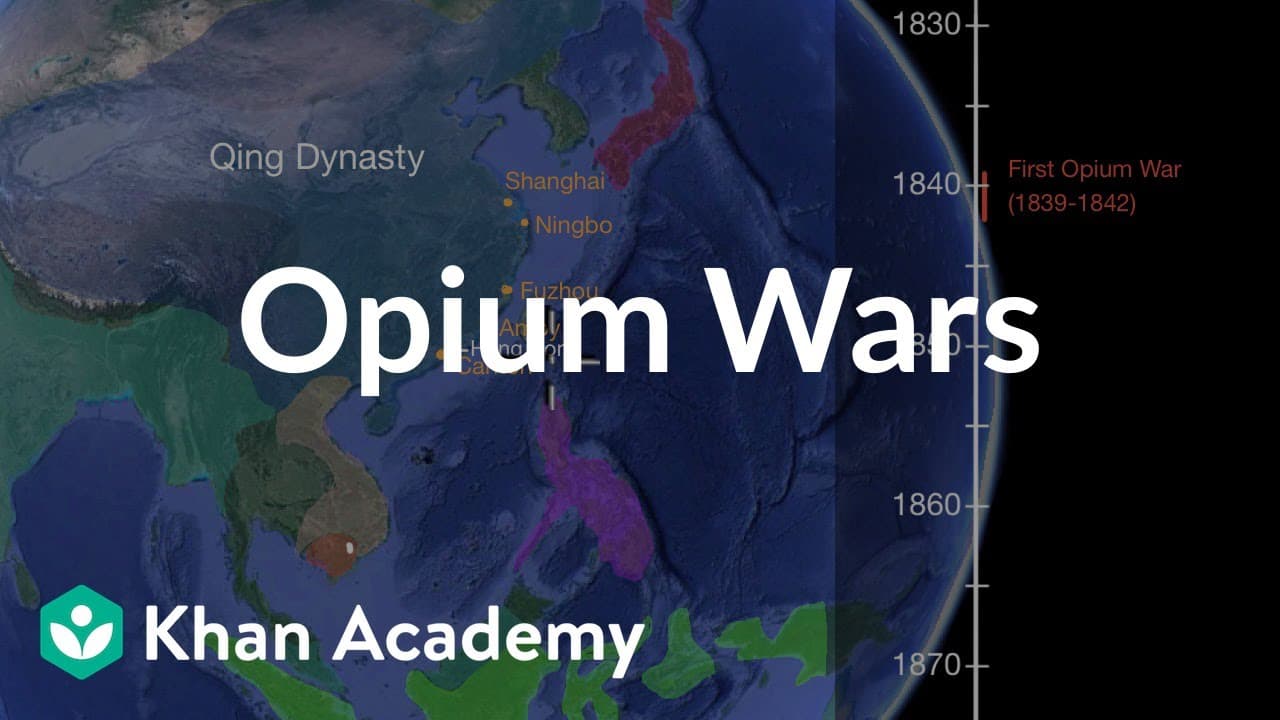
- [Instructor] This is a map of East Asia in the 19th century and you can already see significant imperial control by Western European powers. You have the British East India Company in India, you have the French initially getting a foothold in Southeast Vietnam in this orange area but eventually they will take over this entire region that will bec... Read More
Key Insights
- 🪛 The Opium Wars were driven by the British desire to create a favorable trade balance with China.
- 🇨🇳 The British used opium as a means to stimulate demand and extract concessions from Qing China.
- 🌸 The Opium Wars had devastating consequences for China, including social decay, loss of territory, and the disruption of the Taiping Rebellion.
Install to Summarize YouTube Videos and Get Transcripts
Explore YouTube Video Summarizer or Get YouTube Transcript Extractor
Questions & Answers
Q: Why did the British use opium as a means to solve the trade imbalance?
The British faced a trade deficit as Chinese products were in demand in Europe, but the Chinese had little interest in European goods. By introducing opium to China, the British aimed to stimulate demand for their products and ensure a flow of silver out of China.
Q: How did the Opium Wars impact China?
The Opium Wars inflicted major concessions on China, such as the opening of ports, the loss of Hong Kong, and the payment of reparations. They also led to the legalization of opium, contributing to social decay and the turmoil of the Taiping Rebellion civil war.
Q: How did the Opium Wars influence Japan?
The Opium Wars served as a cautionary example for Japan, motivating them to industrialize and become an imperial power to avoid being vulnerable to European dominance.
Q: Was there opposition to the Opium Wars in Europe?
Yes, figures like William Gladstone in Britain strongly opposed the Opium Wars, viewing them as unjust, immoral, and disgraceful. Gladstone had personal experience with the destructive effects of opium addiction.
Summary & Key Takeaways
-
The British, facing a trade imbalance with China, discovered that opium grown in India could be used as a solution to the problem.
-
The First Opium War was initiated by the British in 1839, leading to major concessions from Qing China, such as the opening of ports and the cession of Hong Kong.
-
The Second Opium War followed in 1856, resulting in further concessions, the legalization of opium, and the destabilization of Chinese society.
Read in Other Languages (beta)
Share This Summary 📚
Summarize YouTube Videos and Get Video Transcripts with 1-Click
Try YouTube Summary with ChatGPT & Claude or YouTube Transcript Generator
Explore More Summaries from Khan Academy 📚



Summarize YouTube Videos and Get Video Transcripts with 1-Click
Try YouTube Summary with ChatGPT & Claude or YouTube Transcript Generator