Inflation and Deflation | Macroeconomics
TL;DR
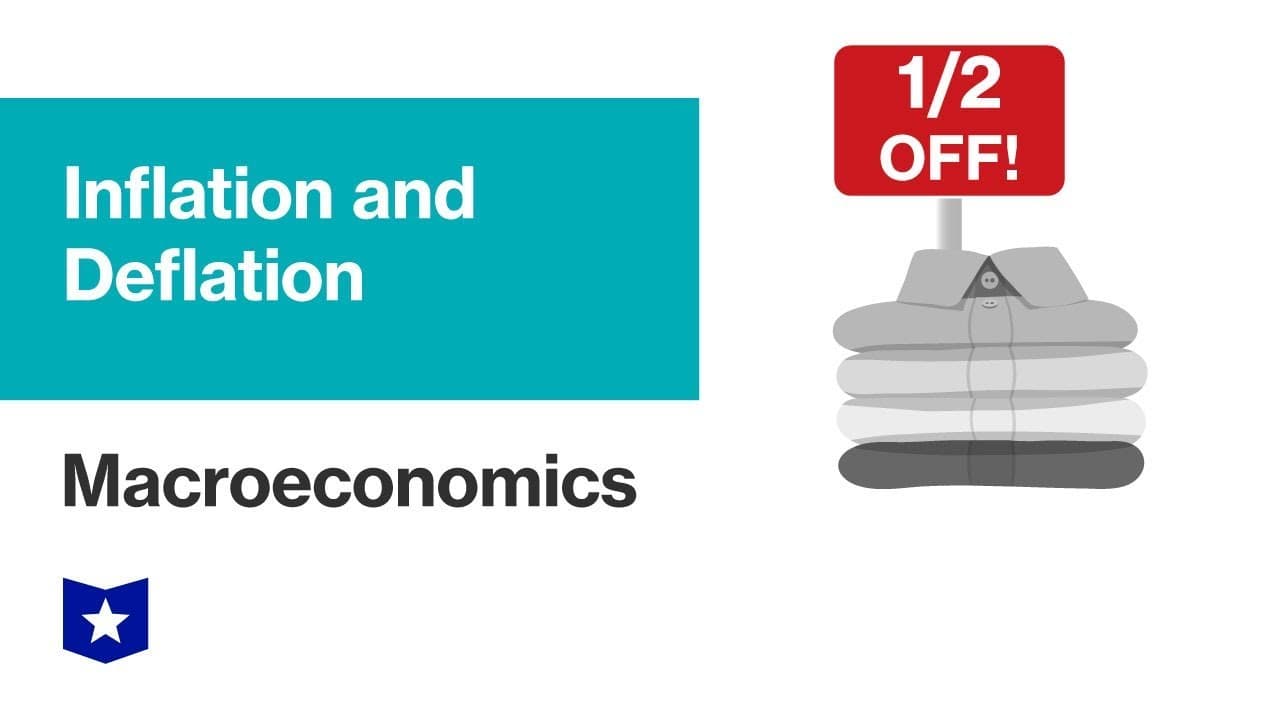
Inflation is the increase in prices, while deflation is the decrease; both have significant economic implications.
Transcript
inflation describes as a sustained increase in the general price level of commonly bought goods and services and is calculated as a rate of change of a price index over a particular period of time a price index is a measure that examines the weighted average of prices of a basket of goods and services the Consumer Price Index CPI is a common measur... Read More
Key Insights
- ❓ Inflation is a sustained increase in prices, often measured by the Consumer Price Index.
- 🇨🇷 Cost-push inflation occurs when production costs rise, leading to price increases.
- 😮 Demand-pull inflation happens when demand outpaces supply, causing prices to rise.
- ❓ Deflation is a sustained decrease in prices, which can trigger economic and social crises.
- 🤑 Monetarists view deflation as resulting from a decrease in the velocity or supply of money.
- ❓ The US has experienced both inflation and deflation throughout its history.
- 💡 Keynes challenged the idea that deflation would resolve itself and advocated for intervention during economic downturns.
Install to Summarize YouTube Videos and Get Transcripts
Explore YouTube Video Summarizer or Get YouTube Transcript Extractor
Questions & Answers
Q: What is inflation and how is it measured?
Inflation is the increase in the general price level of goods and services, typically measured by the Consumer Price Index (CPI), which tracks the weighted average of prices of a basket of goods and services.
Q: How do cost-push inflation and demand-pull inflation differ?
Cost-push inflation occurs when production costs rise, leading to price increases, while demand-pull inflation happens when demand outstrips supply, causing prices to rise due to increased consumer spending.
Q: What is deflation, and what are its consequences?
Deflation is the sustained decrease in the general price level of goods and services, leading to a situation where the same amount of money can buy more. It can trigger a deflationary spiral with negative effects on debtors and the economy.
Q: How did John Maynard Keynes view deflation during the Great Depression?
Keynes believed that the economy was not self-correcting and that intervention, such as increasing spending or reducing taxes, was necessary to counter deflation and stimulate economic recovery.
Summary & Key Takeaways
-
Inflation is a sustained increase in the general price level of goods and services, often measured by the Consumer Price Index.
-
Cost-push inflation occurs when production costs rise, leading companies to increase prices to maintain profits.
-
Demand-pull inflation happens when demand exceeds supply, causing prices to rise.
Read in Other Languages (beta)
Share This Summary 📚
Summarize YouTube Videos and Get Video Transcripts with 1-Click
Try YouTube Summary with ChatGPT & Claude or YouTube Transcript Generator
Explore More Summaries from Course Hero 📚

Summarize YouTube Videos and Get Video Transcripts with 1-Click
Try YouTube Summary with ChatGPT & Claude or YouTube Transcript Generator