The unexpected challenges of a country's first election | Philippa Neave
TL;DR
This content discusses the importance of creating a comprehensive electoral terminology in Arabic to facilitate understanding and communication in the Arab region.
Transcript
The great philosopher Aristotle said if something doesn't exist, there's no word for it, and if there's no word for something, that something doesn't exist. So when we talk about elections, we in established democracies, we know what we're talking about. We've got the words. We have the vocabulary. We know what a polling station is. We know what a ... Read More
Key Insights
- 🌍 In countries where democracy doesn't exist, there is a lack of vocabulary to describe democratic concepts, making it challenging to assist in organizing elections.
- 🗳️ The United Nations does not impose Western democracy on countries; their work is based on the Universal Declaration of Human Rights, which guarantees the right to choose who governs.
- 🚀 Public outreach in electoral assistance involves designing information campaigns to educate voters and candidates on registration, voting, and the importance of participation.
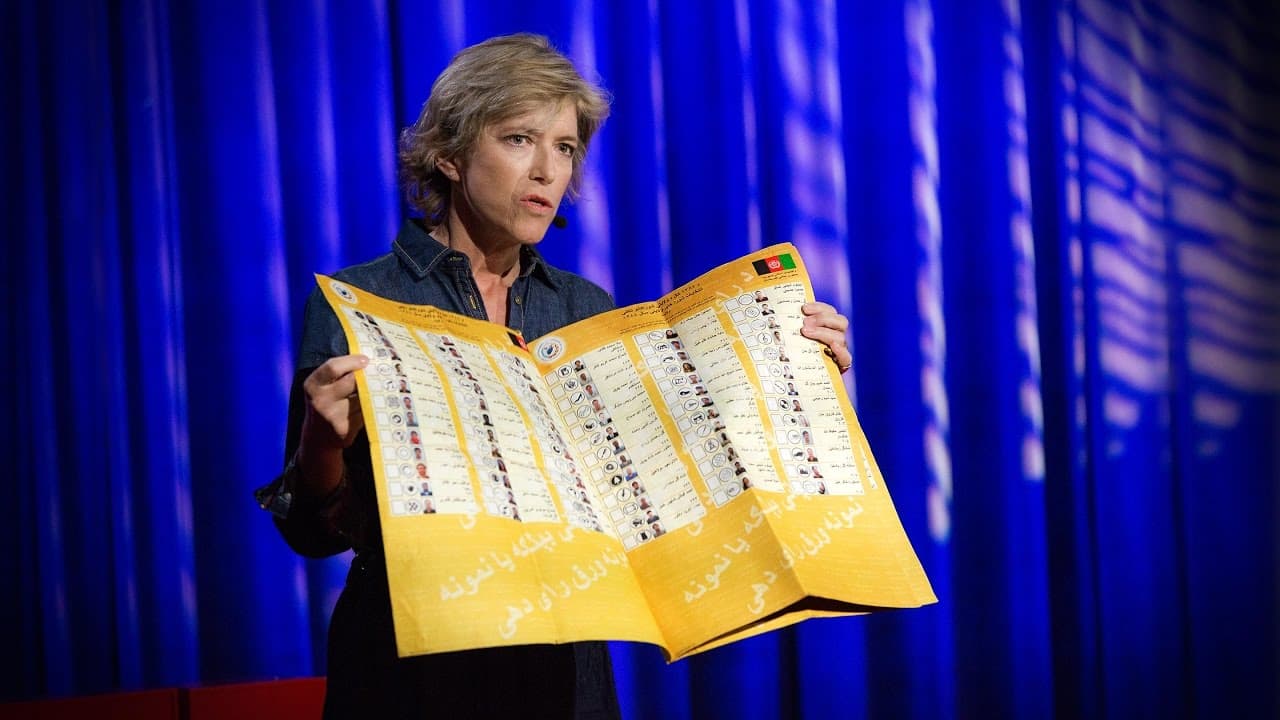
- ✉️ In countries with high illiteracy rates like Afghanistan, using images and symbols on ballots helps make the voting process more understandable.
- 🌍 In places like Southern Sudan, with high illiteracy levels and poor infrastructure, verbal communication is essential for explaining the election process, even though there are many different languages.
- 🗣️ The Arab Spring generated hope and political change across the region, but it also highlighted the need for standardized electoral terminology, as different countries used different terms to describe the same concepts.
- 📘 The Arabic Lexicon of Electoral Terminology was created to define and agree upon electoral terms in Arabic, facilitating understanding across the Arab region.
- 💡 The knowledge tools and technology available can facilitate civic education and help the silent majority in the Middle East gain a voice and understand democratic processes better.
Install to Summarize YouTube Videos and Get Transcripts
Explore YouTube Video Summarizer or Get YouTube Transcript Extractor
Questions & Answers
Q: What is the purpose of the speaker's work in the field of electoral assistance?
The speaker's work in the field of electoral assistance is to assist emerging democracies in organizing their first elections and educate candidates and voters on the process and importance of participating in elections.
Q: Does the United Nations impose Western democracy on countries that can't handle it?
No, the United Nations does not impose anything on anybody. Their work is firmly anchored in the 1948 Universal Declaration of Human Rights, which states that everybody should have the right to choose who governs them.
Q: What does the speaker specialize in within the field of electoral assistance?
The speaker specializes in public outreach, specifically in designing information campaigns to educate and reach out to candidates and voters who have never had the opportunity to participate or vote in elections.
Q: What challenges did the speaker face in organizing elections in Afghanistan?
In Afghanistan, the speaker faced challenges such as high levels of illiteracy and a large number of candidates for limited seats. The use of symbols and visual communication had to be employed due to the lack of words to describe democratic concepts in the local language and the need to accommodate for the limited literacy levels.
Q: How did the speaker address language barriers in organizing elections in Southern Sudan?
In Southern Sudan, the speaker faced language barriers due to the country's high illiteracy rates and various languages spoken. Verbal communication was used, and the speaker had to work with 132 languages to effectively communicate election-related information to the population.
Q: What initiative did the speaker undertake in order to standardize electoral terminology in the Arab region?
The speaker launched the "Arabic Lexicon of Electoral Terminology" initiative, which involved defining 481 terms related to democratic elections and reaching an agreement with Arab colleagues from eight different countries on the appropriate Arabic words to use for these terms. The project aimed to facilitate understanding among people across the Arab region.
Q: How has the "Arabic Lexicon of Electoral Terminology" been utilized since its publication?
The "Arabic Lexicon of Electoral Terminology" has been widely utilized since its publication. It has been downloaded over 3,000 times from the internet, used by the Arab Organization for Electoral Management Bodies and the Arab League's pan-Arab observation unit. Additionally, Somalia plans to produce a version of the lexicon for use in their country, where no similar resource exists.
Summary & Key Takeaways
-
Aristotle's quote emphasizes the relationship between language and existence, highlighting the importance of vocabulary in understanding concepts related to democracy.
-
The speaker works in electoral assistance, helping emerging democracies organize their elections and promote public outreach to ensure that everyone, including women, young people, and handicapped individuals, can participate in the electoral process.
-
The creation of the "Arabic Lexicon of Electoral Terminology" helped standardize election-related vocabulary across the Arab region, promoting understanding and facilitating democratic elections. The work of reference has been adopted by organizations and countries in the region, and there is a need to expand civic education tools to further empower the silent majority.
Read in Other Languages (beta)
Share This Summary 📚
Summarize YouTube Videos and Get Video Transcripts with 1-Click
Try YouTube Summary with ChatGPT & Claude or YouTube Transcript Generator
Explore More Summaries from TED 📚
Summarize YouTube Videos and Get Video Transcripts with 1-Click
Try YouTube Summary with ChatGPT & Claude or YouTube Transcript Generator