Chinese Dumplings Vs. Japanese Dumplings
TL;DR
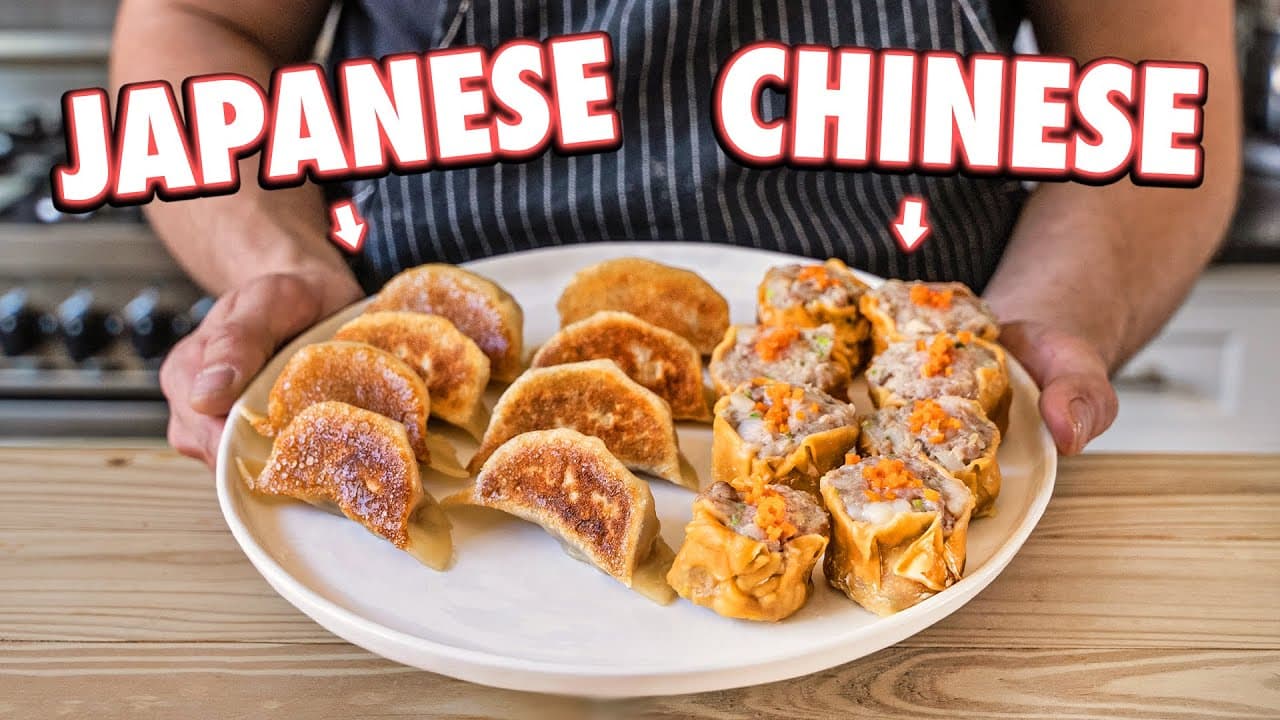
Chinese and Japanese style dumplings go head-to-head in a taste test to determine which one reigns supreme.
Transcript
this is the dumpling off of the century so we're gonna take the two most popular and bring them head to head today we're doing chinese style dumplings versus japanese style dumplings from what i've researched chinese dumplings have a much wider bread you know you've got soup dumplings steamed dumplings there are also fried dumplings so i figured le... Read More
Key Insights
- 👹 Chinese style dumplings come in different varieties, offering a wider range of flavors and textures compared to Japanese gyoza.
- ❓ Gyoza is characterized by its crispy bottom, steamed top, and straightforward flavors.
- 💦 Chumai dumplings have a more complex flavor profile due to the addition of ingredients like dried shiitake mushrooms and water chestnuts.
- 💦 Properly preparing the filling for both dumplings, including squeezing excess water from the cabbage and rehydrating mushrooms, is crucial for achieving the desired texture.
- 😤 Gyoza dumplings are cooked by pan-frying and then steaming, while chumai dumplings are steamed using a bamboo steamer basket.
- 👻 The choice between gyoza and chumai ultimately depends on personal preference, with the host favoring the straightforward flavors of gyoza.
- 🥰 Both dumplings are enjoyed worldwide and have a special place in people's hearts.
Install to Summarize YouTube Videos and Get Transcripts
Explore YouTube Video Summarizer or Get YouTube Transcript Extractor
Questions & Answers
Q: What are the main differences between Chinese style dumplings and Japanese style dumplings?
Chinese style dumplings come in various forms, such as soup dumplings, steamed dumplings, and fried dumplings. Japanese style dumplings, or gyoza, are typically pan-fried with a crispy bottom and a steamed top.
Q: What ingredients are used in the filling for gyoza?
The gyoza filling consists of ground pork, finely chopped cabbage, green onion, sesame oil, mirin, soy sauce, garlic, and ginger. It is mixed together by hand to ensure proper emulsification.
Q: How do you shape gyoza dumplings?
To shape gyoza dumplings, wet the edges of the wrapper with water and place a dollop of meat filling in the center. Fold it like a taco, pleat the open ends three to four times, ensuring the dumpling is fully enclosed with no air bubbles.
Q: How are Chinese style chumai dumplings different from gyoza?
Chumai dumplings have a different filling, which includes dried shiitake mushrooms, ground pork, water chestnuts, green onion, shaoxing wine, soy sauce, sugar, ginger, and shrimp. The chumai dumplings are shaped differently, with the filling placed in the center and the sides folded and pressed together.
Summary & Key Takeaways
-
The video compares Chinese style dumplings to Japanese style dumplings, highlighting their similarities and differences.
-
The host provides detailed recipes for both gyoza (Japanese style dumplings) and chumai (Chinese style dumplings).
-
The taste test reveals that while both dumplings are delicious, the host prefers the Japanese gyoza for its straightforward flavors and texture.
Read in Other Languages (beta)
Share This Summary 📚
Summarize YouTube Videos and Get Video Transcripts with 1-Click
Try YouTube Summary with ChatGPT & Claude or YouTube Transcript Generator
Explore More Summaries from Joshua Weissman 📚



Summarize YouTube Videos and Get Video Transcripts with 1-Click
Try YouTube Summary with ChatGPT & Claude or YouTube Transcript Generator