Why are Stars Star-Shaped?
TL;DR
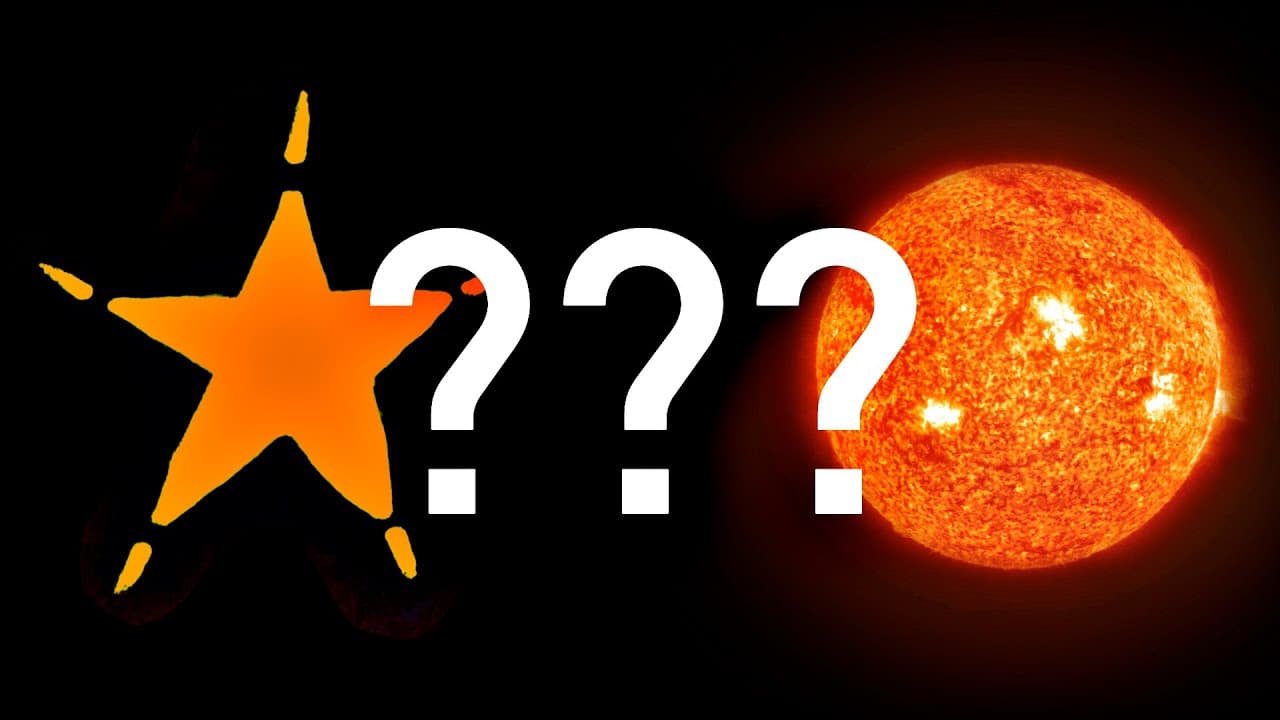
Stars appear pointy to us because of how light is spread out when viewed through specific openings or past certain objects.
Transcript
When you ask someone to draw a star, they'll probably draw something like this - or this or this. Even ignoring the rainbows, this doesn't seem very scientific, since we know stars are actually big hot ROUND balls of plasma and far enough away that they're basically just dots. So why do we draw stars that have points? The answer is surprisingly sim... Read More
Key Insights
- 🙂 Stars appear pointy to us because of the way light waves are spread out and interfere with each other.
- 🙂 The patterns and shapes we associate with stars are the result of specific imprints left on light by openings or objects.
- 🤩 The structure of our eyes, including suture lines and imperfections, contributes to the unique star-like smears we see.
- 🔯 Different types of openings or objects can create various patterns, including four-pointed stars, concentric rings, and dashed four-pointed stars.
- 🔯 The Hubble space telescope's four struts create the imprint causing the four-pointed stars in Hubble photos.
- 💠 The shape of the aperture on camera lenses also influences the shape of stars in photographs.
- 🤩 Each eye sees a slightly different star-like smear, leading to variations in how stars are perceived by individuals.
Install to Summarize YouTube Videos and Get Transcripts
Explore YouTube Video Summarizer or Get YouTube Transcript Extractor
Questions & Answers
Q: Why do we draw stars with points when we know they're actually round?
We see stars as pointy because the light from stars is spread out when it reaches our eyes, creating a star-like shape. This is due to the interference and diffraction of light waves.
Q: Do all eyes see the same star-like shape for every star?
No, each eye will see a slightly different star-like smear because of the unique suture lines and imperfections in the lenses of our eyes. Even our left and right eyes will differ in how they perceive stars.
Q: Is it scientifically accurate to color stars with rainbows in drawings?
Yes, it is scientifically accurate to color stars with rainbows. Longer wavelength red light is spread out more than bluer light, creating mini-rainbows within the star-shaped smears of light.
Q: Do telescopes also see stars as pointy?
Yes, some telescopes also see stars as pointy. The interference and diffraction of light waves when passing through openings or around objects can create similar patterns and imprints.
Summary & Key Takeaways
-
Stars themselves are round balls of plasma, but when their light reaches our eyes, it is smeared out, creating a star-like shape.
-
Light waves are bounced or bent when passing through openings or around objects, leaving imprints that cause specific patterns when viewed.
-
The shape of our eyes' lenses and structural imperfections called suture lines contribute to the star-like shape we perceive.
Read in Other Languages (beta)
Share This Summary 📚
Summarize YouTube Videos and Get Video Transcripts with 1-Click
Try YouTube Summary with ChatGPT & Claude or YouTube Transcript Generator
Explore More Summaries from minutephysics 📚



Summarize YouTube Videos and Get Video Transcripts with 1-Click
Try YouTube Summary with ChatGPT & Claude or YouTube Transcript Generator