Why It's Impossible to Tune a Piano
TL;DR
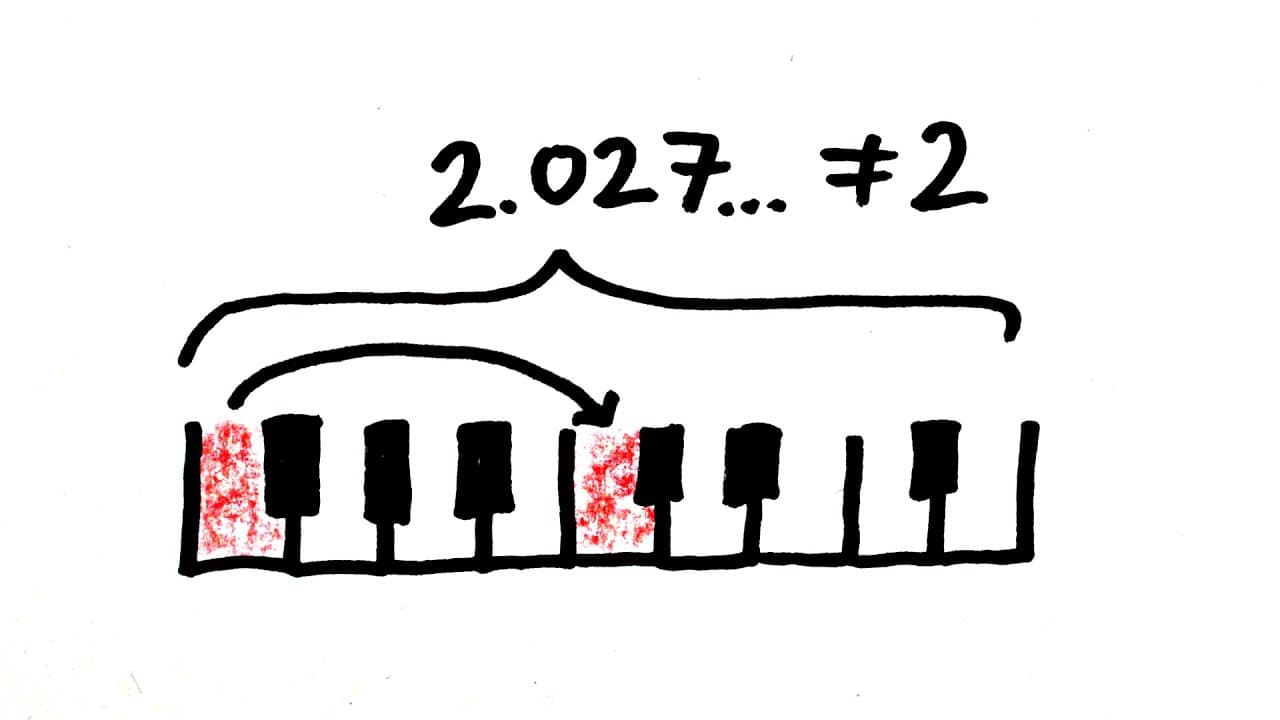
Musical instruments produce different pitches based on the number of bumps or vibrations in their strings or air vibrating pipes, creating harmonics. Harmonics can be used to tune string instruments, but tuning a piano using perfect harmonics is mathematically impossible. Most pianos use equal tempered tuning, resulting in slightly out-of-tune intervals.
Transcript
Aah, the sound of shaking animal intestines.. I mean, strings which are traditionally made out of cat gut but regardless of what it's made out of when a string vibrates it does so with the ends fixed to the instrument. This means that it can only vibrate in certain waves, sin waves. Like a jump rope with one bump or two bumps or three or four or so... Read More
Key Insights
- 👱 Musical instruments produce different pitches based on the vibrations in their strings or air vibrating pipes.
- 📳 The number of bumps or vibrations determines the pitch, with more bumps resulting in higher frequencies and faster vibrations.
- 🥳 Harmonics can be used to tune string instruments like violins, violas, and cellos, ensuring specific ratios between harmonics.
- 😒 Tuning a piano using perfect harmonics is mathematically impossible due to the large number of strings, leading to the use of equal tempered tuning.
- 🙂 Equal tempered tuning allows for playing any song in any key but results in slightly out-of-tune intervals.
- 🖱️ Most pianos, digital tuners, and computer instruments use equal tempered tuning based on the 12th root of two.
- 👂 Harmonics create a pure and resonant sound, as demonstrated by the bugle playing taps with only the notes in a series of harmonics.
Install to Summarize YouTube Videos and Get Transcripts
Explore YouTube Video Summarizer or Get YouTube Transcript Extractor
Questions & Answers
Q: What are harmonics in musical instruments?
Harmonics refer to the different pitches produced by the number of vibrations or bumps in the strings or pipes of musical instruments.
Q: How can harmonics be used to tune string instruments?
String instruments like violins, violas, and cellos can be tuned by comparing the third harmonic on one string to the second harmonic on the next string up.
Q: Why is it mathematically impossible to tune a piano using perfect harmonics?
Pianos have too many strings to tune using harmonics consistently across all keys. The multiplication of frequencies by factors of ratios does not result in the desired frequency.
Q: What is equal tempered tuning?
Equal tempered tuning is a method used in most pianos, digital tuners, and computer instruments where the frequency of each key is the 12th root of two times the frequency of the key below it. This allows for playing in any key but results in slightly out-of-tune intervals.
Summary & Key Takeaways
-
Musical instruments create different pitches based on the number of vibrations in their strings or pipes, known as harmonics.
-
Harmonics can be used to tune string instruments such as violins, violas, and cellos.
-
Tuning a piano using perfect harmonics is mathematically impossible, leading to the use of equal tempered tuning.
Read in Other Languages (beta)
Share This Summary 📚
Summarize YouTube Videos and Get Video Transcripts with 1-Click
Try YouTube Summary with ChatGPT & Claude or YouTube Transcript Generator
Explore More Summaries from minutephysics 📚




Summarize YouTube Videos and Get Video Transcripts with 1-Click
Try YouTube Summary with ChatGPT & Claude or YouTube Transcript Generator