Evidence of ChatGPT use in Published Academic Research Articles
TL;DR
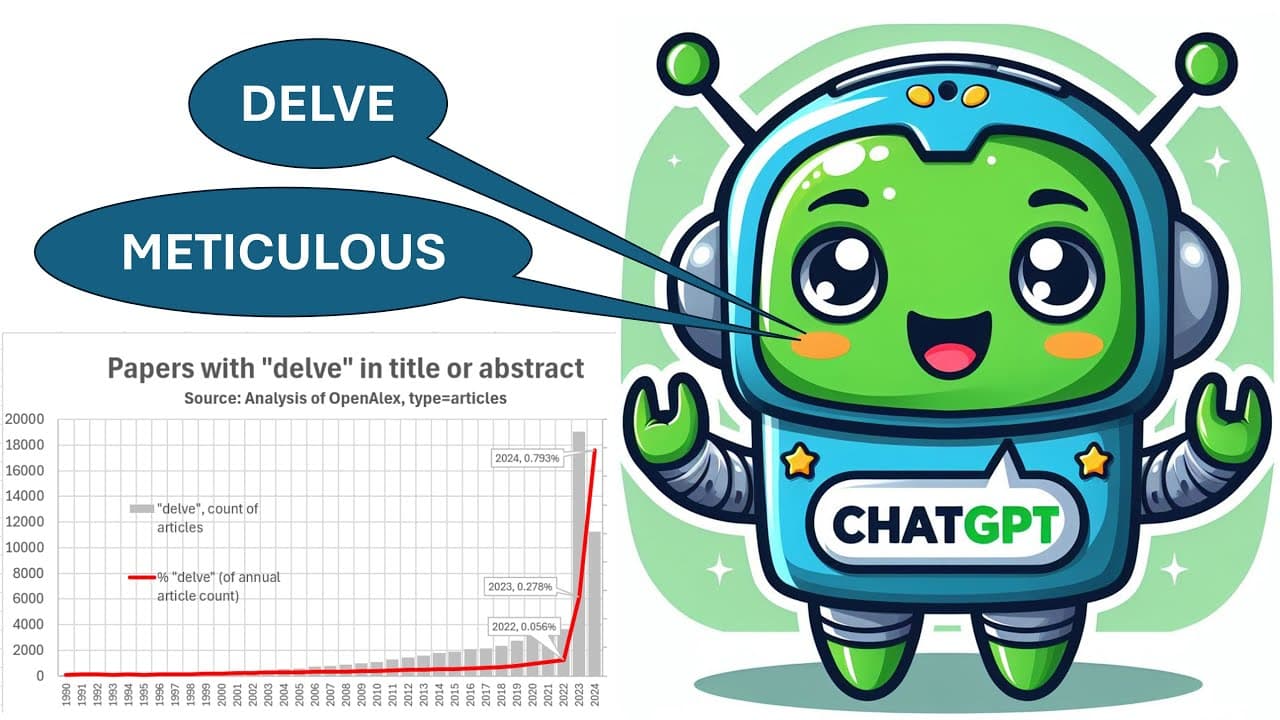
Recent articles reveal changes in language use signaling increased AI involvement in academic research.
Transcript
today I wanted to share with you a couple of articles that have been recently published one on Scientific American one on a Blog that have been looking at some of language use in recent research articles and having a think about whether that could be indicating a whole lot of AI use happening in research so the first one here we are on a Blog I'll ... Read More
Key Insights
- 🙈 The term "delve" has seen a notable increase in academic articles, suggesting enhanced AI influence in language choice.
- 😥 Research indicates that specific adjectives and adverbs are becoming more prevalent, pointing to potential AI-generated text characteristics.
- 🤨 The observed language changes may reflect an underlying shift in how researchers express ideas, raising concerns about originality in academic writing.
- 💦 Anecdotal reports suggest that researchers may be hesitant to disclose AI usage in their work, posing challenges for understanding AI's role in academia.
- 👨🔬 As AI tools become more prevalent, the distinction between human and AI-generated content could blur, impacting the perception of credibility in research.
- 🤕 The academic community may need to adapt by developing new standards for evaluating research authenticity and originality in the age of AI.
- ✍️ There is an emerging interest in how AI impacts the writing and reviewing process within academic circles, indicating a potential shift in academic norms.
Install to Summarize YouTube Videos and Get Transcripts
Explore YouTube Video Summarizer or Get YouTube Transcript Extractor
Questions & Answers
Q: What significance do changes in word usage indicate in academic research?
Changes in word usage, such as the rise of specific terms like "delve," suggest a growing influence of AI tools in academic writing. These shifts highlight a possible change in how researchers communicate their findings, potentially affecting the perception of human authorship versus AI-generated content in scholarly publications.
Q: Why are words like "meticulous" and "valuable" notable in recent research?
The increased frequency of words such as "meticulous" and "valuable" in recent studies aligns with the patterns associated with AI-generated text. Their prevalence raises questions about the originality of language in academic writing, as they may indicate a reliance on AI tools rather than genuine human expression in research.
Q: What implications could AI-generated language have for the future of academic publishing?
The rise of AI-generated language could redefine academic publishing by increasing the quantity of produced papers, but it may also challenge the quality and authenticity of research. If AI begins to dominate writing and reviewing processes, it raises ethical concerns about authorship and the academic rigor traditionally associated with scholarly work.
Q: How can researchers ensure the authenticity of their work amid AI influences?
Researchers can maintain authenticity by cultivating a unique writing style and consciously avoiding overused AI-generated language. Engaging in peer reviews and seeking feedback can also help differentiate human research outputs from AI content, promoting originality and integrity in academic publications.
Summary & Key Takeaways
-
Recent articles from Scientific American and a blog indicate a significant rise in the use of certain words in academic research papers, potentially linking this trend to AI-generated content.
-
The word "delve" has notably increased in usage in the past two years, suggesting that reliance on AI tools may influence language choices in research writing.
-
Patterns show a rising adoption of specific adverbs and adjectives, prompting discussions on the authenticity of AI-generated papers and potential implications for future academic writing and reviewing processes.
Read in Other Languages (beta)
Share This Summary 📚
Summarize YouTube Videos and Get Video Transcripts with 1-Click
Try YouTube Summary with ChatGPT & Claude or YouTube Transcript Generator
Explore More Summaries from Dr Lyndon Walker 📚
Summarize YouTube Videos and Get Video Transcripts with 1-Click
Try YouTube Summary with ChatGPT & Claude or YouTube Transcript Generator