Road signs suck. What if we got rid of them all?
TL;DR
Removing road signs can improve safety but challenges accessibility.
Transcript
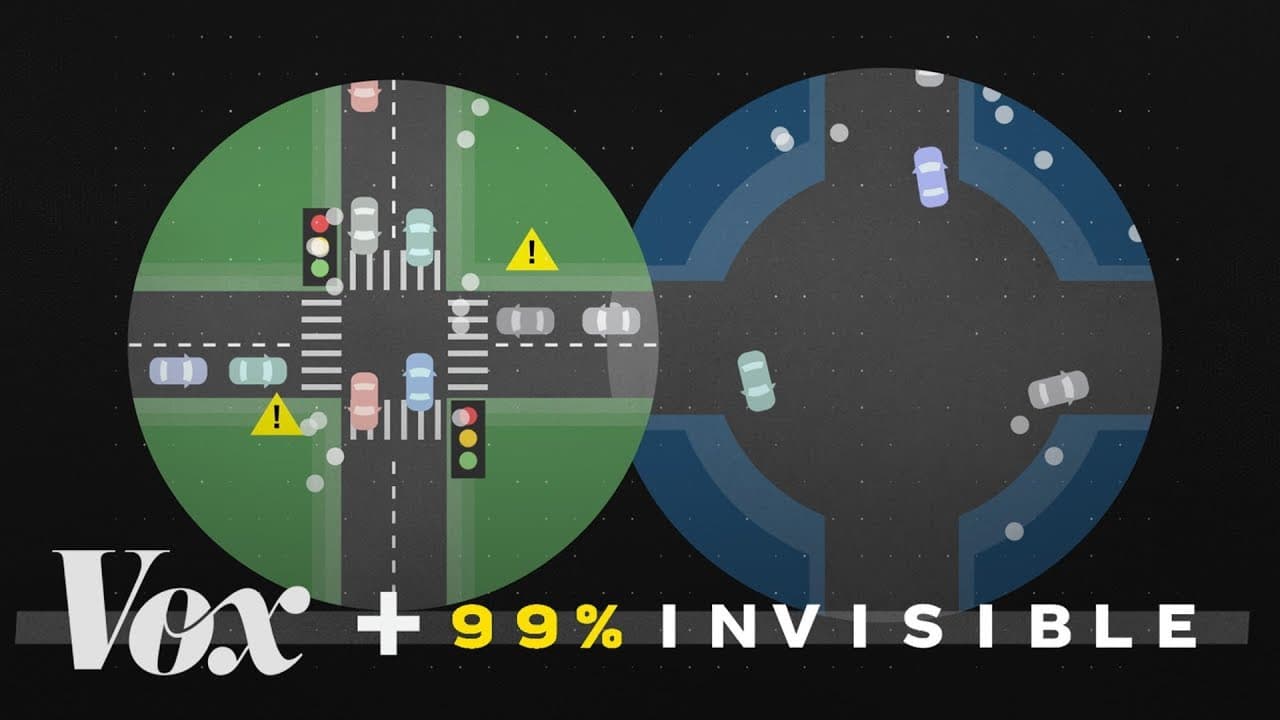
If I showed you two big intersections — one with a bunch of signs, traffic lights, and boundaries, and one with no markings or apparent rules at all — which one would look safer to you? Towns all over Europe are starting to experiment with streets like this: where cars, bikes, buses, and people can travel freely in the same space. I think this look... Read More
Key Insights
- Shared space design involves removing traditional road signs and barriers, encouraging all forms of transportation to share the road. This design aims to make streets safer by increasing driver alertness.
- In Poynton, England, the transformation to a shared space involved removing traffic lights and signs, expanding sidewalks, and creating a space where vehicles and pedestrians negotiate their paths.
- The concept of 'edge friction' is crucial in shared spaces, where vertical elements like trees and lamps slow down drivers by providing visual cues about their speed.
- While shared spaces can reduce accidents, they are often stressful for pedestrians, who may feel anxious about crossing without clear demarcations and prefer traditional layouts.
- Historical city streets often featured mixed traffic without intentional planning, but modern shared spaces are deliberately designed to enhance safety and flow.
- Accidents in shared spaces have significantly decreased in various locations, with notable reductions in Ipswich, London, and Drachten, indicating improved safety.
- Despite their benefits, shared spaces face criticism for lacking protections for disabled pedestrians, particularly the visually impaired, prompting calls for design improvements.
- Future shared space designs may incorporate features like raised street textures and button-activated crosswalks to better accommodate disabled users, requiring further research and consultation.
Install to Summarize YouTube Videos and Get Transcripts
Explore YouTube Video Summarizer or Get YouTube Transcript Extractor
Questions & Answers
Q: What is the main concept behind shared space design?
Shared space design is an urban planning concept that involves removing traditional road signs, traffic lights, and barriers. This approach encourages all forms of transportation, including cars, bikes, buses, and pedestrians, to share the road. The idea is that without clear demarcations, drivers become more alert and cautious, potentially leading to safer streets.
Q: How does the concept of 'edge friction' contribute to shared space design?
Edge friction refers to the presence of vertical elements, such as trees or lamps, in a driver's peripheral vision. These elements provide visual cues that help drivers gauge their speed. In shared spaces, edge friction is used to naturally slow down drivers, as the presence of these elements makes them more aware of their surroundings and encourages them to drive more cautiously.
Q: What are some of the safety benefits observed in shared spaces?
Shared spaces have been shown to reduce the number of accidents significantly. For example, in Ipswich, the rate of accidents involving injuries dropped from 23 over three years to just one per year after implementing shared spaces. Similar reductions were observed in London and Drachten, indicating that shared spaces can enhance safety by reducing both the frequency and severity of traffic conflicts.
Q: Why do some pedestrians feel anxious in shared spaces?
Pedestrians may feel anxious in shared spaces due to the lack of clear demarcations, such as crosswalks and traffic lights, which traditionally guide their movements. The absence of these features can create uncertainty about when and where it is safe to cross, leading to stress and a preference for traditional traffic layouts that provide more structure and predictability.
Q: What historical context is relevant to the concept of shared spaces?
Historically, city streets in the early 1900s featured mixed traffic, with cars, pedestrians, bicyclists, and streetcars sharing the road without intentional planning. Vehicles couldn't go very fast, so there wasn't a significant concern about separating them from pedestrians and bikers. Shared spaces today aim to recreate this environment deliberately to enhance safety and flow.
Q: What criticisms do shared spaces face regarding accessibility?
Shared spaces face criticism for not providing sufficient protections for disabled pedestrians, particularly the visually impaired. The lack of clear demarcations and traffic control measures can make these environments challenging to navigate, prompting calls for design improvements and more inclusive consultation processes to ensure that all users' needs are addressed.
Q: What design features might improve shared spaces for disabled users?
Future shared space designs may incorporate features like raised street textures and button-activated crosswalks to better accommodate disabled users. These features aim to provide tactile and audible cues that help visually impaired pedestrians navigate the space safely, balancing the benefits of shared spaces with the accessibility needs of all users.
Q: What further research is needed for shared space designs?
Further research is needed to determine what design elements work best in different contexts and how to effectively serve the needs of all street users, including disabled pedestrians. This research should involve consulting with disabled communities to understand their experiences and preferences, ensuring that shared spaces are both safe and accessible for everyone.
Summary & Key Takeaways
-
Shared space design removes traditional traffic control measures, encouraging all forms of transportation to share the road. This approach aims to increase safety by making drivers more alert, but it poses challenges for accessibility, particularly for disabled pedestrians.
-
Cities like Poynton, England, have adopted shared spaces, removing signs and traffic lights to create a more integrated environment. This design relies on concepts like edge friction to naturally slow down drivers, reducing accidents and improving traffic flow.
-
Despite evidence of increased safety and reduced accidents, shared spaces face criticism for not adequately protecting disabled pedestrians. Future designs may need to incorporate additional features to balance safety and accessibility for all users.
Read in Other Languages (beta)
Share This Summary 📚
Summarize YouTube Videos and Get Video Transcripts with 1-Click
Try YouTube Summary with ChatGPT & Claude or YouTube Transcript Generator
Explore More Summaries from Vox 📚



Summarize YouTube Videos and Get Video Transcripts with 1-Click
Try YouTube Summary with ChatGPT & Claude or YouTube Transcript Generator