Colombia’s fragile peace, explained
TL;DR
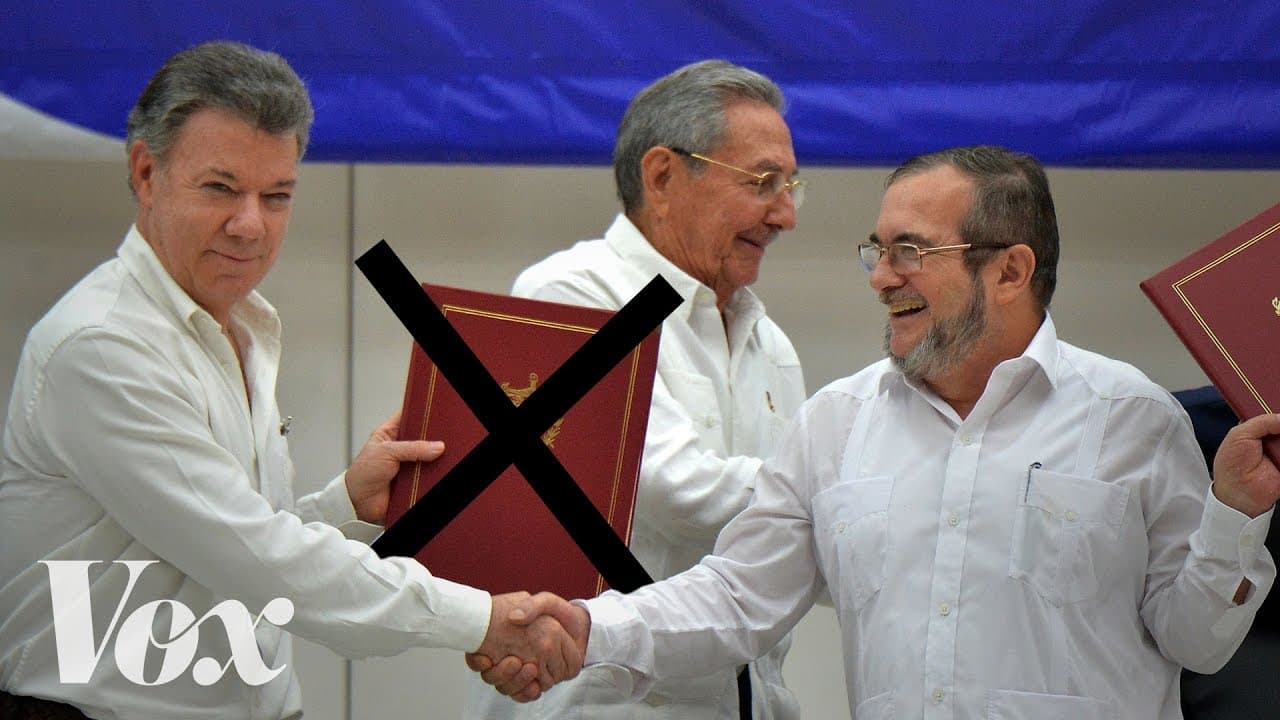
Colombians voted against a historic peace deal with FARC.
Transcript
It looked like the longest war on this side of the planet had finally ended. For 52 years the Colombian government has been fighting a civil war against the FARC, the revolutionary armed forces of Colombia, a marxist guerilla organization. That have been bloody, and horrible, and have cost over 220,000 lives and displaced over 5 million people. Thi... Read More
Key Insights
- The Colombian government and FARC had been in a civil war since 1964, costing over 220,000 lives and displacing millions.
- A historic peace agreement was reached in 2016 after four years of negotiations, but Colombians narrowly voted against it.
- The FARC, a Marxist guerrilla group, was formed in response to severe inequality and rural disenfranchisement in Colombia.
- The FARC funded their operations through drug trafficking, kidnappings, and other violent means, leading to widespread opposition to the peace deal.
- The peace agreement included FARC's disarmament and community service but offered no jail time and political representation, which was controversial.
- Former President Uribe led the opposition against the deal, arguing it lacked justice and truth, despite his role in weakening FARC.
- Regions most affected by the conflict, such as Bojaya, showed strong support for the peace agreement despite its defeat.
- The rejection of the peace deal left the future uncertain, but both current and former leaders vowed to continue working towards peace.
Install to Summarize YouTube Videos and Get Transcripts
Explore YouTube Video Summarizer or Get YouTube Transcript Extractor
Questions & Answers
Q: Why did Colombians vote against the peace deal?
Colombians voted against the peace deal due to concerns about the terms offered to FARC, including no jail time and guaranteed political representation. Critics, led by former President Uribe, argued that the deal lacked justice and truth, despite the potential benefits of ending the conflict.
Q: What were the main terms of the peace agreement with FARC?
The peace agreement with FARC included their disarmament, cessation of drug trafficking, and community service for removing landmines. In return, FARC members faced no jail time and were guaranteed political representation with five seats in each house of Colombia's congress, along with financial aid for demobilized fighters.
Q: How did the FARC fund their operations during the conflict?
The FARC funded their operations primarily through drug trafficking, leveraging Colombia's position in the global drug trade. They also engaged in kidnappings and ransom demands, recruited child soldiers, and committed acts of sexual violence, all of which contributed to their financial and operational capabilities during the conflict.
Q: What role did former President Uribe play in the peace process?
Former President Uribe played a significant role in weakening the FARC through military crackdowns, supported by the US, which brought the group to the negotiating table. However, he led the opposition against the peace deal, arguing that it failed to deliver justice and truth, despite not opposing peace in principle.
Q: Why did regions most affected by the conflict support the peace deal?
Regions most affected by the conflict, like Bojaya, supported the peace deal because they experienced the worst of the violence and saw the agreement as a chance for lasting peace. Despite the deal's rejection, these regions understood the potential benefits of ending the decades-long conflict and voted overwhelmingly in favor.
Q: What historical factors contributed to the formation of FARC?
FARC was formed in response to severe inequality and disenfranchisement of rural populations in Colombia. Historical factors include a previous civil war and government assaults on communist groups, which led Manuel Marulanda to establish FARC in the 1960s to advocate for land redistribution and resistance against multinational companies.
Q: What was the international reaction to the peace agreement?
The international reaction to the peace agreement was overwhelmingly positive, with leaders and heads of state celebrating the historic deal. The agreement was seen as a significant step towards ending one of the longest-running conflicts in the Western Hemisphere, and President Santos was awarded the Nobel Peace Prize for his efforts.
Q: What is the current status of the peace process in Colombia?
Following the rejection of the peace deal, the future of the peace process in Colombia remains uncertain. However, current and former leaders, including President Santos and Uribe, have expressed a commitment to continue working towards peace. As of now, the FARC and the government have not returned to full-scale conflict, and efforts are ongoing to find a resolution.
Summary & Key Takeaways
-
The Colombian government and FARC were engaged in a civil war for over 50 years, resulting in significant loss of life and displacement. A peace agreement was reached in 2016, but it was rejected by a narrow margin in a national vote, leaving the country in uncertainty.
-
The FARC, a Marxist guerrilla group, emerged from historical inequalities and conflicts in Colombia. Despite the peace agreement offering disarmament and political representation, it faced criticism for not imposing jail time on FARC members, leading to its rejection.
-
The peace deal's rejection highlighted a divide in Colombia, with regions heavily impacted by the conflict supporting the agreement. The opposition, led by former President Uribe, argued the deal lacked justice, while current efforts continue to seek a peaceful resolution.
Read in Other Languages (beta)
Share This Summary 📚
Summarize YouTube Videos and Get Video Transcripts with 1-Click
Try YouTube Summary with ChatGPT & Claude or YouTube Transcript Generator
Explore More Summaries from Vox 📚

Summarize YouTube Videos and Get Video Transcripts with 1-Click
Try YouTube Summary with ChatGPT & Claude or YouTube Transcript Generator