What Is the QR Algorithm for Clustering and How Does It Work?
TL;DR
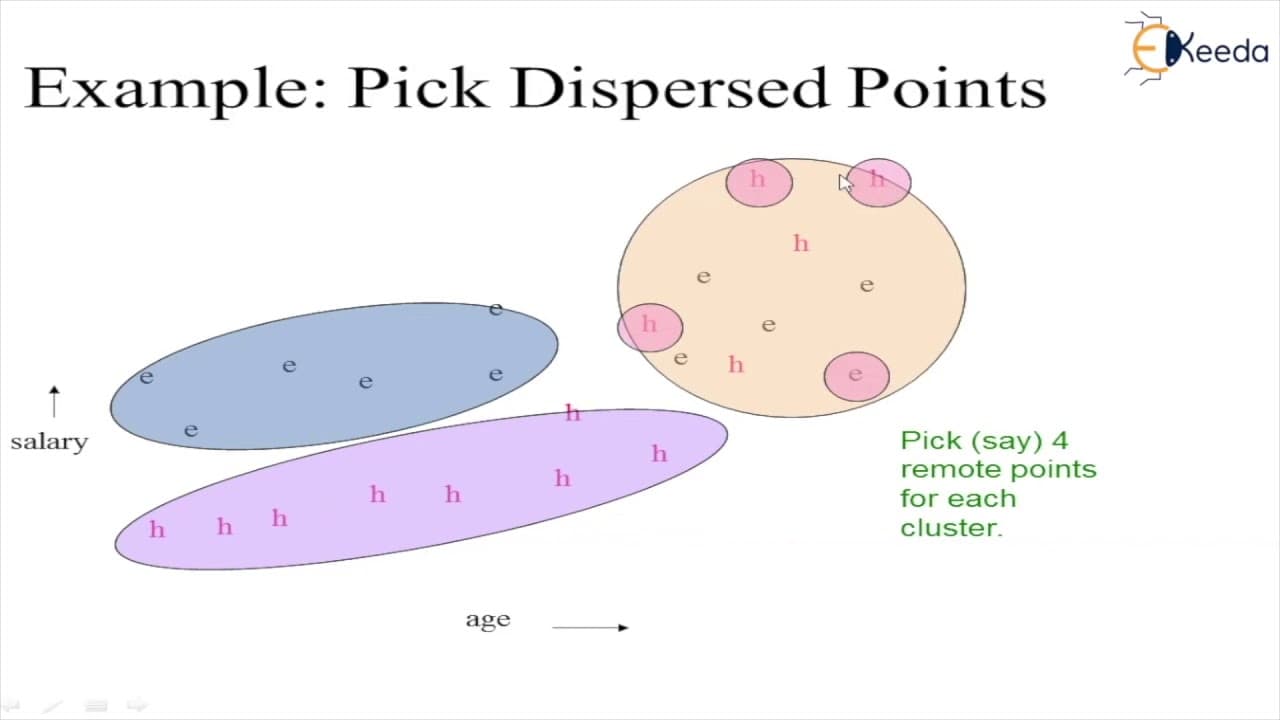
The QR algorithm is a robust clustering method that can handle complex shapes and varying sizes, outperforming traditional algorithms like BFR and K-means. It operates in two passes: first selecting representative points from the dataset, and then moving these points toward the cluster centroid while assigning data points to their closest representative. This approach effectively manages outliers and noise.
Transcript
hello students we will be studying the qr algorithm in this topic we'll understand what is cure algorithm what is the need of it of all we understand what is my clustering definition of clustering is clustering is the task of grouping a state of object in such a way that objects in the same group are more similar to each other than those in the oth... Read More
Key Insights
- 👻 QR algorithm allows for clusters of any shape, addressing the limitations of other clustering algorithms like BFR and K-means.
- 😥 The algorithm consists of two passes: selecting representative points and moving them towards the centroid.
- 😥 QR algorithm handles outliers and noise by shrinking representative points towards the center of the cluster.
- 🍵 Unlike other clustering algorithms, QR algorithm can handle clusters with varying sizes and variances.
- 🚱 The algorithm is more robust, able to identify clusters with non-spherical shapes and sizes.
- 😫 QR algorithm is a useful tool for analyzing data sets with complex clusters, such as salary distribution among different employee types.
- 🍵 The algorithm has theoretical limitations in handling clusters with different densities.
Install to Summarize YouTube Videos and Get Transcripts
Explore YouTube Video Summarizer or Get YouTube Transcript Extractor
Questions & Answers
Q: What is the main problem with BFR and K-means clustering algorithms?
BFR and K-means algorithms can only create circular or elliptical clusters, limiting their ability to handle complex shapes.
Q: How does the QR algorithm address the problem of complex shapes?
The QR algorithm allows clusters of any shape by using representative points to represent the clusters, providing more flexibility.
Q: How does the QR algorithm handle outliers and noise?
By shrinking representative points towards the center of the cluster, the QR algorithm is more robust to outliers and can automatically remove noise.
Q: What are the limitations of the QR algorithm?
The QR algorithm cannot handle clusters with different densities, as it requires similar densities within the clusters.
Summary & Key Takeaways
-
The QR algorithm is a clustering algorithm that allows for clusters with complex shapes, unlike other algorithms like BFR and K-means.
-
In the first pass, random samples are selected as representatives and clusters are initialized.
-
In the second pass, representatives are moved towards the centroid, and all data points are assigned to the closest representative cluster.
Read in Other Languages (beta)
Share This Summary 📚
Summarize YouTube Videos and Get Video Transcripts with 1-Click
Try YouTube Summary with ChatGPT & Claude or YouTube Transcript Generator
Explore More Summaries from Ekeeda 📚

Summarize YouTube Videos and Get Video Transcripts with 1-Click
Try YouTube Summary with ChatGPT & Claude or YouTube Transcript Generator