How Will Voice-First Apps Transform Technology in 2024?
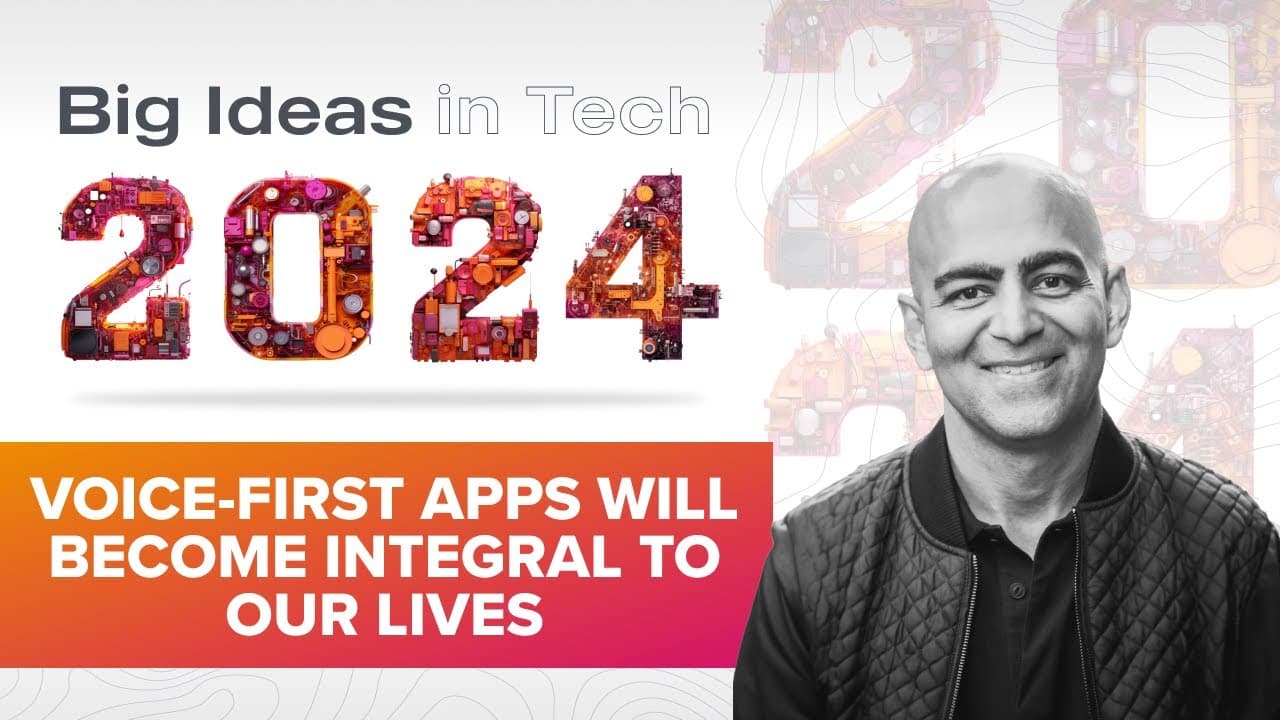
TL;DR
Voice-first applications are set to revolutionize how we interact with technology, leveraging advancements in AI to enable more natural and flexible user experiences. Current productivity app providers may not fully embrace this shift, presenting opportunities for new entrants in the market. Notable examples of emerging voice-first apps include Tab and ChatGPT's voice interface, showcasing the potential for innovative solutions.
Transcript
Precision delivery of medicine entertainment franchise games absolutely exploding small modul reactors and the nuclear Renaissance plus AI moving into very complex workflows now these were just a few of the major Tech innovations that Partners at a16z predicted last year and our partners are back we just dropped our list of over 40 plus big ideas f... Read More
Key Insights
- 🌥️ Voice interaction with technology is becoming more viable with advancements in AI and large models.
- 😀 Existing productivity app providers may not prioritize voice-first experiences, creating opportunities for new players in the market.
- 😀 Voice-first apps like Tab and ChatGPT's voice module are already being developed.
Install to Summarize YouTube Videos and Get Transcripts
Explore YouTube Video Summarizer or Get YouTube Transcript Extractor
Questions & Answers
Q: Why has voice interaction with technology been limited in the past?
The old technology architecture did not allow for high fidelity interactions, limiting voice-based systems to basic logic trees. AI advancements have now enabled more flexible and sophisticated voice interactions.
Q: Are existing productivity app providers likely to prioritize voice-first experiences?
It's less likely that incumbents like Gmail will prioritize voice-first experiences, as it requires rethinking the entire user experience from the ground up.
Q: What are some examples of voice-first apps currently being developed?
Apps like Tab, which captures conversations and allows users to interact with the captured context, and ChatGPT's voice module are examples of voice-first apps currently being built.
Q: What are the challenges of adopting voice-first technology?
Customers need to be trained on how to interact with voice-based systems, and there may be social patterns that need to change for voice interactions to become widely accepted.
Summary & Key Takeaways
-
Voice interaction with technology has traditionally been limited due to inflexible systems.
-
Advances in AI and large models now enable more flexible and sophisticated voice interactions with technology.
-
Existing productivity app providers may not prioritize voice-first experiences, creating opportunities for new players in the market.
Read in Other Languages (beta)
Share This Summary 📚
Summarize YouTube Videos and Get Video Transcripts with 1-Click
Try YouTube Summary with ChatGPT & Claude or YouTube Transcript Generator
Explore More Summaries from a16z 📚






Summarize YouTube Videos and Get Video Transcripts with 1-Click
Try YouTube Summary with ChatGPT & Claude or YouTube Transcript Generator