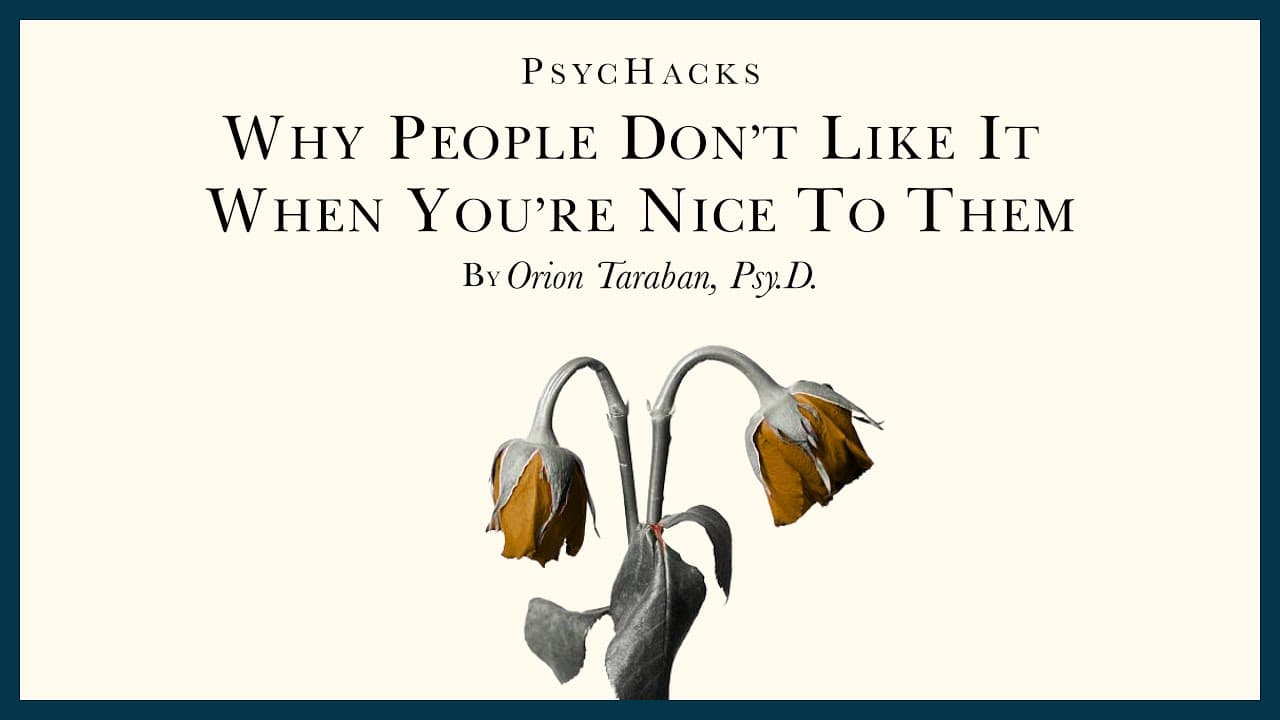
Why people DON'T LIKE IT when you are NICE to them: mind the gap in your attraction
TL;DR
People may not like it when you're nice to them because it can disrupt the balance of attraction and create discomfort.
Transcript
I'm Dr Orion taraban and this is cycax Better Living Through psychology and the topic of today's short talk is why people don't like it when you're nice to them chances are you have experienced this phenomenon yourself there's somebody that you like there's somebody that you admire you want to show your affection you want to give them a token of yo... Read More
Key Insights
- 👯 Different people have different preferences in relationships, including the role they prefer and the size of the attraction gap.
- 🥺 Non-reciprocal situations can increase the gap in attraction, leading to discomfort.
- 💁 Negative responses to niceness can be a form of communication to recalibrate the balance of attraction.
- 🏆 Being willing to give anonymously may test the true intentions behind your niceness.
- 🧑 It is important to consider the other person's preferences and adjust your behavior accordingly.
- 😥 Complaining about people not liking your niceness misses the point of their feedback.
- 🤳 Seeking recognition for your kindness doesn't make you a bad person, but acknowledging this can prevent self-deception.
Install to Summarize YouTube Videos and Get Transcripts
Explore YouTube Video Summarizer or Get YouTube Transcript Extractor
Questions & Answers
Q: Why do some people not like it when you're nice to them?
Some individuals may prefer a more equal balance of attraction in relationships and feel uncomfortable when the gap becomes too large.
Q: Can non-reciprocal situations increase the gap in attraction?
Yes, when you show affection or give gifts without receiving any in return, it can widen the gap in attraction and make people uncomfortable.
Q: Why do people respond negatively to niceness?
Their negative response is a way to communicate that the increasing gap in attraction is making them uncomfortable and they want you to like them less.
Q: Is it bad to only want to be nice to someone?
While wanting to be nice is not inherently bad, it can be selfish if you prioritize your preference for the imbalance of attraction over the other person's preferences.
Key Insights:
- Different people have different preferences in relationships, including the role they prefer and the size of the attraction gap.
- Non-reciprocal situations can increase the gap in attraction, leading to discomfort.
- Negative responses to niceness can be a form of communication to recalibrate the balance of attraction.
- Being willing to give anonymously may test the true intentions behind your niceness.
- It is important to consider the other person's preferences and adjust your behavior accordingly.
- Complaining about people not liking your niceness misses the point of their feedback.
- Seeking recognition for your kindness doesn't make you a bad person, but acknowledging this can prevent self-deception.
- Being genuinely selfless in giving without expecting appreciation or reward can lead to virtue.
Summary & Key Takeaways
-
People have different preferences when it comes to the role they prefer in relationships and the size of the gap they want between partners.
-
When you demonstrate affection or appreciation without reciprocation, it can increase the gap in attraction and make people uncomfortable.
-
People may respond negatively to your niceness as a way to communicate that the balance of attraction is becoming too large for their tastes.
Read in Other Languages (beta)
Share This Summary 📚
Summarize YouTube Videos and Get Video Transcripts with 1-Click
Try YouTube Summary with ChatGPT & Claude or YouTube Transcript Generator
Explore More Summaries from PsycHacks 📚



Summarize YouTube Videos and Get Video Transcripts with 1-Click
Try YouTube Summary with ChatGPT & Claude or YouTube Transcript Generator