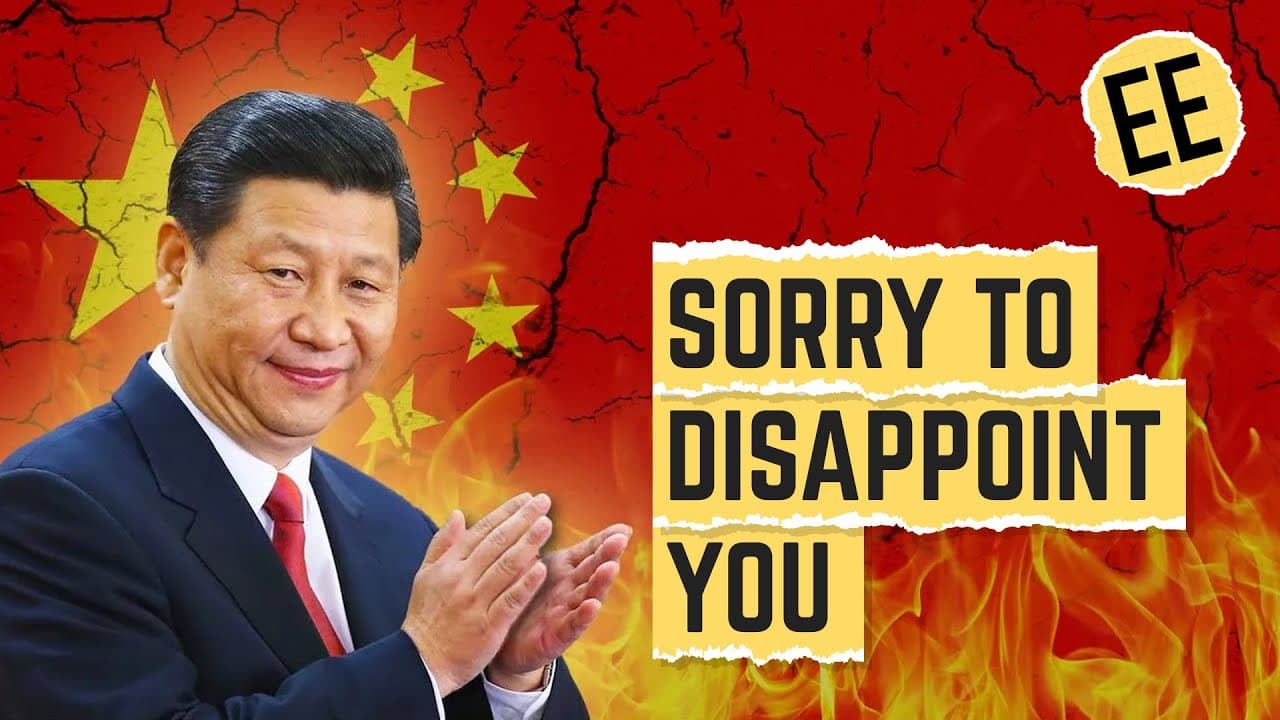
No. China Is Not Going To Collapse... Yet
TL;DR
China's collapse is unlikely despite facing significant economic challenges.
Transcript
- [Narrator] China has not been having a good year. Between extended lockdowns, real estate market collapses, banking crises, trade wars, food insecurity, and an unusually high level of civil unrest, it's starting to look like the once invincible CCP is forming cracks. Look, I know it's fun to speculate the demise of a regime that has done some ter... Read More
Key Insights
- China faces multiple economic challenges including real estate market issues, banking crises, and trade wars, but a total collapse is unlikely.
- The Chinese government has significant control over its economy and can use foreign currency reserves to prevent bank runs and manage inflation.
- China's rapid growth has led to vulnerabilities in its real estate market, which constitutes 30% of its GDP, posing risks to financial stability.
- While China's manufacturing competitiveness is declining due to rising labor costs, it still maintains advantages in technical agglomeration and skilled workforce.
- The Belt and Road Initiative has led to loan defaults, impacting China's international economic influence and financial returns.
- China's political system, with its authoritarian control, reduces the likelihood of civil unrest leading to regime change.
- A slowdown in China's economy could provide an opportunity to shift focus from real estate to high-tech industries and value-added sectors.
- Comparisons to Japan's economic stagnation may not fully apply to China due to differences in wealth distribution and political structure.
Install to Summarize YouTube Videos and Get Transcripts
Explore YouTube Video Summarizer or Get YouTube Transcript Extractor
Questions & Answers
Q: What are the main economic challenges China is facing?
China is facing a series of economic challenges, including a real estate market bubble, banking crises, trade wars, and food insecurity. Additionally, the country is dealing with extended lockdowns, industrial slowdowns, and environmental issues like heatwaves and droughts. These factors collectively strain the Chinese economy.
Q: How does China's political system impact its economic stability?
China's authoritarian political system allows for significant government control over economic matters, which can help stabilize the economy in times of crisis. However, this system also limits public dissent and can lead to corruption, which may undermine long-term economic stability. The lack of democratic processes reduces the likelihood of regime change through civil unrest.
Q: Why is a total collapse of China's economy considered unlikely?
A total collapse of China's economy is considered unlikely due to the government's control over economic policies and its substantial foreign currency reserves. These reserves enable China to manage bank runs and inflation effectively. Additionally, the authoritarian regime's control limits the potential for widespread civil unrest that could lead to a collapse.
Q: What role does the Belt and Road Initiative play in China's economy?
The Belt and Road Initiative is a significant part of China's strategy to extend its economic influence by funding infrastructure projects in developing countries. However, it has led to financial strains due to loan defaults, impacting China's returns on investment and international economic influence. Despite these challenges, it continues to be a tool for economic expansion.
Q: How does the real estate market affect China's economic outlook?
China's real estate market is a major component of its economy, contributing about 30% of GDP. The market's over-reliance on speculative growth poses risks to financial stability, as seen in the ongoing housing crisis. A collapse in this sector could have widespread repercussions, but government intervention may mitigate the immediate impact.
Q: What are the potential benefits of a slowdown in China's economy?
A slowdown in China's economy could provide an opportunity to restructure and diversify away from over-reliance on real estate and manufacturing. By focusing on high-tech industries, research and development, and value-added sectors, China could create a more sustainable economic model and improve long-term growth prospects.
Q: How does China's economic situation compare to Japan's past stagnation?
While there are parallels between China's current economic situation and Japan's past stagnation, such as an over-inflated housing market and aging population, China's lower GDP per capita and different political structure present unique challenges. China's authoritarian regime and ongoing corruption issues differentiate its potential outcomes from Japan's experience.
Q: Why is the narrative of China's imminent collapse popular in media?
The narrative of China's imminent collapse is popular due to sensationalist media coverage and clickbait tactics. These stories attract attention and views but often oversimplify complex economic realities. While China faces significant challenges, the likelihood of an outright collapse is low, and such narratives may not accurately reflect the situation.
Summary & Key Takeaways
-
China is currently facing a range of economic difficulties, including a real estate bubble, banking crises, and trade issues. Despite these challenges, a total economic collapse is unlikely due to the government's control and resources. The situation highlights the need for economic restructuring.
-
The Chinese economy's reliance on real estate and manufacturing is becoming problematic as costs rise and competitiveness declines. The government may need to pivot towards more sustainable, value-added industries to maintain growth and stability.
-
While there are fears of a collapse, China's strong foreign currency reserves and government control over the economy provide a buffer against immediate threats. However, long-term challenges such as an aging population and corruption remain significant concerns.
Read in Other Languages (beta)
Share This Summary 📚
Summarize YouTube Videos and Get Video Transcripts with 1-Click
Try YouTube Summary with ChatGPT & Claude or YouTube Transcript Generator
Explore More Summaries from Economics Explained 📚



Summarize YouTube Videos and Get Video Transcripts with 1-Click
Try YouTube Summary with ChatGPT & Claude or YouTube Transcript Generator