What Are Stop and Stop-Limit Orders in Trading?
TL;DR
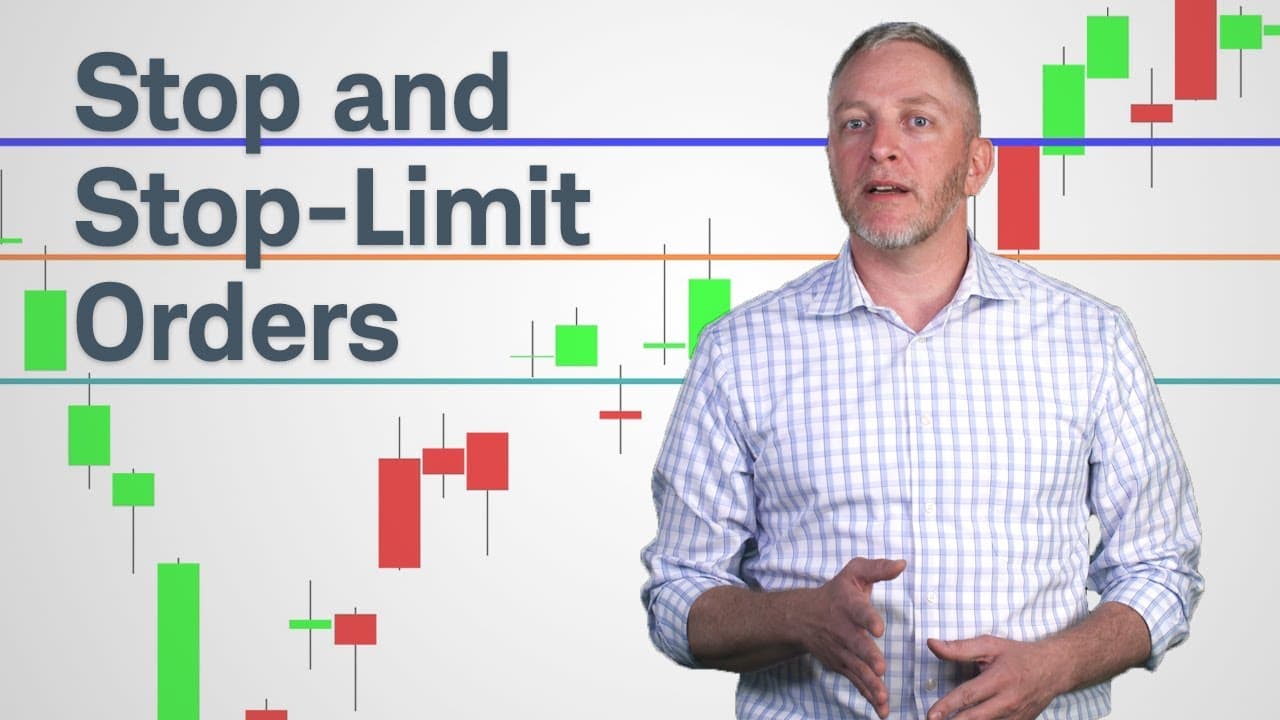
Stop orders execute market sell orders when a stock price falls to a specified level, allowing quick exits from trades. In contrast, stop-limit orders provide control by setting a minimum acceptable selling price, but they may result in holding shares if the limit isn't met. Choose stop orders for guaranteed execution and stop-limit orders for price control.
Transcript
Stop and stop-limit orders are both tools traders use to manage risk, but they're not the same. Let's look at how they work and explore why you would use each of them. A sell stop order is set at a specific price, below the last trade price. If the stock falls to or below this price, it triggers a market sell order. Widely recognized as the quickes... Read More
Key Insights
- ✋ Stop orders are efficient for quickly exiting trades, but they do not guarantee the desired selling price.
- ⛔ Stop-limit orders provide more control over the price but may result in shares not being sold if the price stays below the limit.
- ✋ Market conditions and volatility should be considered when deciding between stop and stop-limit orders.
- ✋ Stop orders are filled at the next available price, which can be advantageous or disadvantageous depending on the market situation.
- ⛔ Stop-limit orders can help protect against unexpected price gaps, but they also run the risk of leaving shares unsold if the price does not reach the limit.
- ✋ Traders should consider their risk tolerance and market expectations when choosing between stop and stop-limit orders.
- ✋ Stop orders are recommended when certainty of execution is more important than the exact selling price.
Install to Summarize YouTube Videos and Get Transcripts
Explore YouTube Video Summarizer or Get YouTube Transcript Extractor
Questions & Answers
Q: What is the main difference between stop orders and stop-limit orders?
The key difference is that stop orders execute a market sell order once a specific price is reached, while stop-limit orders include a limit price, specifying the minimum selling price the trader is willing to accept.
Q: Can stop orders protect traders from price gaps during market hours?
No, stop orders do not protect traders from price gaps. If there is a substantial price gap, the sell order may be executed at a significantly different price than anticipated.
Q: Under what circumstances would it make sense to use a stop order?
Stop orders are recommended when exiting a trade quickly is a priority, and the exact price at which the order executes is less significant. They provide protection during regular market hours but may result in a larger-than-anticipated loss in volatile markets.
Q: When should traders consider using a stop-limit order?
Traders should use stop-limit orders when they want control over the selling price and are willing to hold onto the shares if the desired price is not met. This provides the opportunity for more precise execution but may result in holding onto shares if the price continues to fall.
Summary & Key Takeaways
-
Stop orders are triggered when a stock falls to or below a specific price, immediately executing a market sell order.
-
Stop-limit orders are similar to stop orders but include a limit price, allowing traders to specify the lowest price they are willing to accept.
-
Stop orders prioritize quick execution, while stop-limit orders allow for more control over the sell price but may result in shares being held if the desired price is not met.
Read in Other Languages (beta)
Share This Summary 📚
Summarize YouTube Videos and Get Video Transcripts with 1-Click
Try YouTube Summary with ChatGPT & Claude or YouTube Transcript Generator
Explore More Summaries from Charles Schwab 📚


Summarize YouTube Videos and Get Video Transcripts with 1-Click
Try YouTube Summary with ChatGPT & Claude or YouTube Transcript Generator