Is Fukushima's Radioactive Water Safe?
TL;DR
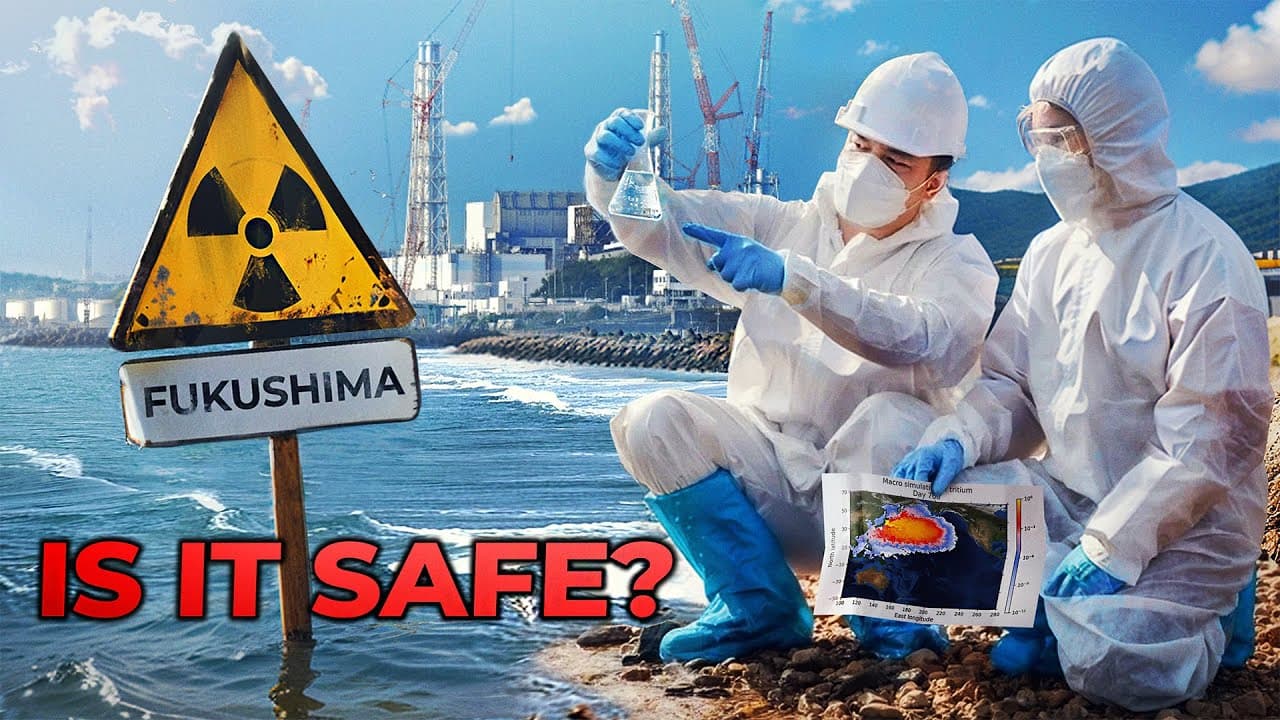
Ten years after the Fukushima nuclear disaster, Japan approved a plan to release stored radioactive water back into the ocean, sparking concerns about safety and misleading risk communication.
Transcript
on March 11 2011 a tsunami resulting from a magnitude 9.1 earthquake pummeled the Japanese coastline within a single day Millions would be without power over a hundred thousand buildings would be destroyed and over 19 000 people would be missing or dead it was the single greatest loss of life Japan had suffered since nuclear bombs flattened Hiroshi... Read More
Key Insights
- 👹 The Fukushima nuclear disaster caused significant loss of life and devastation to the Japanese coastline.
- 🍉 The storage of radioactive water on-site at the Fukushima Daiichi plant is not a sustainable long-term solution.
- 🌊 The planned release of treated water into the ocean is controversial, with concerns about public perception, economic consequences, and potential environmental impacts.
- 🌱 Risk communication surrounding the plan has been deemed confusing and misleading.
- 😘 Tritium, the main contaminant in the water, is relatively harmless in low concentrations, but concerns about its release remain.
- 🌊 Dilution in the vastness of the ocean is the key factor in ensuring the safety of the released water.
- 🇨🇫 The complex interplay between government regulation, corporate interests, nuclear physics, and public perception contributes to the challenges of managing the Fukushima disaster.
Install to Summarize YouTube Videos and Get Transcripts
Explore YouTube Video Summarizer or Get YouTube Transcript Extractor
Questions & Answers
Q: What caused the Fukushima nuclear disaster?
The Fukushima nuclear disaster was caused by a tsunami resulting from a magnitude 9.1 earthquake, which damaged the Fukushima Daiichi nuclear power plant and led to the release of radioactive water.
Q: Why is there a need to release the stored radioactive water?
The storage tanks at the Fukushima Daiichi plant are running out of space, and building more storage is not a long-term solution. Releasing the treated water is seen as the most viable option.
Q: What is the main contaminant in the water?
The main contaminant is tritium, a hydrogen atom with two extra neutrons. In low concentrations, tritium is relatively harmless, but concerns about its release into the ocean have been raised.
Q: What are the potential consequences of releasing the water?
China has imposed a ban on all Japanese seafood due to concerns about the released water. Environmentalist groups have also raised concerns about the plan, questioning the concentration of tritium and its potential impact on marine life.
Summary & Key Takeaways
-
In 2011, a tsunami caused a nuclear disaster in Fukushima, Japan, resulting in the release of radioactive water. This water has been stored on site for the past decade.
-
Due to the limited storage capacity and risks associated with continued storage, a plan has been proposed to release the treated water into the ocean.
-
The main contaminant in the water is tritium, which is relatively harmless in low concentrations. However, concerns about misleading risk communication and potential economic and environmental consequences have arisen.
Read in Other Languages (beta)
Share This Summary 📚
Summarize YouTube Videos and Get Video Transcripts with 1-Click
Try YouTube Summary with ChatGPT & Claude or YouTube Transcript Generator
Explore More Summaries from Kyle Hill 📚




![🔴 Viral "Hanger Reflex" Explained! | [OFFICE HOURS] Podcast 090 thumbnail](/_next/image?url=https%3A%2F%2Fi.ytimg.com%2Fvi%2F-GQPNu0erKc%2Fhqdefault.jpg&w=750&q=75)

Summarize YouTube Videos and Get Video Transcripts with 1-Click
Try YouTube Summary with ChatGPT & Claude or YouTube Transcript Generator