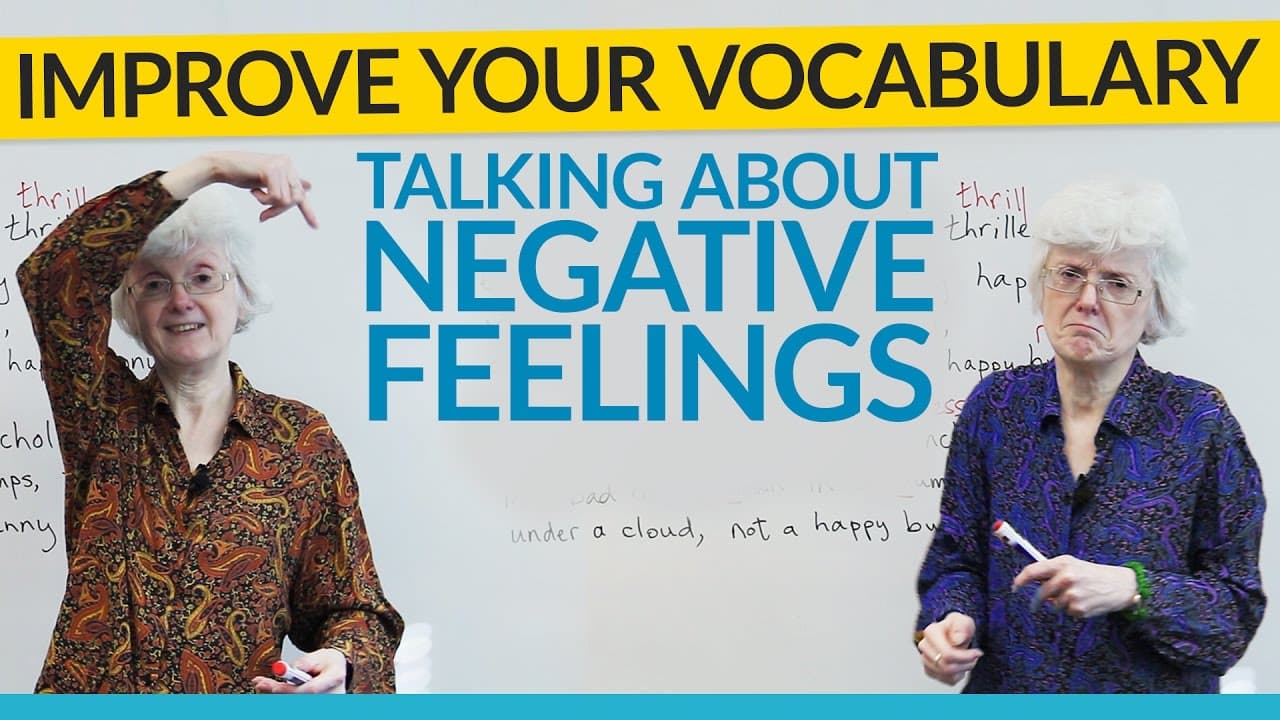
Vocabulary to talk about your feelings in English: anger, fear, and confusion
TL;DR
Learn words to express anger, fear, and confusion for better communication and self-awareness.
Transcript
Hi. I'm Gill from engVid and today in this lesson we're going to be looking at some moods, emotions, feelings, and state of mind which means what your... What state your head is in. Okay? Whether it's good or bad. But in this lesson it's all the not so good examples. In fact, we're looking at three areas of feelings: Anger, fear, and confusion. So ... Read More
Key Insights
- 😑 Expressing emotions accurately requires a diverse vocabulary to convey nuances effectively.
- 🤳 Discussing negative feelings with others can aid in self-understanding and emotional processing.
- 😨 Colloquial words like "mad" and "scared" offer casual ways to express anger and fear in conversations.
- ❓ Extreme emotions like fury and being terrified signify intense emotional reactions to specific triggers.
- 🍧 Having a clear understanding of emotions improves communication and interpersonal relationships.
- 😘 Idiomatic expressions like "blowing your top" and "losing your temper" convey extreme anger in English.
- 🤭 Timid and timid people are described as quiet and shy, avoiding confrontations due to fear or hesitation.
Install to Summarize YouTube Videos and Get Transcripts
Explore YouTube Video Summarizer or Get YouTube Transcript Extractor
Questions & Answers
Q: Why is it important to have a wide range of vocabulary for expressing emotions?
Having a diverse vocabulary helps in accurately communicating your feelings and understanding yourself better in various situations, enhancing communication skills.
Q: How can discussing negative emotions with a friend be beneficial?
Talking about negative emotions with a good listener friend can help you process and understand your feelings, leading to better self-awareness and emotional well-being.
Q: What are some colloquial words for expressing anger?
Colloquial words like "mad", "irritable", and "prickly" can be used to convey anger informally in everyday conversations.
Q: How do extreme emotions like fury and being terrified differ from everyday anger and fear?
Extreme emotions like fury and being terrified signify a heightened state of anger and fear, indicating a more intense emotional reaction to specific situations.
Summary & Key Takeaways
-
Explore words to describe emotions like anger, fear, and confusion in English.
-
Enhance your vocabulary for better communication and self-expression.
-
Understand the nuances of words like "angry", "scared", and "confused" for everyday interactions.
Read in Other Languages (beta)
Share This Summary 📚
Summarize YouTube Videos and Get Video Transcripts with 1-Click
Try YouTube Summary with ChatGPT & Claude or YouTube Transcript Generator
Explore More Summaries from Learn English with Gill · engVid 📚





Summarize YouTube Videos and Get Video Transcripts with 1-Click
Try YouTube Summary with ChatGPT & Claude or YouTube Transcript Generator