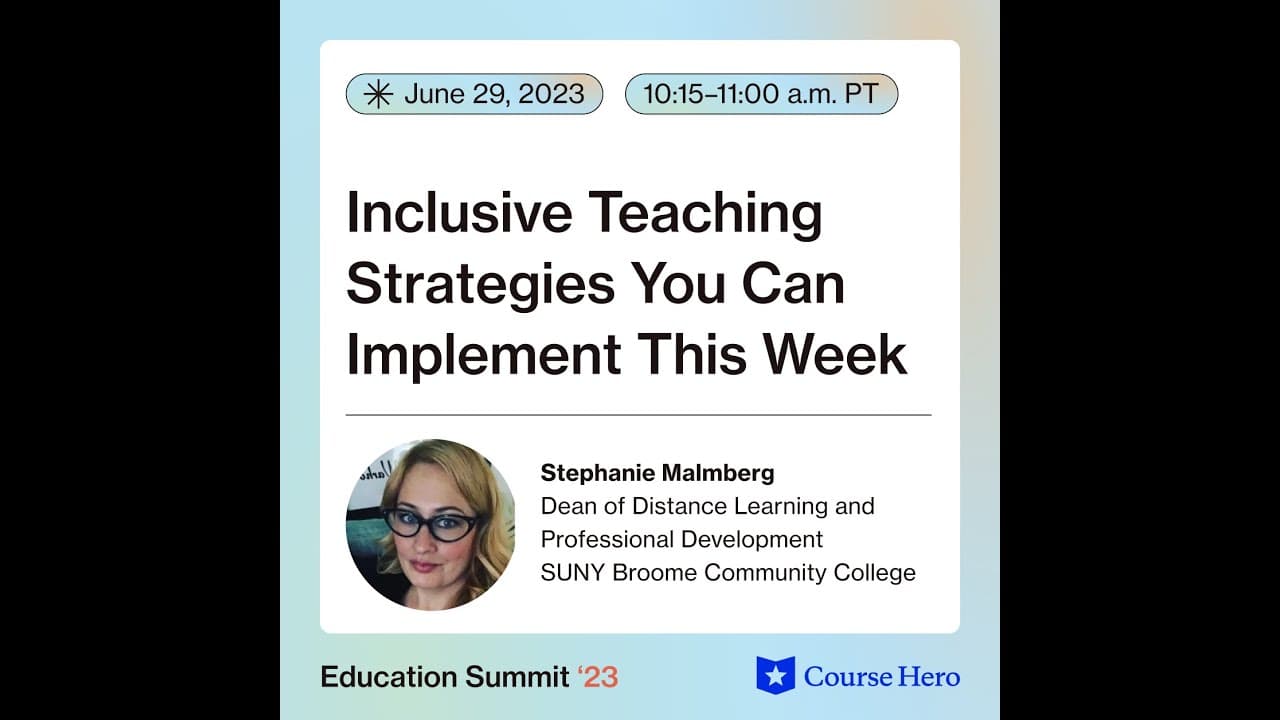
Inclusive Teaching Strategies You Can Implement This Week
TL;DR
Workshop on implementing inclusive teaching strategies, focusing on structural equity and cultural competence.
Transcript
[Applause] all right hello everyone I'm so excited to welcome you all today hope everyone has enjoyed the summit so far my name is Maya Tobias and I am the manager of Partnerships and strategic marketing here at course hero and I'm very excited to welcome you to this session called inclusive teaching strategies you can implement this week which wil... Read More
Key Insights
- 🫡 Inclusive teaching is a deliberate mindset requiring cultural competence, respect, and preparation to create equitable learning environments.
- 🤩 Addressing unintentional harm, fostering inclusive dialogues, and integrating diverse student experiences are key components of effective inclusive teaching.
- 👥 Structured environments, small group interactions, and gentle correction of biases contribute to an inclusive classroom culture.
- 🧑🎓 Learning from students, embracing diverse viewpoints, and providing opportunities for personal connections enrich the inclusive teaching experience.
- ✊ Incorporating intentional language, inclusive activities, and empowering narratives help students challenge power structures and empower marginalized communities.
- 💍 Collaboration, continuous learning, and engaging with diverse perspectives are vital for creating inclusive, equitable learning environments.
- 🧑⚕️ Utilizing scholars' works, facilitating respectful dialogues, and centering marginalized voices enhance understanding of health disparities and structural inequities in educational settings.
Install to Summarize YouTube Videos and Get Transcripts
Explore YouTube Video Summarizer or Get YouTube Transcript Extractor
Questions & Answers
Q: How does Stephanie Malmberg address unintentional harm in the classroom?
Stephanie addresses unintentional harm by immediately intervening, providing context, and refocusing on course content while modeling respectful language and behavior.
Q: What are some examples of intentional learning activities on power and oppression in Stephanie's courses?
Intentional activities include discussions on structural inequities, exploring social privilege, identifying bias, and facilitating critical dialogues.
Q: How does Stephanie foster an inclusive classroom for students with differing perspectives and experiences?
Stephanie creates a safe space for diverse student voices by respecting individual identities, promoting respectful conversations, and providing activities that honor varied viewpoints.
Q: How does Stephanie introduce health disparities to students in public health courses?
Stephanie suggests utilizing works from scholars like Linda Villarosa, centering on empowering narratives, addressing structural inequities, and promoting self-advocacy within marginalized communities.
Summary & Key Takeaways
-
Stephanie Malmberg shares her journey in inclusive teaching grounded in critical race theory, emphasizing understanding whiteness in classroom environments.
-
Teaching for racial equity, structured learning environments, and small group strategies are key components of inclusive teaching.
-
Addressing harm immediately, fostering inclusive dialogue, and integrating student experiences enrich the learning environment.
Read in Other Languages (beta)
Share This Summary 📚
Summarize YouTube Videos and Get Video Transcripts with 1-Click
Try YouTube Summary with ChatGPT & Claude or YouTube Transcript Generator
Explore More Summaries from Course Hero 📚




Summarize YouTube Videos and Get Video Transcripts with 1-Click
Try YouTube Summary with ChatGPT & Claude or YouTube Transcript Generator