Input approach to determining comparative advantage | AP Macroeconomics | Khan Academy
TL;DR
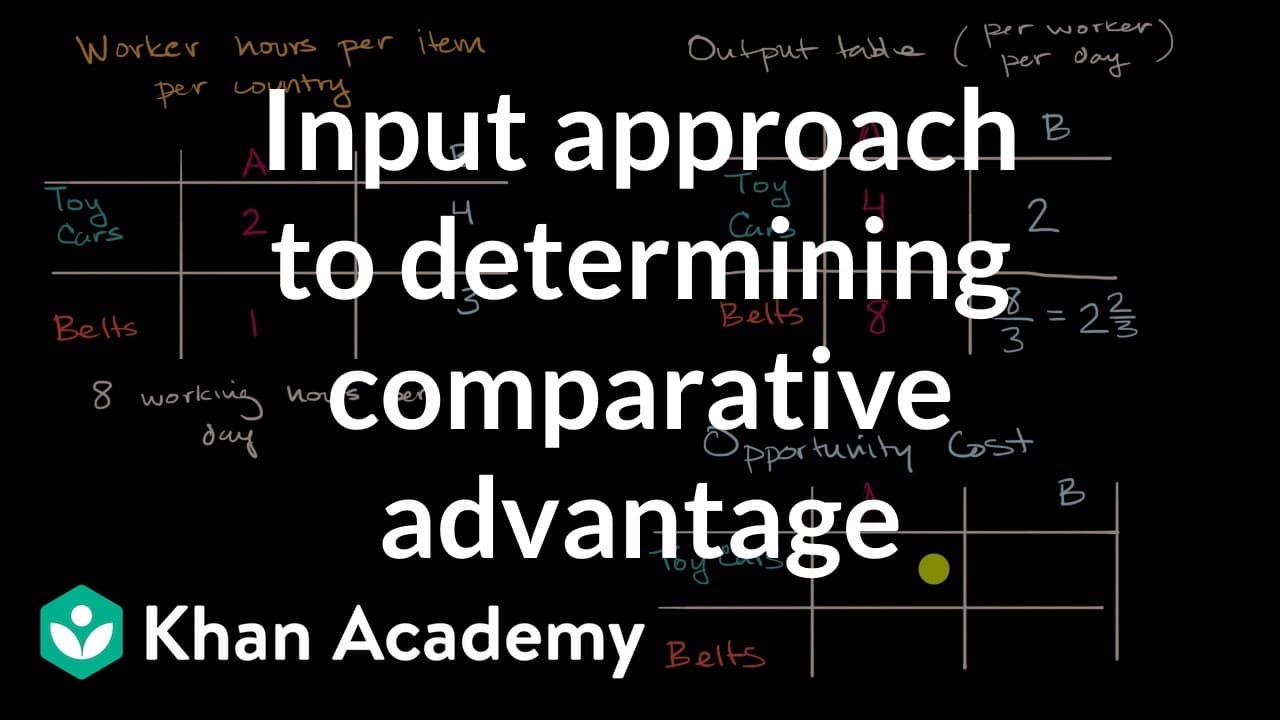
This video explains the concept of comparative advantage and opportunity cost by using input and output tables to determine the number of units that can be produced per day in two different countries.
Transcript
- [Instructor] In other videos we have already looked at production possibility curves and output tables in order to calculate opportunity costs of producing a certain product in a certain country. And then we used that to think about comparative advantage. We're going to do something very similar in this video, but instead of thinking about, or in... Read More
Key Insights
- 🔢 Input tables show the number of worker hours required to produce an item, while output tables show the number of units that can be produced per worker per day.
- 🧑⚕️ The opportunity cost is calculated by comparing the number of units that can be produced in different countries for the same amount of energy or worker hours.
- 🉐 Comparative advantage is determined by comparing the opportunity costs, and the country with the lower opportunity cost has the comparative advantage.
- ✋ Even if a country has a higher absolute efficiency in producing a certain item, it may still have a higher opportunity cost and therefore not have the comparative advantage in that item.
Install to Summarize YouTube Videos and Get Transcripts
Explore YouTube Video Summarizer or Get YouTube Transcript Extractor
Questions & Answers
Q: What is the difference between an input table and an output table?
An input table shows the number of worker hours required to produce an item, while an output table shows the number of units that can be produced per worker per day in each country.
Q: How is the opportunity cost calculated?
The opportunity cost is calculated by comparing the number of units that can be produced in one country with the number of units that could be produced of a different item in the same country.
Q: Why does country B have the comparative advantage in toy cars?
Country B has a lower opportunity cost for producing toy cars, as it can produce 1 1/3 belts for the same amount of energy required to produce 2 cars, while country A can only produce 2 belts for the same amount of energy.
Q: Despite having a lower absolute efficiency, why does country A have the comparative advantage in belts?
Country A has a lower opportunity cost for producing belts, as it can produce 1/2 a car for the same amount of energy required to produce a single belt, while country B can only produce 3/4 of a car for the same amount of energy.
Summary & Key Takeaways
-
The video introduces the concept of input tables, which show the number of worker hours required to produce a certain item in each country.
-
These input tables are then converted into output tables, which show the number of units that can be produced per worker per day in each country.
-
The video explains how to calculate the opportunity cost by comparing the number of units that can be produced in different countries, and which country has a comparative advantage in producing each item.
Read in Other Languages (beta)
Share This Summary 📚
Summarize YouTube Videos and Get Video Transcripts with 1-Click
Try YouTube Summary with ChatGPT & Claude or YouTube Transcript Generator
Explore More Summaries from Khan Academy 📚



Summarize YouTube Videos and Get Video Transcripts with 1-Click
Try YouTube Summary with ChatGPT & Claude or YouTube Transcript Generator