What Are the Key Parameters of Surface Roughness?
TL;DR
The key parameters of surface roughness include the 10-point height average value, root mean square value, and center line average value. These numerical values are essential for measuring surface roughness and determining whether components meet functional requirements. The center line average (Ra) is particularly recognized as a standard for surface texture comparison across various countries.
Transcript
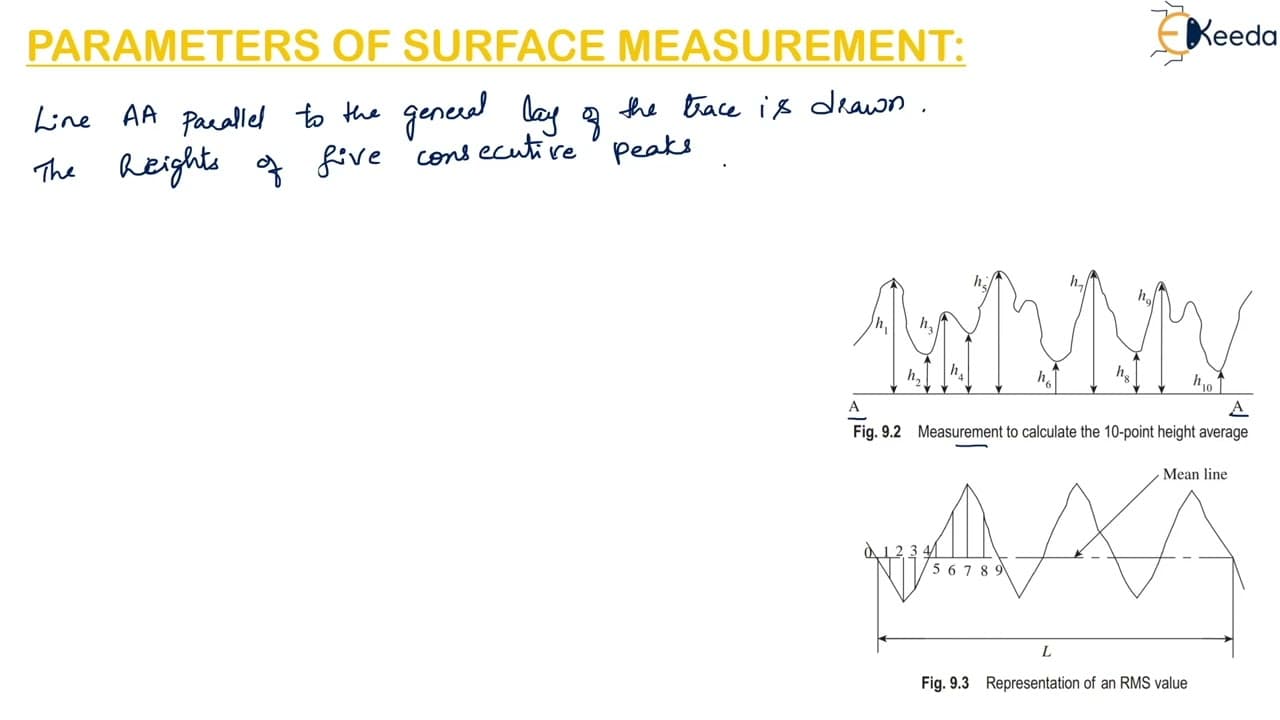
hello students today we will discuss the topic parameters of surface measurement or parameters of surface roughness so it is required to assign numerical values to surface roughness so as to measure its degree so numerical values must be given for surface roughness so as to know its degree so by this analysis we will be able to understand whether t... Read More
Key Insights
- ⚾ Numerical values are crucial for measuring and analyzing surface roughness based on functional requirements.
- 🫥 The parameters of surface roughness include the 10-point height average value, root mean square value, and center line average value.
- 😥 The 10-point height average value provides an average height considering successive peaks and valleys of asperities.
- ❎ The root mean square value quantifies surface roughness by calculating the square root of the mean of squares of the ordinates.
- 🫥 The center line average value is a prevalent standard for measuring surface roughness and is widely used in various countries.
- 🫥 The center line average value, or R a, is an index for surface texture comparison, but it is not a dimension.
- 👻 Assigning numerical values allows for effective comparison and analysis of surface roughness.
Install to Summarize YouTube Videos and Get Transcripts
Explore YouTube Video Summarizer or Get YouTube Transcript Extractor
Questions & Answers
Q: Why is it necessary to assign numerical values to surface roughness?
Assigning numerical values to surface roughness allows for measurement and analysis of the degree of roughness and whether it meets functional requirements.
Q: What is the 10-point height average value and how is it calculated?
The 10-point height average value, also known as peak to valley height, measures the average height consisting of successive peaks and valleys of the asperities. It can be calculated by considering the heights of five consecutive peaks and valleys from a line drawn parallel to the general lay of the trace.
Q: What is the root mean square value and how is it defined?
The root mean square value quantifies surface roughness by calculating the square root of the mean of squares of the ordinates measured from a mean line. It is represented as the square root of the sum of squares of the ordinates divided by the number of ordinates.
Q: What is the center line average value and its significance?
The center line average value, also known as R a, is a prevalent standard for measuring surface roughness. It is defined as the average height from a mean line of all the ordinates of the surface, regardless of their sign. It is widely used in countries like the USA, Canada, Switzerland, and the Netherlands as a standard for surface roughness measurement.
Summary & Key Takeaways
-
Surface roughness requires numerical values to measure its degree and analyze if it meets functional requirements.
-
The parameters of surface roughness include the 10-point height average value, root mean square value, and center line average value.
-
The 10-point height average value measures the average height consisting of successive peaks and valleys of the asperities.
Read in Other Languages (beta)
Share This Summary 📚
Summarize YouTube Videos and Get Video Transcripts with 1-Click
Try YouTube Summary with ChatGPT & Claude or YouTube Transcript Generator
Explore More Summaries from Ekeeda 📚




Summarize YouTube Videos and Get Video Transcripts with 1-Click
Try YouTube Summary with ChatGPT & Claude or YouTube Transcript Generator