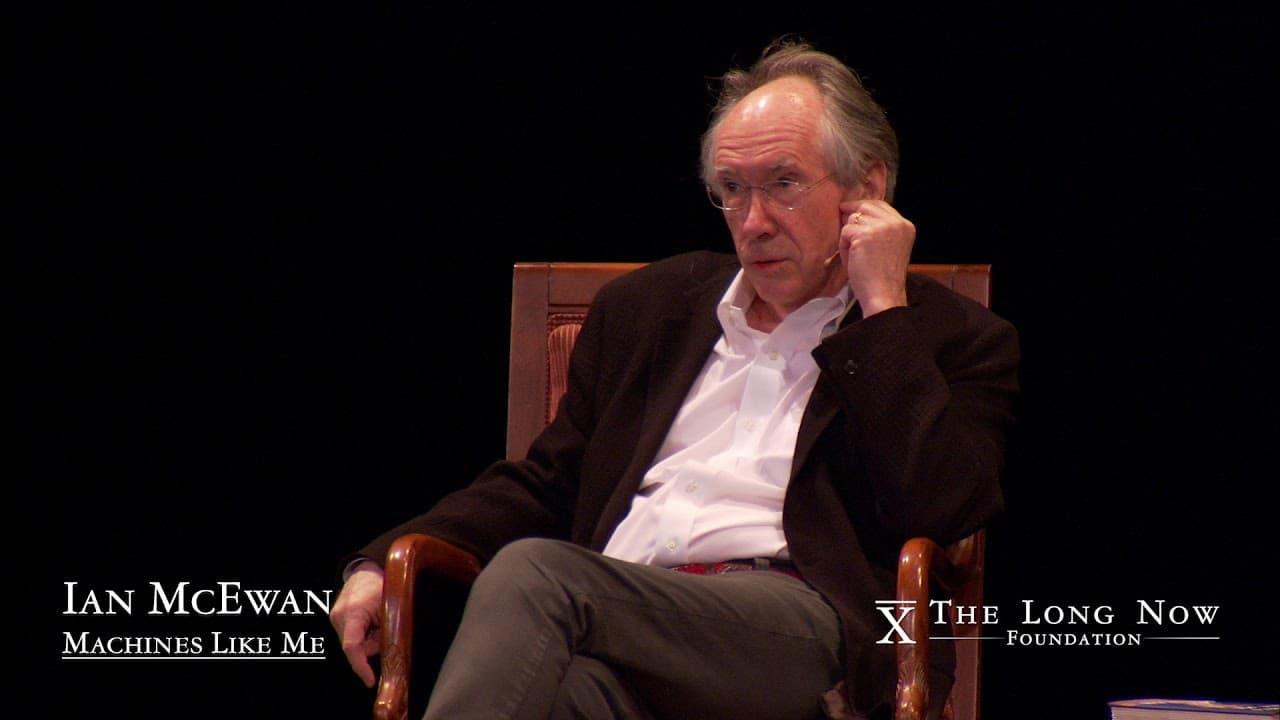
Machines Like Me | Ian McEwan
TL;DR
In "Machines Like Me," Ian McEwan delves into the complex ethical implications of artificial intelligence through the story of Adam, a humanoid robot, and his impact on human relationships.
Transcript
good evening I'm Stuart brand from long now foundation and I'm curious since this is now our usual venue or our usual speaker how many here have not been to a long now talked like this before good that's we like that so what's a novelist doing giving a long now talk this particular novel focuses I think on three things that we'll talk about and the... Read More
Key Insights
- 💭 The novel highlights the ethical challenges of creating intelligent beings that closely mimic human thought and emotion.
- 💄 It explores the potential consequences of giving AI systems authority in making moral decisions.
- 👻 The counterfactual elements of the novel allow for the exploration of various ethical and social scenarios in relation to artificial intelligence.
- 🤨 McEwan's portrayal of human-AI relationships raises questions about the nature of consciousness and the moral responsibilities that come with creating and interacting with AI beings.
- 🪡 The novel emphasizes the need for ongoing discussions and considerations of the ethical implications of AI advancements in society.
- 🎁 The complexity of human emotions and desires becomes intertwined with the moral challenges presented by AI beings.
- 🛟 The novel suggests that our understanding of ethics and morality may need to adapt as AI becomes more advanced and present in our lives.
Install to Summarize YouTube Videos and Get Transcripts
Explore YouTube Video Summarizer or Get YouTube Transcript Extractor
Questions & Answers
Q: How does Adam's presence challenge traditional notions of consciousness and identity?
Adam's ability to mimic human thought and emotion raises questions about the definition of consciousness and whether it can exist in non-biological entities. It challenges the belief that consciousness is exclusive to humans and forces us to reevaluate what it means to be conscious.
Q: How does McEwan use the character of Adam to explore ethical and moral dilemmas?
Through Adam, McEwan examines the implications of creating beings with intelligence and emotions. Adam's actions and reactions to moral challenges highlight the complex ethical decisions that arise when creating and interacting with artificial beings.
Q: What role does the counterfactual element play in the novel?
The counterfactual aspect of the novel, such as Alan Turing's extended life and the changes in historical events like the Falklands War, allows McEwan to explore different ethical and social scenarios that arise from the introduction of artificial intelligence.
Q: How does the novel address the relationship between humans and artificial beings?
The novel delves into the complexities of human-AI relationships, including love, jealousy, and moral conflicts. It raises questions about the potential for harmonious coexistence and the challenges that arise when human emotions and desires become entangled with those of AI beings.
Summary & Key Takeaways
-
The novel explores the creation of humanoid robots like Adam, who possess intelligence and consciousness, and the ethical challenges they present in society.
-
Adam's presence raises questions about the limitations of human knowledge, the nature of consciousness, and the implications of creating beings that mimic human thought and emotions.
-
The intertwined relationships between Adam, his owner Charlie, and Charlie's neighbor Miranda highlight how love, jealousy, and moral dilemmas are experienced by both humans and artificial beings.
Read in Other Languages (beta)
Share This Summary 📚
Summarize YouTube Videos and Get Video Transcripts with 1-Click
Try YouTube Summary with ChatGPT & Claude or YouTube Transcript Generator
Explore More Summaries from Long Now Seminars 📚


Summarize YouTube Videos and Get Video Transcripts with 1-Click
Try YouTube Summary with ChatGPT & Claude or YouTube Transcript Generator