The Declaration of Independence | Period 3: 1754-1800 | AP US History | Khan Academy
TL;DR
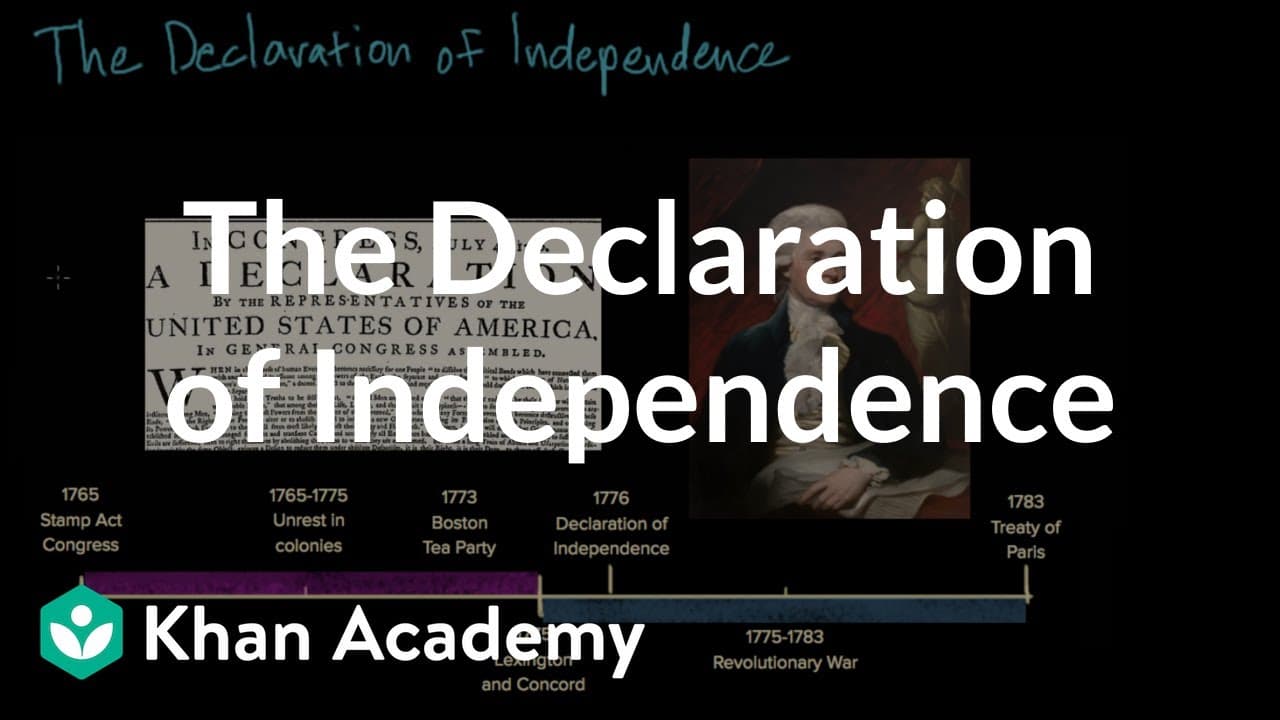
This video explores the origins and effects of the Declaration of Independence, highlighting Thomas Jefferson's ideas and the influence of the Enlightenment.
Transcript
- [Kim] On July fourth, 1776, the delegates to the Second Continental Congress approved the Declaration of Independence. We know parts of it very well. For example, "We hold these truths to be self-evident," "that all men are created equal." The Declaration of Independence was really the point of no return for the young United States of America, ma... Read More
Key Insights
- 🇺🇸 The Declaration of Independence was a crucial moment in the United States' journey towards independence.
- 🌍 The Revolutionary War had already begun when the declaration was made, but it served as a justification for seeking international support.
- 🗯️ Thomas Jefferson's ideas in the declaration were influenced by the Enlightenment, particularly John Locke's concepts of natural rights and the social contract.
Install to Summarize YouTube Videos and Get Transcripts
Explore YouTube Video Summarizer or Get YouTube Transcript Extractor
Questions & Answers
Q: Why did the delegates choose to make the Declaration of Independence in 1776?
The delegates wanted international support, especially from France, as they knew they couldn't win a war against Great Britain without assistance.
Q: How did the Enlightenment influence Thomas Jefferson's ideas in the Declaration of Independence?
Jefferson adopted the Enlightenment notion of natural rights, considering all men equal and endowed with rights like life, liberty, and the pursuit of happiness. He also emphasized the importance of consent of the governed in creating just governments.
Q: Did the Declaration of Independence abolish slavery in the United States?
No, it did not. Despite Jefferson's words, he himself owned enslaved people. The contradiction between the ideal of equality and the reality of slavery remained a contentious issue.
Q: How did the Declaration of Independence inspire other movements for independence and civil rights?
The Declaration's rhetoric and ideals influenced movements like the French Revolution and the first women's rights movement in Seneca Falls, New York, in 1848.
Summary & Key Takeaways
-
The Declaration of Independence marked the point of no return for the young United States, declaring their independence from the British Empire.
-
The Revolutionary War had already begun before the declaration was made, but the delegates saw it as an opportunity to gain international support, particularly from France.
-
Thomas Jefferson drew inspiration from the Enlightenment, specifically philosopher John Locke, who emphasized natural rights and the social contract.
Read in Other Languages (beta)
Share This Summary 📚
Summarize YouTube Videos and Get Video Transcripts with 1-Click
Try YouTube Summary with ChatGPT & Claude or YouTube Transcript Generator
Explore More Summaries from Khan Academy 📚



Summarize YouTube Videos and Get Video Transcripts with 1-Click
Try YouTube Summary with ChatGPT & Claude or YouTube Transcript Generator