How oysters can stop a flood
TL;DR
Oysters can protect coastlines from erosion and improve marine ecosystems.
Transcript
When you picture New York City, there are so many iconic things that come to mind. But, before the yellow cabs and hot dog stands, New York was known for something else: Oysters. From the 1600s through the 1800s, New York was booming with them. And it was oysters, not hotdogs, sold streetside by the millions. Oyster reefs covered over 220,000 acre... Read More
Key Insights
- Oysters were once abundant in New York City, serving as a staple food item before being overharvested, leading to a significant decline in their population.
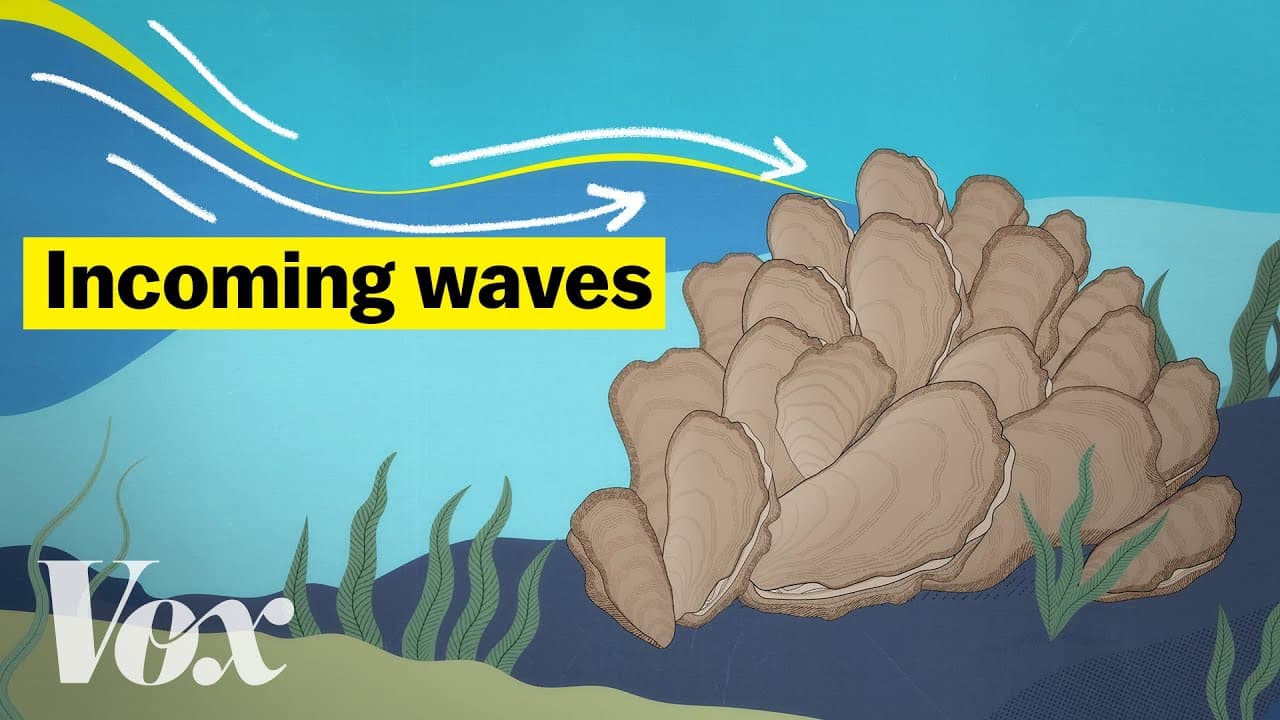
- Oyster reefs play a crucial role in coastal protection by dampening wave energy, which helps to reduce shoreline erosion and protect coastal communities.
- Unlike man-made structures, oyster reefs grow over time, adapting to rising sea levels and providing long-term protection against coastal erosion.
- Oysters are natural water filters, each capable of filtering up to 50 gallons of water daily, improving water quality and promoting the growth of marine life.
- Restoration efforts are underway globally, using recycled shells and concrete barriers to help oyster spat attach and grow, thereby rebuilding oyster reefs.
- Oyster reefs provide essential habitats for diverse marine species, similar to coral reefs, supporting biodiversity and enhancing ecosystem resilience.
- The goal of oyster restoration is not to recreate past ecosystems but to harness their multiple benefits for modern environmental challenges.
- Oyster restoration projects offer a hopeful and achievable path towards mitigating the impacts of climate change on coastal areas.
Install to Summarize YouTube Videos and Get Transcripts
Explore YouTube Video Summarizer or Get YouTube Transcript Extractor
Questions & Answers
Q: How did oysters historically impact New York City?
Historically, oysters were abundant in New York City, serving as a popular street food from the 1600s to the 1800s. They were so prevalent that oyster reefs covered over 220,000 acres along the coastline. However, overharvesting nearly led to their extinction, significantly impacting the city's marine ecosystem and economy.
Q: What role do oyster reefs play in coastal protection?
Oyster reefs play a critical role in coastal protection by dampening the force of incoming waves. They act as natural breakwaters, reducing wave energy and helping to prevent shoreline erosion. As the reefs grow over time, they adapt to rising sea levels, offering scalable and sustainable protection against coastal erosion.
Q: How do oysters improve water quality?
Oysters improve water quality through their natural filtration process. Each oyster can filter up to 50 gallons of water daily, removing algae, nitrogen, and other contaminants. This filtration enhances water clarity, promoting the growth of sea grasses and providing a healthier environment for marine life.
Q: What are some methods used in oyster restoration projects?
Oyster restoration projects use various methods to rebuild reefs. In New York, organizations place recycled shells in cages for oyster spat to attach and grow. In other regions, large concrete barriers are used as substrates. These methods provide surfaces for oysters to colonize, facilitating reef growth and ecosystem restoration.
Q: Why are oyster reefs compared to coral reefs?
Oyster reefs are compared to coral reefs because they provide similar ecological functions. Both serve as habitats for diverse marine species, supporting biodiversity. They also act as natural barriers against waves, protecting coastlines. Additionally, like coral reefs, oyster reefs are integral to the health and resilience of marine ecosystems.
Q: What challenges do oyster restoration projects face?
Oyster restoration projects face challenges such as finding suitable substrates for oyster spat to attach and grow. Industrialized regions like New York City require innovative solutions to support reef growth. Additionally, restoration efforts must balance ecological goals with societal needs, such as reducing wave impacts and improving water quality.
Q: What are the broader environmental benefits of oyster restoration?
Beyond coastal protection, oyster restoration offers broader environmental benefits. Oysters improve water quality, support marine biodiversity, and enhance ecosystem resilience. They contribute to carbon sequestration and nutrient cycling, helping to mitigate climate change impacts. Restoration projects also provide opportunities for community engagement and education.
Q: How does oyster restoration contribute to climate change resilience?
Oyster restoration contributes to climate change resilience by providing natural barriers against rising sea levels and storm surges. As reefs grow, they adapt to environmental changes, offering scalable protection. Additionally, oysters enhance marine biodiversity and water quality, creating healthier ecosystems better equipped to withstand climate-related challenges.
Summary & Key Takeaways
-
Oysters were once a staple in New York City, but overharvesting led to their decline. Efforts are now underway to restore oyster reefs, which can protect coastlines from erosion and improve water quality.
-
Oyster reefs act as natural breakwaters, reducing wave energy and helping to prevent shoreline erosion. Unlike man-made structures, they grow over time, adapting to rising sea levels and offering long-term protection.
-
Oysters filter water, improving clarity and promoting marine life growth. Restoration projects across the globe aim to rebuild oyster reefs, providing habitats for marine species and enhancing ecosystem resilience.
Read in Other Languages (beta)
Share This Summary 📚
Summarize YouTube Videos and Get Video Transcripts with 1-Click
Try YouTube Summary with ChatGPT & Claude or YouTube Transcript Generator
Explore More Summaries from Vox 📚




Summarize YouTube Videos and Get Video Transcripts with 1-Click
Try YouTube Summary with ChatGPT & Claude or YouTube Transcript Generator