Global renewables: Pioneering the energy transition | DW Documentary
TL;DR
Cities are implementing sustainable energy solutions to address climate challenges and resource demands.
Transcript
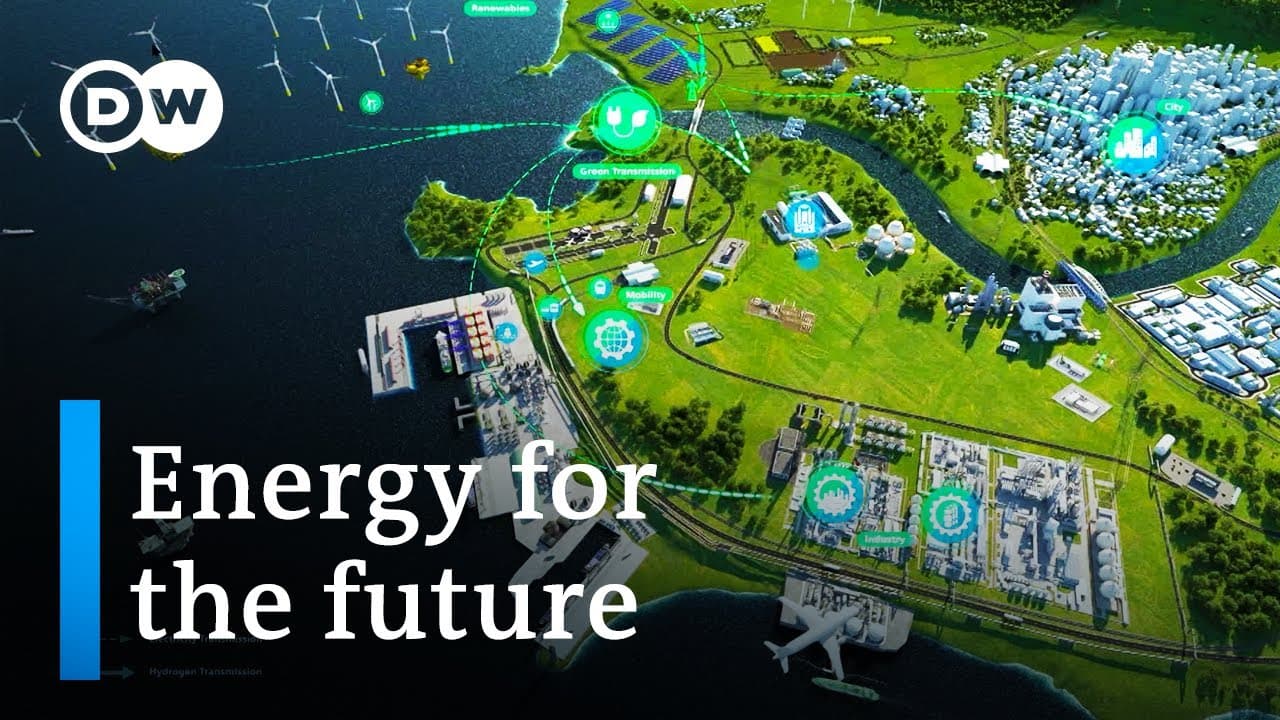
More than 50% of the world’s population live in urban areas. By 2050, it could be nearly seventy percent. Big cities have big needs when it comes to water, food, and energy. This heavy demand on resources poses daunting challenges to researchers in a world grappling with climate change. Those cities and towns will need large amounts of energy. Revo... Read More
Key Insights
- 👳 Urban areas must rapidly adapt to sustainable practices due to increasing populations and climate demands.
- 🏙️ Cities like Lancaster and Wunsiedel demonstrate the effectiveness of local resource utilization within circular economies for energy transition.
- 🏛️ In Copenhagen and Oslo, innovations in building energy efficiency showcase the importance of integrating sustainable design from project inception.
- 💚 Hydrogen can emerge as a crucial energy carrier, supporting a transition towards a greener economy while also providing storage solutions for renewable energy sources.
- 😮 The rise of smart grids and interconnected energy systems, particularly in the North Sea region, enhances energy security and promotes collaboration among countries.
- 🖐️ The construction industry plays a vital role in reducing carbon emissions; emphasizing reuse and recycling of materials can mitigate waste and enhance sustainability.
- 😒 Technological advancements in energy harnessing and storage, such as artificial photosynthesis, potentially revolutionize how we generate and use energy sustainably.
Install to Summarize YouTube Videos and Get Transcripts
Explore YouTube Video Summarizer or Get YouTube Transcript Extractor
Questions & Answers
Q: Why is urban sustainability increasingly important for cities worldwide?
As urban populations continue to grow—projected to reach nearly 70% by 2050—cities face skyrocketing demands for resources like water, food, and energy. Climate change exacerbates these challenges, pushing cities to adopt sustainable practices. Urban sustainability is critical for reducing greenhouse gas emissions, conserving resources, and ensuring resilience against climate-related impacts, making it a priority for city planners and policymakers.
Q: How has Lancaster, California, set an example for sustainable energy?
Lancaster embarked on a mission in 2009 to become a carbon-neutral city, introducing innovative policies to speed up the installation of solar panels. Reducing the permitting process from six months to just 45 minutes encouraged residents to adopt renewable energy. Consequently, the city saw financial savings, which reinvested into expanding its solar infrastructure, creating substantial economic opportunities and reducing unemployment rates significantly.
Q: What role does hydrogen play in the new energy economy?
Hydrogen holds potential as a versatile energy carrier and storage medium in the green energy transition. It can be produced through electrolysis using renewable electricity and can replace conventional fossil fuels in various industries. Its ability to serve as a clean fuel, particularly in sectors where direct electrification is impractical, positions hydrogen as a key component in achieving carbon neutrality and sustainable energy systems.
Q: What challenges do cities face in transitioning to sustainable energy systems?
Cities encounter challenges such as outdated infrastructure, regulatory bottlenecks, and the need to foster political and cultural shifts toward sustainability. Securing funding, aligning stakeholder interests, and coordinating efforts across multiple sectors also play significant roles. Overcoming these hurdles requires collaborative approaches, innovative solutions, and commitment from both governmental and private sectors to ensure a successful transition.
Summary & Key Takeaways
-
More than half of the world's population resides in urban areas, increasing demand for sustainable energy, food, and water, especially in light of climate change.
-
Lancaster, California, and Wunsiedel, Germany, serve as successful examples, having transformed their energy systems through local resources and circular economies, drastically reducing unemployment and enhancing profitability.
-
Projects in Copenhagen and Oslo showcase innovations in energy use and construction practices, pushing towards carbon neutrality and promoting circular economies for efficient resource management.
Read in Other Languages (beta)
Share This Summary 📚
Summarize YouTube Videos and Get Video Transcripts with 1-Click
Try YouTube Summary with ChatGPT & Claude or YouTube Transcript Generator
Explore More Summaries from DW Documentary 📚

Summarize YouTube Videos and Get Video Transcripts with 1-Click
Try YouTube Summary with ChatGPT & Claude or YouTube Transcript Generator