Is prosperity without economic growth possible? | DW Documentary
TL;DR
Exploring if sustainable prosperity is achievable without economic growth.
Transcript
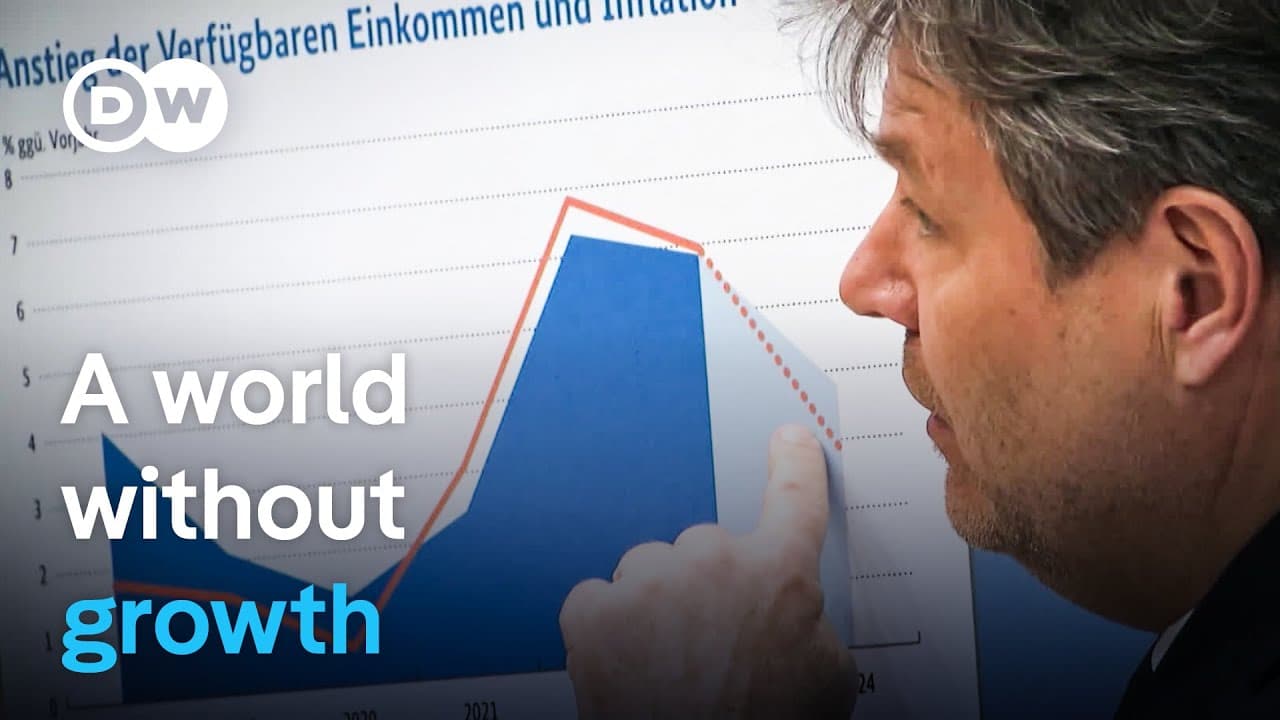
Hard-working hands, non-stop production lines. The economy should be booming, according to German lore. A growing economy means growing prosperity – the foundation on which Germany was built. I believe economic growth is essential to safeguard our prosperity. But now, Germany isn’t doing well – billions of Euros in debt. The economy: lackluster. 20... Read More
Key Insights
- Germany's economy faces challenges with negative growth, raising questions about the necessity of economic expansion for prosperity.
- Climate change and social issues are intertwined, with protests highlighting the need for sustainable solutions.
- Some businesses, like the restaurant Klinker, prioritize sustainability and work-life balance over traditional growth metrics.
- Critics argue that green growth is insufficient for climate goals, advocating for degrowth to reduce environmental impact.
- Iceland's Wellbeing Economy model focuses on quality of life and environmental factors, not just economic growth.
- The debate continues on whether economic growth can coexist with effective climate protection and sustainability.
- Technological advancements and green energy are viewed as essential for achieving sustainable economic growth.
- Personal and systemic changes are necessary for a sustainable future, but achieving consensus remains a challenge.
Install to Summarize YouTube Videos and Get Transcripts
Explore YouTube Video Summarizer or Get YouTube Transcript Extractor
Questions & Answers
Q: What challenges does Germany's economy face?
Germany's economy is experiencing negative growth, with a contraction of 0.3% in 2023. This raises questions about the traditional link between economic growth and prosperity. The country also faces significant debt, high energy costs, and social issues, which complicate the path to sustainable development.
Q: How do businesses like Klinker restaurant approach growth?
Klinker restaurant prioritizes sustainability and work-life balance over traditional growth metrics. The owners have chosen to close on weekends, reducing stress and turnover. They focus on fair wages, organic ingredients, and preserving regional produce, demonstrating that prosperity can be redefined beyond economic expansion.
Q: What is the argument for degrowth?
Proponents of degrowth argue that green growth is insufficient to meet climate goals. They believe that economic expansion is incompatible with environmental sustainability and advocate for reducing energy-intensive sectors. By focusing on reducing consumption and emissions, they aim to create a sustainable future for the planet.
Q: How does Iceland's Wellbeing Economy differ from traditional models?
Iceland's Wellbeing Economy focuses on quality of life, environmental factors, and social well-being, rather than solely on economic growth. This model was introduced after the 2008 financial crisis and includes indicators like access to housing, gender equality, and environmental health, offering a holistic view of prosperity.
Q: Can economic growth coexist with climate protection?
The documentary presents differing views on this issue. Some believe that technological advancements and green energy can enable sustainable growth, while others argue that growth inherently leads to environmental degradation. Achieving a balance between economic expansion and climate protection remains a contentious topic.
Q: What role does technology play in sustainable growth?
Technology is seen as crucial for achieving sustainable economic growth. Innovations in clean energy and efficiency can reduce emissions and environmental impact, allowing for continued economic expansion. However, critics argue that relying solely on technology may not be sufficient to address the urgent climate crisis.
Q: How do personal and systemic changes contribute to sustainability?
Both personal and systemic changes are necessary for a sustainable future. Individuals can make choices that reduce their carbon footprint, while systemic changes in policy and industry are needed to create a supportive environment for sustainable practices. Achieving consensus on these changes is a significant challenge.
Q: What is the potential impact of Germany's economic decisions on the global stage?
Germany's economic decisions have global implications due to its significant economic influence. As a major exporter, its approach to balancing growth and sustainability could serve as a model for other countries. However, achieving this balance requires careful consideration of both domestic and international factors.
Summary & Key Takeaways
-
Germany's economic performance is under scrutiny as negative growth raises questions about the relationship between prosperity and expansion. The documentary explores whether a sustainable future is achievable without constant economic growth, considering climate change and social issues.
-
Businesses like Klinker restaurant demonstrate alternative approaches, prioritizing sustainability and work-life balance over traditional growth metrics. Critics, however, argue that green growth is insufficient for climate goals, advocating for a degrowth model to reduce environmental impact.
-
Iceland's Wellbeing Economy model offers a different perspective, focusing on quality of life and environmental factors. The debate continues on whether economic growth can coexist with effective climate protection, with technological advancements and green energy seen as essential for sustainable growth.
Read in Other Languages (beta)
Share This Summary 📚
Summarize YouTube Videos and Get Video Transcripts with 1-Click
Try YouTube Summary with ChatGPT & Claude or YouTube Transcript Generator
Explore More Summaries from DW Documentary 📚


Summarize YouTube Videos and Get Video Transcripts with 1-Click
Try YouTube Summary with ChatGPT & Claude or YouTube Transcript Generator