Essential Money Vocabulary and Phrases in Portuguese 🇵🇹
TL;DR
Learn essential Portuguese money terms and pronunciation tips.
Transcript
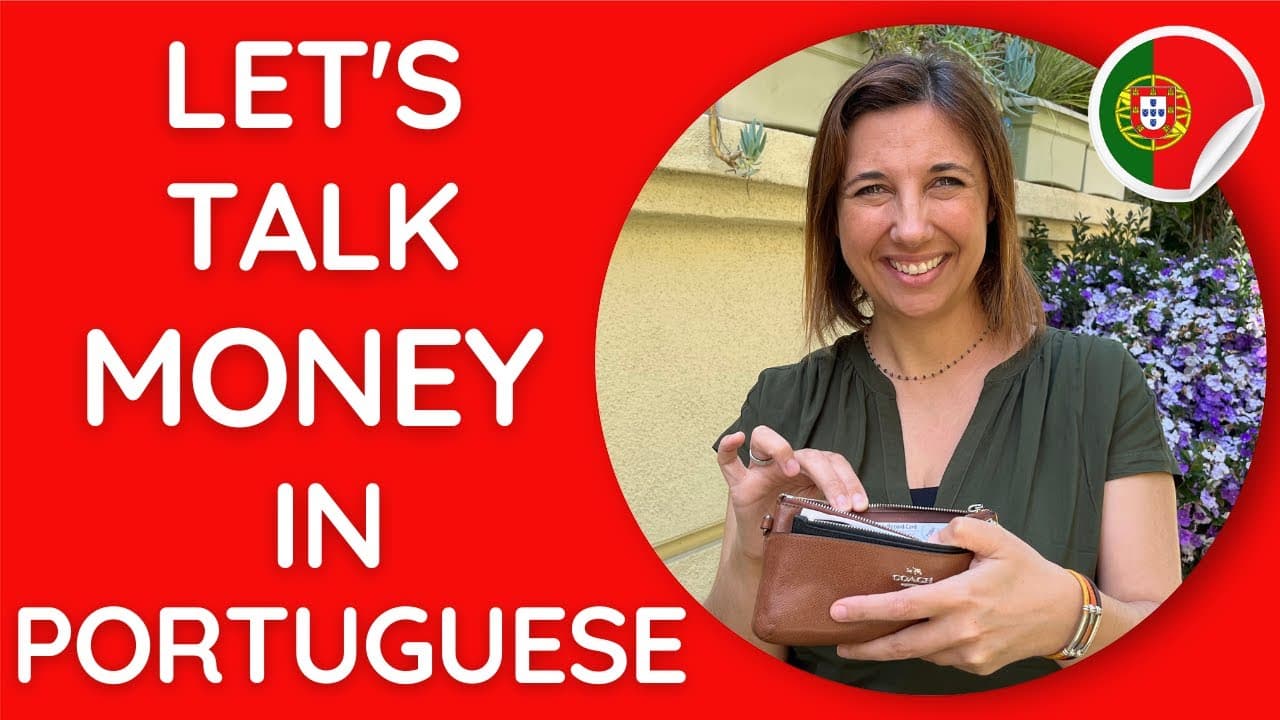
today we will be covering a useful Topic in Portuguese knowing how to refer to money is essential when visiting or living in Portugal and I want to help you learn the main vocabulary for prices and amounts useful expressions and practice pronunciation along the way remember to subscribe to my channel and if you enjoy my content don't also forget to... Read More
Key Insights
- Understanding Portuguese currency is crucial for visitors and residents, with the euro being the official currency since 2002.
- The transition from the escudo to the euro was challenging, with initial difficulties in price calculations and increased costs.
- Portuguese euro bills and coins have specific terms, and pronunciation can be tricky due to phonetic connections.
- Collector coins are occasionally issued in Portugal, with a recent example being a dinosaur-themed coin.
- Prices in Portugal are written with a comma separating euros from cents, and the euro symbol placement varies.
- For prices with 50 cents, the term 'meio' is often used, meaning half a euro, instead of saying fifty cents.
- Common Portuguese slang terms for money include 'grana' and 'trocado,' similar to 'bucks' in English.
- In Portugal, it's polite to apologize when using large bills for small purchases, as change may be limited.
Install to Summarize YouTube Videos and Get Transcripts
Explore YouTube Video Summarizer or Get YouTube Transcript Extractor
Questions & Answers
Q: What is the official currency in Portugal?
The official currency in Portugal is the euro, which has been in use since 2002. Prior to the euro, the escudo was used. The transition to the euro was initially challenging for many Portuguese people, as it required adjusting to new price calculations and resulted in increased costs for some items.
Q: How are prices written and read in Portuguese?
In Portuguese, prices are written with a comma separating euros from cents, unlike the period used in English. The euro symbol can appear before or after the digits. When reading prices, the word 'centimos' for cents can be omitted, and 'meio' is used for 50 cents, meaning half a euro.
Q: What are some common slang terms for money in Portuguese?
Common slang terms for money in Portuguese include 'grana,' 'trocado,' and 'dinheiro.' These terms are similar to English slang like 'bucks' or 'cash.' Understanding these informal expressions can be helpful for navigating everyday conversations about money in Portugal.
Q: What should you do if you only have a large bill for a small purchase in Portugal?
If you have a large bill for a small purchase, it's polite to apologize and explain that you don't have anything smaller. You can say 'Desculpe, não tenho trocado,' meaning 'Sorry, I don't have any change.' This shows consideration for the cashier, as they may have limited change available.
Q: How does pronunciation affect understanding prices in Portuguese?
Pronunciation can affect understanding prices due to phonetic connections in Portuguese. For example, the final 's' in 'dois' (two) connects with the 'e' in 'euros,' changing the sound to a 'z.' This can make it difficult to distinguish from similar sounds. Repeating the price slowly can help confirm it with the seller.
Q: What are some tips for using credit and debit cards in Portugal?
In Portugal, using a debit card is the most common form of payment. When using a credit card, you can say 'pagar com cartão de crédito.' It's important to note that some small establishments may prefer cash, so it's good to have some euros on hand for such situations.
Q: What is an example of a collector coin issued in Portugal?
An example of a collector coin issued in Portugal is the five-euro coin featuring a dinosaur species. This coin was released in limited quantities, with only 30,000 in circulation. Such collector coins are occasionally issued by countries in the Eurozone, adding unique designs to the standard currency.
Q: Why is it important to understand money vocabulary in Portuguese?
Understanding money vocabulary in Portuguese is crucial for effective communication during transactions, whether visiting or living in Portugal. It helps in reading prices, handling currency, and navigating cultural nuances in financial interactions. This knowledge enhances confidence and reduces misunderstandings in monetary dealings.
Summary & Key Takeaways
-
The video explores essential money-related vocabulary in Portuguese, focusing on currency, banknotes, coins, and pronunciation tips. It provides practical expressions and cultural insights for effective communication in monetary transactions.
-
Understanding the euro's history in Portugal, the video highlights the initial challenges faced during its introduction and the cultural nuances in handling money, including common slang terms and politeness in transactions.
-
The video offers practical advice on reading prices, handling change, and using credit or debit cards in Portugal, equipping viewers with the necessary skills to navigate money matters confidently in Portuguese.
Read in Other Languages (beta)
Share This Summary 📚
Summarize YouTube Videos and Get Video Transcripts with 1-Click
Try YouTube Summary with ChatGPT & Claude or YouTube Transcript Generator
Explore More Summaries from Learn European Portuguese Online 📚



Summarize YouTube Videos and Get Video Transcripts with 1-Click
Try YouTube Summary with ChatGPT & Claude or YouTube Transcript Generator