Microwave Isolators - Microwave Components - Microwave Communication
TL;DR
Microwave isolators are passive components that isolate microwave signals in one direction, preventing reflections and potential damage.
Transcript
click the bell icon to get latest videos from equator hello friends I welcome you all to this video we are with the 12th chapter of microwave engineering where the various kinds of the microwave passive components we have been addressing so far so microwave passive components we call because they are not generating any kind of the energy we have al... Read More
Key Insights
- ❓ Microwave isolators are passive components used to prevent reflections and protect devices from potential damage.
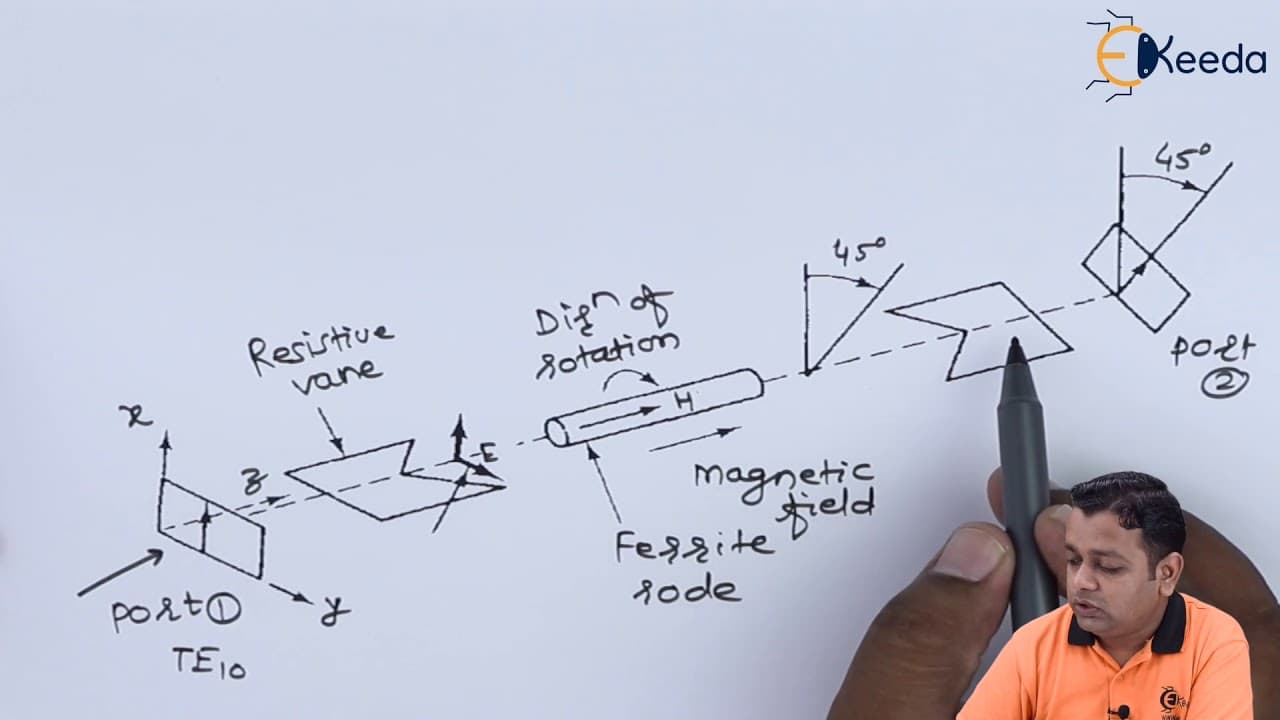
- 🚙 They consist of two ports, with one port allowing signal propagation and the other port completely blocking reflections.
- 👷 Ferrite materials and resistive elements are used in the construction of microwave isolators.
- 📡 Proper matching of impedances is crucial to minimize reflections and ensure efficient signal transmission.
- 🏆 Microwave isolators are commonly used in microwave test benches to protect devices and improve measurement accuracy.
- 🖐️ The orientation and alignment of the e-field vector play a significant role in the operation of microwave isolators.
- 😵 Microwave isolators can be constructed using different waveguide structures, including rectangular and circular cross-sections.
Install to Summarize YouTube Videos and Get Transcripts
Explore YouTube Video Summarizer or Get YouTube Transcript Extractor
Questions & Answers
Q: What is the purpose of a microwave isolator?
The main purpose of a microwave isolator is to prevent reflections of microwave signals and protect devices from potential damage.
Q: How does a microwave isolator block reflections?
Microwave isolators use ferrite materials and resistive elements to absorb or redirect reflections, ensuring that the microwave signal propagates in one direction without any reflections.
Q: How is the construction of a microwave isolator explained?
Microwave isolators consist of two ports, with one port allowing microwave signal propagation and the other port completely blocking reflections. They involve the use of ferrite materials, resistive elements, and waveguide structures.
Q: What are the dominant modes of propagation in microwave isolators?
The dominant modes of propagation in microwave isolators depend on the waveguide structure. For rectangular cross-sections, the dominant mode is TE10, while for circular cross-sections, the dominant mode is TE11.
Summary & Key Takeaways
-
Microwave isolators are passive components that divert or process microwave signals in order to prevent reflections and protect devices.
-
These isolators consist of two ports, with one port allowing microwave signal propagation and the other port completely blocking reflections.
-
The construction of microwave isolators involves the use of ferrite materials and resistive elements to absorb or redirect microwave signals.
Read in Other Languages (beta)
Share This Summary 📚
Summarize YouTube Videos and Get Video Transcripts with 1-Click
Try YouTube Summary with ChatGPT & Claude or YouTube Transcript Generator
Explore More Summaries from Ekeeda 📚






Summarize YouTube Videos and Get Video Transcripts with 1-Click
Try YouTube Summary with ChatGPT & Claude or YouTube Transcript Generator