Problem on Calculation of Shear Stress of I Section
TL;DR
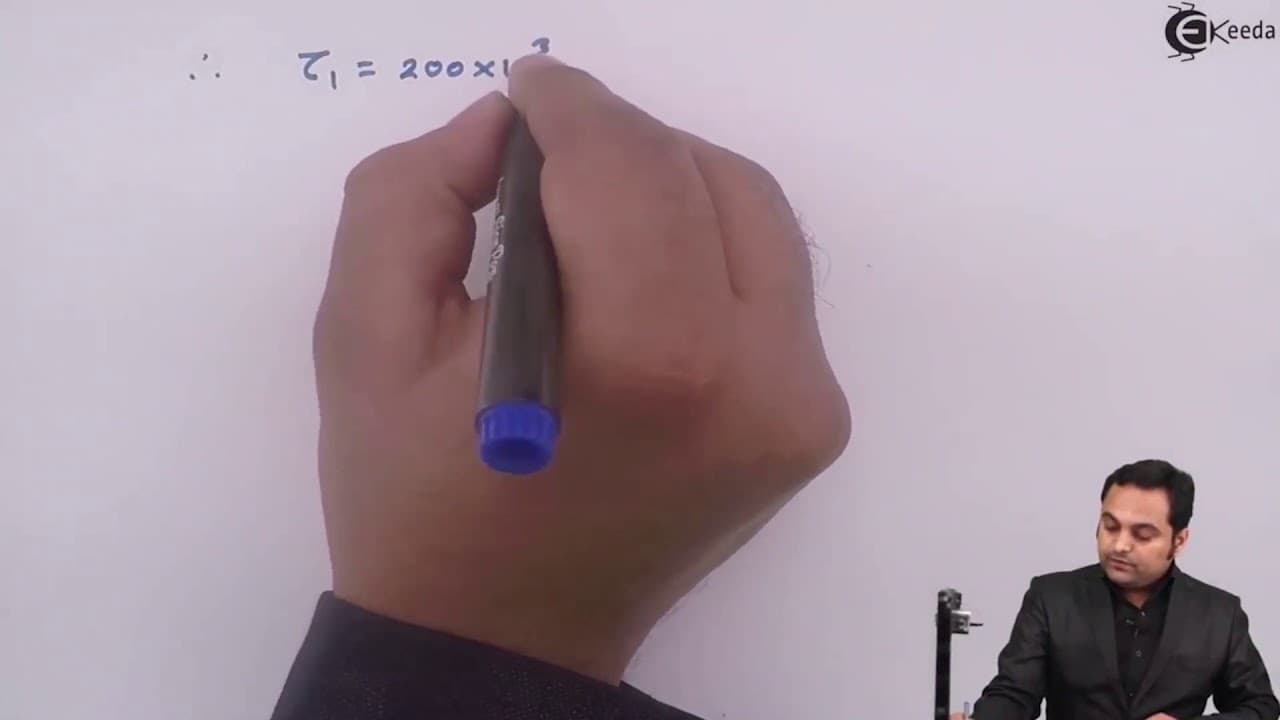
This video explains how to calculate the shear stress distribution across an I-section beam.
Transcript
hello friends here in this video we will see a problem on calculation of shear stress for an eye section here is the question i'll write that in the form of data and i section i section beam 350 mm into 200 mm has a web thickness of 12.5 mm and flange thickness of 25 mm so these are the dimensions given it carries a shearing force of 200 kilo newto... Read More
Key Insights
- 😁 Shear stress distribution is important for analyzing the behavior of a beam under load.
- 📌 Calculating the moment of inertia is essential for determining shear stress at different locations.
- 😁 Shear stress is inversely proportional to width, meaning that the maximum shear stress occurs at the minimum width of the beam.
- 😁 The neutral axis is the location where the shear stress is maximum in an I-section beam.
- 😁 The shear stress distribution diagram helps visualize the variation of shear stress along the beam.
- 🧑🏭 Shear stresses are calculated using formulas that take into account factors like shear force, area, distance, moment of inertia, and width.
- 😁 Engineering calculations like these are crucial for ensuring the structural integrity of beams and other load-bearing structures.
Install to Summarize YouTube Videos and Get Transcripts
Explore YouTube Video Summarizer or Get YouTube Transcript Extractor
Questions & Answers
Q: What is the purpose of calculating the shear stress distribution for an I-section beam?
Calculating the shear stress distribution helps engineers understand how the beam will behave under load and design appropriate supports or reinforcements.
Q: How is the moment of inertia calculated for an I-section beam?
The moment of inertia is calculated by subtracting the moment of inertia of the small rectangles within the I-section from the moment of inertia of the complete rectangle.
Q: How are the shear stresses calculated at different locations?
Shear stress is calculated using the formula tau = FAy/I*b, where F is the shear force, A is the area, y is the distance, I is the moment of inertia, and b is the width.
Q: Why is the maximum shear stress at the neutral axis?
The neutral axis is the location where the shear force is distributed evenly throughout the section, resulting in the maximum shear stress.
Summary & Key Takeaways
-
The video discusses how to calculate the shear stress distribution for an I-section beam with given dimensions and shear force.
-
The process involves finding the moment of inertia for the beam, calculating shear stress at different locations, and plotting the shear stress distribution diagram.
-
The maximum shear stress occurs at the neutral axis of the beam.
Read in Other Languages (beta)
Share This Summary 📚
Summarize YouTube Videos and Get Video Transcripts with 1-Click
Try YouTube Summary with ChatGPT & Claude or YouTube Transcript Generator
Explore More Summaries from Ekeeda 📚




Summarize YouTube Videos and Get Video Transcripts with 1-Click
Try YouTube Summary with ChatGPT & Claude or YouTube Transcript Generator