How Can I Manage Study and Work Effectively?
TL;DR
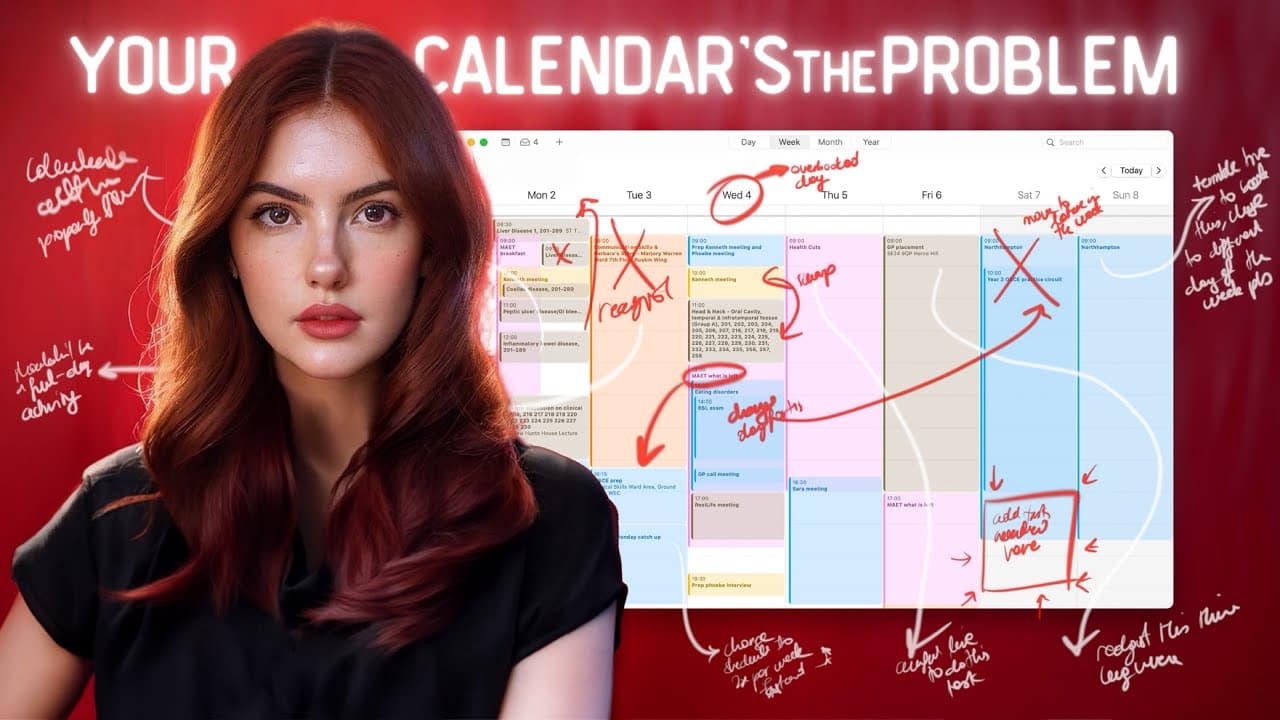
Balancing study and work involves recognising that both tasks and rewards influence motivation. By implementing flexible scheduling and randomising rewards, you can make work more engaging, helping to maintain enthusiasm and prevent burnout.
Transcript
in 2018 my life started to go crazy I'd just started medical school and had to work three jobs to be able to afford it I then discovered Medical Art so I started studying that too I signed up for extra courses in philosophy volunteered as a mental health responder got some more jobs all while still studying to be a doctor I loved my life but it was... Read More
Key Insights
- 🥺 Traditional planning methods that focus only on work tasks can lead to burnout and decreased motivation.
- 💦 Both work and non-work activities impact each other, and their combination determines our desire to work.
- 🎆 Fixed interval and fixed ratio reward schedules are less effective in motivating us to complete work tasks compared to variable schedules.
- ❤️🩹 Planning tasks with flexible start and end times, and randomizing rewards can make work more enjoyable and increase motivation.
- 💦 The audit of work and reward activities is essential to understanding our individual preferences and needs for stimulation.
- 🎚️ Careful attention to the level of stimulation and selecting complementary rewards can help maintain higher energy levels and avoid burnout.
- ❓ The method described may not be suitable for everyone, and individual circumstances should be considered when applying planning techniques.
Install to Summarize YouTube Videos and Get Transcripts
Explore YouTube Video Summarizer or Get YouTube Transcript Extractor
Questions & Answers
Q: What is the main issue with traditional planning methods?
Traditional planning methods focus only on work tasks and ignore non-work activities, which can lead to a lack of motivation and burnout.
Q: How can variable schedules improve motivation to work?
Variable schedules, where work tasks have flexible start and end times and the rewards are randomized, make work more unpredictable and interesting, increasing motivation to engage in tasks.
Q: Why is it important to identify and manage stimulation levels?
Different activities have different levels of stimulation, and being mindful of this can help maintain energy levels throughout the day and prevent exhaustion.
Q: What are some recommended activities for rewards that complement stimulating work tasks?
Journaling, meditation, stretching, walking, calling a friend, and listening to music are suggested as rewards that provide a break from mental stimulation and offer relaxation or physical activity.
Key Insights:
- Traditional planning methods that focus only on work tasks can lead to burnout and decreased motivation.
- Both work and non-work activities impact each other, and their combination determines our desire to work.
- Fixed interval and fixed ratio reward schedules are less effective in motivating us to complete work tasks compared to variable schedules.
- Planning tasks with flexible start and end times, and randomizing rewards can make work more enjoyable and increase motivation.
- The audit of work and reward activities is essential to understanding our individual preferences and needs for stimulation.
- Careful attention to the level of stimulation and selecting complementary rewards can help maintain higher energy levels and avoid burnout.
- The method described may not be suitable for everyone, and individual circumstances should be considered when applying planning techniques.
- Practicing self-compassion and being kind to oneself is important in finding a balance between productivity and well-being.
Summary & Key Takeaways
-
The author shares their personal experience of struggling with a packed schedule and the negative effects it had on their mental health.
-
They explain that traditional planning methods focused only on work tasks and ignored non-work activities, to the detriment of their motivation and productivity.
-
The author introduces the concept of variable schedules for work and reward activities, leveraging principles of addiction psychology to make work more interesting and enjoyable.
Read in Other Languages (beta)
Share This Summary 📚
Summarize YouTube Videos and Get Video Transcripts with 1-Click
Try YouTube Summary with ChatGPT & Claude or YouTube Transcript Generator
Explore More Summaries from Elizabeth Filips 📚




Summarize YouTube Videos and Get Video Transcripts with 1-Click
Try YouTube Summary with ChatGPT & Claude or YouTube Transcript Generator