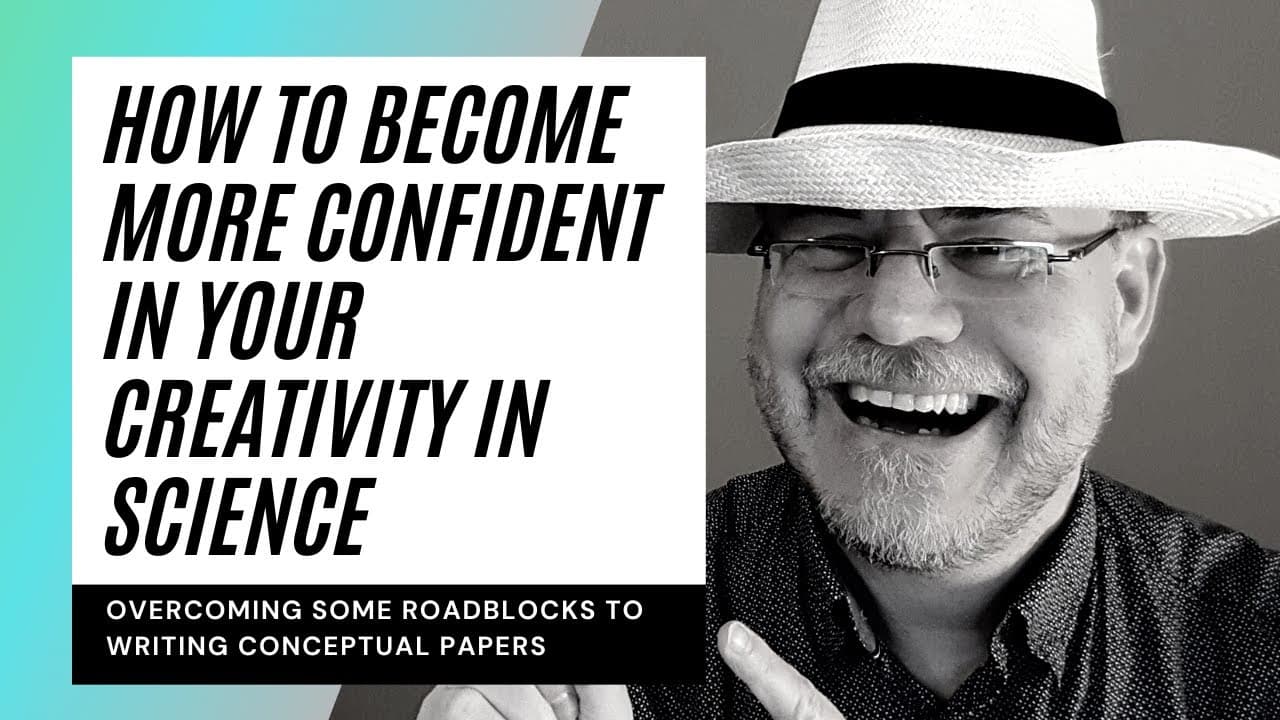
How to become more confident in your creativity in science #phdlife #phd #creativity #creative
TL;DR
Overcoming roadblocks to creativity in science is essential for progress; address fear of embarrassment, capturing and sharing ideas, judging idea quality, importance of fresh perspectives, and incorporating viewpoint papers into lab work.
Transcript
hi in this video I want to talk about creative confidence basically how you become more confident in terms of creativity in science I think this is a very important topic because I think we all agree that creativity is very important in science development of new ideas and making progress so during a recent lab meeting we were talking about why not... Read More
Key Insights
- 👶 Creativity is crucial for scientific progress and developing new ideas.
- 😨 Fear of embarrassment can be overcome by sharing ideas within protected environments and seeking feedback.
- 💡 Capturing and writing down ideas, even if they seem insignificant, is essential for creativity.
- 🧑⚖️ Seeking input from more experienced individuals can help in judging the value and potential of ideas.
- 🆕 Fresh perspectives from less experienced individuals can bring new and innovative ideas to scientific fields.
- 💦 Collaborating with experienced researchers can add credibility to a scientist's work, especially when writing viewpoint papers.
- 💦 Developing viewpoint papers can complement lab work and contribute to productivity.
Install to Summarize YouTube Videos and Get Transcripts
Explore YouTube Video Summarizer or Get YouTube Transcript Extractor
Questions & Answers
Q: How can I overcome the fear of embarrassment when sharing my ideas?
Start by discussing ideas within a protected environment, such as your lab group, and seek feedback from supportive individuals like your advisor or committee members. Remember that you are not alone, and there are people to help and support you.
Q: What should I do if I feel like I don't have any good ideas?
It is crucial to write down any ideas that come to mind before they are forgotten. Be open to having ideas and practice capturing them in writing. Also, share your ideas with peers and advisors, as they can help you judge their value.
Q: How can I judge if an idea is good or not?
Capturing ideas is more important than being able to judge them yourself. Seek input from experienced individuals like your advisor, committee members, or collaborators. They can offer their expertise and help you decide which ideas are worth pursuing.
Q: Can less experienced individuals contribute valuable ideas to scientific fields?
Absolutely! Fresh perspectives from individuals who are not burdened by extensive knowledge in a field can bring new, innovative ideas. While journals may show a bias towards publishing more experienced researchers, collaborating with experienced individuals can add credibility to your work.
Q: Will working on viewpoint papers distract me from my lab work?
Developing viewpoint papers can actually complement your lab work. It broadens your thinking about your research topic and can be beneficial for writing introduction and discussion sections in empirical papers. Shorter pieces, like opinion papers, can be worked on alongside lab work during downtime effectively.
Summary & Key Takeaways
-
Many scientists fear embarrassing themselves when sharing ideas, but they can start by discussing ideas within a protected environment, such as a lab group, and seeking feedback from advisors and colleagues.
-
Scientists often believe they don't have any good ideas, but it is crucial to write down ideas before they're forgotten and to be open to having ideas. Sharing ideas with peers and advisors can help in judging their value.
-
Scientists may struggle to judge if an idea is good, but the focus should be on capturing ideas and seeking input from more experienced individuals who can offer their expertise and help decide which ideas are worth pursuing.
-
Some scientists feel they are not experienced enough to write viewpoint papers, but fresh perspectives from less experienced individuals can bring new ideas to a field. Collaborating with more experienced researchers can also add credibility to the work.
-
Scientists may worry that working on viewpoint papers will distract from their lab work, but such papers contribute to productivity and help in thinking broadly about a topic. Shorter pieces like opinion papers can be worked on alongside lab work, using any available downtime effectively.
Read in Other Languages (beta)
Share This Summary 📚
Summarize YouTube Videos and Get Video Transcripts with 1-Click
Try YouTube Summary with ChatGPT & Claude or YouTube Transcript Generator
Explore More Summaries from Life in academia 📚
Summarize YouTube Videos and Get Video Transcripts with 1-Click
Try YouTube Summary with ChatGPT & Claude or YouTube Transcript Generator