Who were the Richest Tycoons in America?
TL;DR
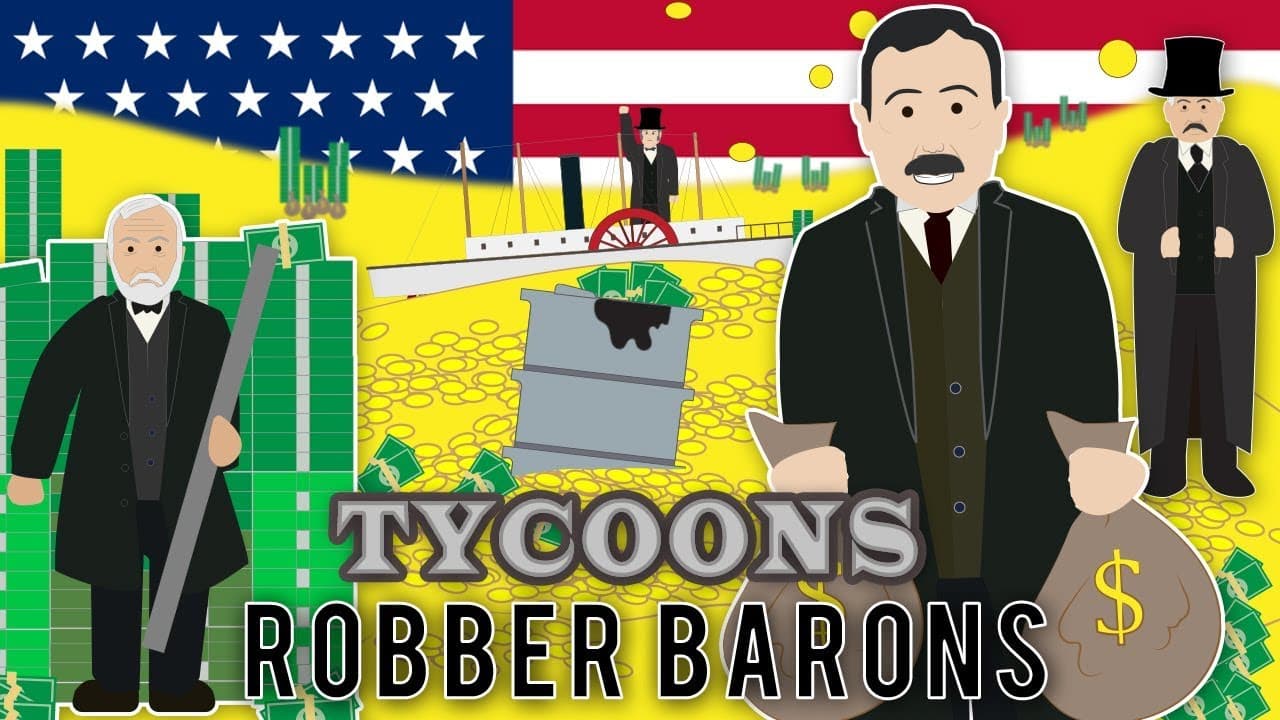
Robber barons, such as Andrew Carnegie, John D. Rockefeller, Cornelius Vanderbilt, and J.P. Morgan, amassed massive fortunes through questionable methods in industries such as steel, oil, water transport, and banking.
Transcript
Robber barons. Who were the Richest Tycoons in America? In the late 19th century and early 20th century there were Americans who made vast amounts of wealth, these tycoons gained the derogatory nickname "Robber barons" because of the questionable methods they used to acquire their fortunes and build their vast industrial empires. Andrew Carnegie. S... Read More
Key Insights
- ❓ Robber barons like Andrew Carnegie, John D. Rockefeller, Cornelius Vanderbilt, and J.P. Morgan used questionable methods to amass immense wealth.
- 🖐️ Industrialists like Andrew Carnegie played significant roles in technological advancements and economic growth.
- 🥺 Monopolistic control of industries by individuals like John D. Rockefeller led to legal actions to regulate and prevent such concentration of power.
- 👻 Cornelius Vanderbilt's success in the transportation industry allowed for the expansion of routes and the growth of America's infrastructure.
- 🏈 J.P. Morgan's influence in banking and mergers brought order to the American economy and helped stabilize it during financial crises.
- 🍃 The philanthropic efforts of these tycoons, particularly Andrew Carnegie and John D. Rockefeller, left a lasting impact on society through the funding of libraries, universities, and charities.
- 🤑 The wealth accumulated by these tycoons far exceeded billions of dollars, making them some of the richest individuals in American history.
Install to Summarize YouTube Videos and Get Transcripts
Explore YouTube Video Summarizer or Get YouTube Transcript Extractor
Questions & Answers
Q: What were some of the questionable methods used by these tycoons to gain their wealth?
The tycoons relied on practices such as unfair pricing, cartels, monopolies, and taking advantage of competitors to consolidate their industries and amass wealth.
Q: How did Andrew Carnegie contribute to society after his retirement?
After retiring, Carnegie dedicated his life to philanthropy and funded numerous public libraries, universities, and charities worldwide.
Q: How did John D. Rockefeller's monopoly in the oil industry lead to the Sherman Antitrust Act?
Rockefeller's Standard Oil monopoly controlled 90% of the oil in the USA, leading to public outcry and eventually the passage of the Sherman Antitrust Act to regulate and prevent such monopolies.
Q: How did J.P. Morgan play a role in stabilizing the American economy?
Morgan helped merge companies and create order in the American economy, reducing chaotic competition. Furthermore, he aided Wall Street during the Panic of 1907 financial crisis.
Summary & Key Takeaways
-
Andrew Carnegie, born in poverty, became extremely successful in the steel industry through innovations and strategic investments.
-
John D. Rockefeller dominated the oil industry and established a monopoly with Standard Oil, leading to the Sherman Antitrust Act.
-
Cornelius Vanderbilt started as a steamship captain and expanded his transportation empire to dominate the maritime trade and eventually railroads.
-
J.P. Morgan, a prominent banker, played a crucial role in mergers and helped stabilize the American economy during crises.
Read in Other Languages (beta)
Share This Summary 📚
Summarize YouTube Videos and Get Video Transcripts with 1-Click
Try YouTube Summary with ChatGPT & Claude or YouTube Transcript Generator
Explore More Summaries from Simple History 📚





Summarize YouTube Videos and Get Video Transcripts with 1-Click
Try YouTube Summary with ChatGPT & Claude or YouTube Transcript Generator