Products
Features
YouTube Video Summarizer
Summarize YouTube videos
Web & PDF Highlighter
Highlight web pages & PDFs
Chat with PDF
Ask any PDF questions with AI
Ask AI Clone
Chat with your highlights & memories
Audio Transcriber
Transcribe audio files to text
Glasp Reader
Read and highlight articles
Kindle Highlight Export
Export your Kindle highlights
Idea Hatch
Hatch ideas from your highlights
Integrations
Obsidian Plugin
Notion Integration
Pocket Integration
Instapaper Integration
Medium Integration
Readwise Integration
Snipd Integration
Hypothesis Integration
Apps & Extensions
Chrome Extension
Safari Extension
Edge Add-ons
Firefox Add-ons
iOS App
Android App
Discover
Discover
Ideas
Discover new ideas and insights
Articles
Curated articles and insights
Books
Book recommendations by great minds
Posts
Essays and notes from readers
Quotes
Inspiring quotes collection
Videos
Curated videos and summaries
Explore Glasp
Glasp Newsletter
Weekly insights and updates
Glasp Talk
Interview series with great minds
Glasp Blog
Latest news and articles
Glasp Use Cases
Learn how others use Glasp
Build & Support
Glasp API
Access Glasp's API for developers
MCP Connector
Connect Glasp to Claude & ChatGPT
Community
Glasp Reddit Community
Students
Student discount and benefits
FAQs
Frequently Asked Questions
AboutPricing
DashboardLog inSign up

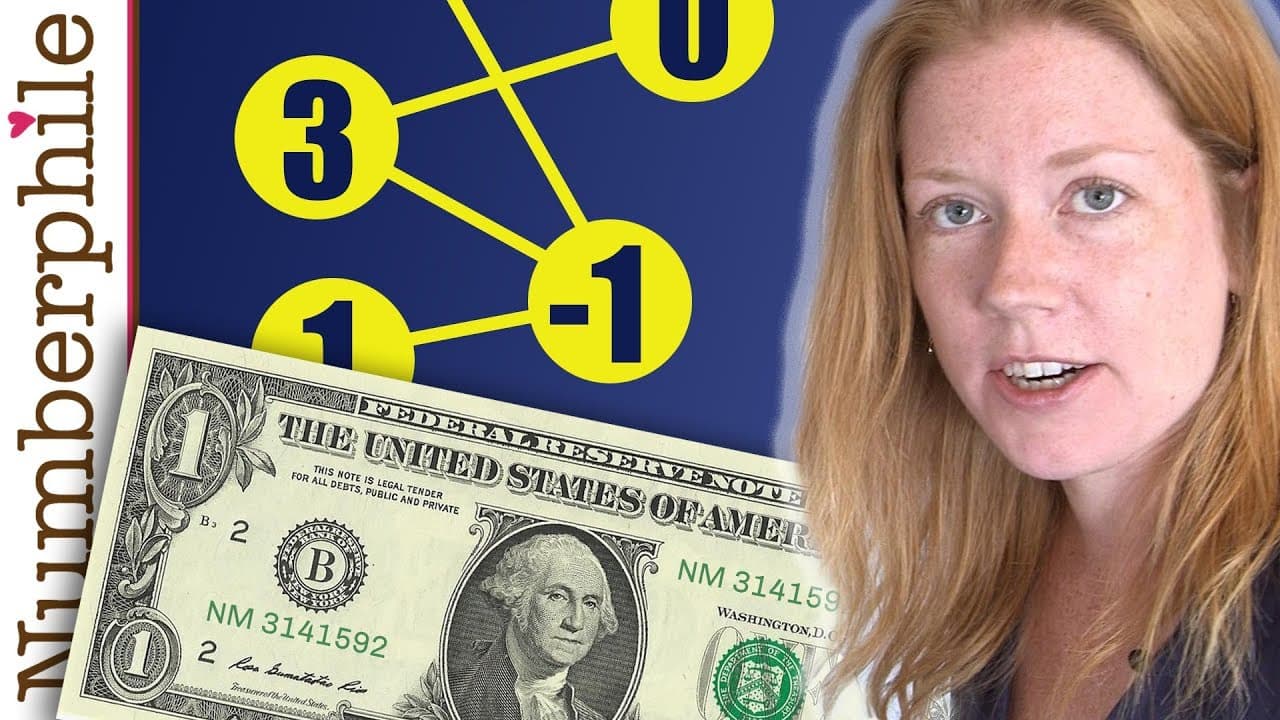
The Dollar Game - Numberphile
672.8K views
•
August 31, 2018
by
Numberphile
YouTube video player
The Dollar Game - Numberphile

TL;DR

A strategic game where vertices must balance money values to reach zero debts.

Transcript

So the first thing we're going to do is we're gonna draw some graph. So, I don't care what it looks like, let's try it, put a few vertices here and some edges, connect it up nicely, okay, so there's a graph. And now I'm gonna give each vertex of my graph a number; and again you can just choose this randomly and it can even be a negative number. Oka... Read More

Key Insights

  • ⚖️ Successful "Dollar Game" strategies involve balancing donations or withdrawals across all connected vertices.
  • 🤑 The game's winnability is determined by having a money surplus equal to or exceeding the graph's "genus."
  • 👾 Certain graph configurations can render the game unwinnable, highlighting the importance of strategic planning.
  • 😉 The optimal strategy for winning "The Dollar Game" is still a topic of ongoing research and exploration.
  • 👾 Understanding graph theory concepts, like the "genus," enhances the ability to analyze game winnability.
  • 🎮 Strategic gameplay in "The Dollar Game" offers a challenging puzzle for players to explore and solve.
  • 👾 The game's complexity lies in striking the right balance between money distributions on vertices.

Install to Summarize YouTube Videos and Get Transcripts

Explore YouTube Video Summarizer or Get YouTube Transcript Extractor

Questions & Answers

Q: How does "The Dollar Game" involve balancing money values on vertices?

In the game, players must strategically donate or withdraw money from connected vertices to eliminate negative amounts and achieve a debt-free state.

Q: What role does a graph's "genus" play in determining if a game is winnable?

The "genus" of a graph, calculated based on edges and vertices, indicates the complexity of the game and if the money surplus is sufficient to win.

Q: Can a game be unwinnable despite having enough money on the board?

Yes, certain graph configurations can make it impossible to win, even with a surplus of money, due to the arrangement of vertices and connections.

Q: Why is determining the optimal strategy for "The Dollar Game" challenging?

Finding the optimal strategy for the game is complex and involves advanced graph theory concepts, making it difficult to pinpoint the best moves.

Summary & Key Takeaways

  • Players balance money values on vertices in "The Dollar Game" to eliminate negative amounts.

  • Donations or withdrawals must be made from all connected vertices in the game.

  • A graph's "genus" determines if a game is winnable based on money surplus.


Read in Other Languages (beta)

English

Share This Summary 📚

Summarize YouTube Videos and Get Video Transcripts with 1-Click

Download browser extensions on:

Try YouTube Summary with ChatGPT & Claude or YouTube Transcript Generator

Explore More Summaries from Numberphile 📚
What Is Pascal's Triangle and Its Mathematical Patterns? thumbnail
What Is Pascal's Triangle and Its Mathematical Patterns?
Numberphile
The Girl with the Hyperbolic Helicoid Tattoo - Numberphile thumbnail
The Girl with the Hyperbolic Helicoid Tattoo - Numberphile
Numberphile
The Most Favourite Number - Numberphile thumbnail
The Most Favourite Number - Numberphile
Numberphile
29 and Leap Years - Numberphile thumbnail
29 and Leap Years - Numberphile
Numberphile
Professors React to 2048 - Numberphile thumbnail
Professors React to 2048 - Numberphile
Numberphile
The man with 1,000 Klein Bottles UNDER his house - Numberphile thumbnail
The man with 1,000 Klein Bottles UNDER his house - Numberphile
Numberphile

Summarize YouTube Videos and Get Video Transcripts with 1-Click

Download browser extensions on:

Try YouTube Summary with ChatGPT & Claude or YouTube Transcript Generator

Apps & Extensions

  • Chrome Extension
  • Safari Extension
  • Edge Add-ons
  • Firefox Add-ons
  • iOS App
  • Android App

Key Features

  • YouTube Video Summarizer
  • Web & PDF Summarizer
  • Web & PDF Highlighter
  • Chat with PDF
  • Ask AI Clone
  • Audio Transcriber
  • Glasp Reader
  • Kindle Highlight Export
  • Idea Hatch

Integrations

  • Obsidian Plugin
  • Notion Integration
  • Pocket Integration
  • Instapaper Integration
  • Medium Integration
  • Readwise Integration
  • Snipd Integration
  • Hypothesis Integration

More Features

  • APIs
  • MCP Connector
  • Blog & Post
  • Embed Links
  • Image Highlight
  • Personality Test
  • Quote Shots

Company

  • About us
  • Blog
  • Community
  • FAQs
  • Job Board
  • Newsletter
  • Pricing
Terms

•

Privacy

•

Guidelines

© 2026 Glasp Inc. All rights reserved.