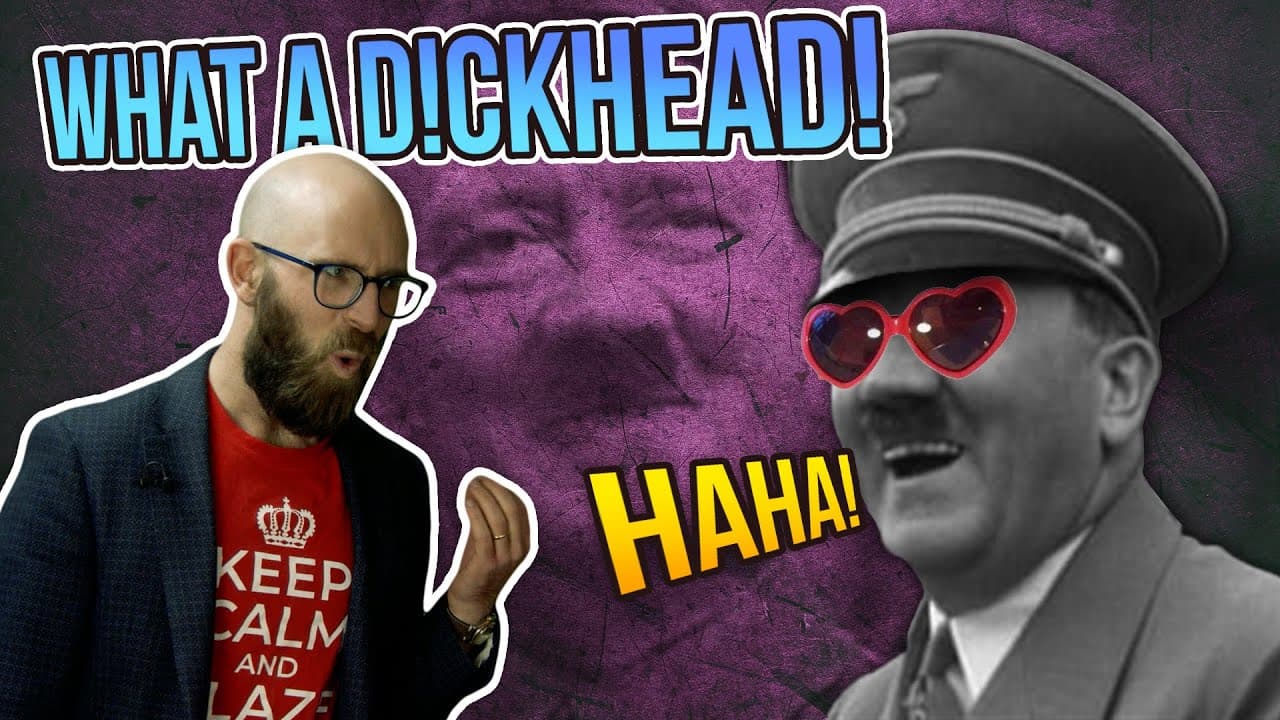
Yet Another of Hitler's Ultimate Dick Moves
TL;DR
The armistice signed on November 11, 1918, marked the end of World War I, but the Treaty of Versailles imposed punitive measures on Germany, leading to resentment and ultimately fueling Hitler's rise to power.
Transcript
today's video is brought to you by magellan tv magellan tv is a new documentary streaming service founded by filmmakers who love history their mission is to tell the great stories that have defined the human experience and with more than 3000 excellent programs available on magellan it's hard to start watching once you start they've got everything ... Read More
Key Insights
- ❤️🩹 The armistice signed in 1918 marked the end of World War I but did not bring lasting peace.
- 🥺 The Treaty of Versailles imposed harsh sanctions on Germany, leading to resentment and instability.
- 🇩🇪 The reparations payments required by the treaty did not directly cause Germany's economic downfall.
- 🥳 Hitler capitalized on the German public's anger over the treaty and used it to gain support for the Nazi party.
- 🎨 The armistice negotiations of 1940, held at the same spot where Germany signed the armistice in 1918, were deliberately designed to humiliate France.
- 🇫🇷 The armistice agreement of 1940 imposed harsh terms on France, including the surrender of territory and the disarming of the French army.
- 🇫🇷 The collaborationist Vichy regime in Southern France was established to keep the French navy and overseas forces out of the conflict.
- ✌️ The armistice site at Compiègne was destroyed by Hitler to erase the memory of France's victory in World War I.
Install to Summarize YouTube Videos and Get Transcripts
Explore YouTube Video Summarizer or Get YouTube Transcript Extractor
Questions & Answers
Q: How did the armistice end World War I?
The armistice signed on November 11, 1918, declared a ceasefire between Germany and the Allied powers, bringing an end to the fighting.
Q: What were the terms of the Treaty of Versailles?
The treaty blamed Germany for starting the war and imposed punitive sanctions, including territorial losses, restrictions on military capabilities, and war reparations.
Q: Did the war reparations bankrupt Germany?
No, the reparations payments were renegotiated multiple times before being canceled in 1932. Germany had paid less than a quarter of the original amount.
Q: How did Hitler exploit the resentment over the Treaty of Versailles?
Hitler used the harsh terms of the treaty to fuel his rise to power, appealing to German nationalism and promising to seek revenge against those who had humiliated the country.
Summary & Key Takeaways
-
On November 11, 1918, an armistice was signed between Germany and the Allied powers, ending World War I.
-
The Treaty of Versailles, signed on June 28, 1919, blamed Germany for starting the war and imposed harsh sanctions that many viewed as humiliating.
-
The reparations payments required by the treaty did not bankrupt Germany, but Hitler used the resentment over the treaty to gain support and seek revenge.
Read in Other Languages (beta)
Share This Summary 📚
Summarize YouTube Videos and Get Video Transcripts with 1-Click
Try YouTube Summary with ChatGPT & Claude or YouTube Transcript Generator
Explore More Summaries from Today I Found Out 📚



Summarize YouTube Videos and Get Video Transcripts with 1-Click
Try YouTube Summary with ChatGPT & Claude or YouTube Transcript Generator