How Is the NATO Alliance Changing? Ukraine and the Future of European Security
TL;DR
NATO's role in Ukraine is evolving amidst geopolitical shifts.
Transcript
FIX: So welcome to the second session of today’s symposium, titled Ukraine and the Future of European Security. I’m Liana Fix. I’m the fellow for Europe here at the Council on Foreign Relations, and I’ll be presiding over this discussion. Thanks for staying with us for this, and there will be another panel afterwards. I’m more than delighted to... Read More
Key Insights
- The U.S. strategy towards Ukraine has shifted from maximum pressure on Russia to a focus on Ukraine, signaling a change in diplomatic tactics.
- Russia's negotiation tactics are seen as leveraging perceived U.S. weaknesses, with a focus on geopolitical gains rather than genuine compromise.
- China's role in the Ukraine conflict is significant, acting as a major buyer of Russian resources and potentially influencing European security dynamics.
- The Trump administration's approach to Ukraine and Russia is perceived as favoring economic deals over geopolitical alliances, reflecting a transactional view of foreign policy.
- European security guarantees in Ukraine are under discussion, with a potential division of labor between the U.S. and Europe on negotiating and securing peace.
- Sanctions against Russia are deemed effective but poorly implemented, leading to questions about their future credibility and enforcement.
- The frozen Russian assets debate highlights differing views on using economic leverage as a tool for enforcing ceasefires.
- The global implications of the Ukraine conflict extend to Asia, with countries like Japan and South Korea closely monitoring U.S. commitments to European security.
Install to Summarize YouTube Videos and Get Transcripts
Explore YouTube Video Summarizer or Get YouTube Transcript Extractor
Questions & Answers
Q: What is the current U.S. strategy towards Ukraine?
The U.S. strategy has shifted from applying maximum pressure on Russia to focusing on Ukraine, with the aim of bringing Ukraine to the negotiation table. This shift indicates a strategic change in how the U.S. engages with both Russia and Ukraine, potentially leveraging economic incentives and diplomatic pressure.
Q: How does Russia perceive the ongoing negotiations?
Russia perceives the negotiations as an opportunity to assert its geopolitical interests, viewing the U.S. and European responses as indicative of weakness. This perception emboldens Russia to push for concessions, believing that their strategic patience will eventually yield favorable outcomes.
Q: What role does China play in the Ukraine conflict?
China plays a crucial role by economically supporting Russia through the purchase of Russian resources, thus keeping the Russian economy afloat. China's involvement also extends to influencing European security dynamics, as it positions itself as a reliable partner amidst changing U.S. policies.
Q: How is the Trump administration's foreign policy characterized?
The Trump administration's foreign policy is characterized by a transactional approach, prioritizing economic deals over geopolitical alliances. This perspective sees foreign relations as opportunities for economic gain, often at the expense of traditional diplomatic and security commitments.
Q: What are the European security considerations in Ukraine?
European security considerations involve potentially taking over security guarantees in Ukraine, with discussions on a division of labor where the U.S. negotiates a ceasefire and Europe secures it. This approach requires clear commitments from the U.S. to support European-led missions.
Q: What is the status of sanctions against Russia?
Sanctions against Russia are seen as effective but suffer from poor implementation. The lack of enforcement undermines their credibility, raising concerns about their future use as a diplomatic tool. The discussion highlights the need for improved sanctions mechanisms and consistent application.
Q: What is the debate over frozen Russian assets?
The debate centers on whether to use frozen Russian assets as leverage to enforce ceasefires. Some argue for immediate utilization to support Ukraine, while others propose using them as a deterrent against ceasefire violations. The issue reflects broader tensions over economic leverage in diplomacy.
Q: What are the global implications of the Ukraine conflict?
The conflict has significant global implications, particularly in Asia. Countries like Japan and South Korea are closely monitoring U.S. commitments to European security, as these actions signal broader U.S. foreign policy priorities. The situation also affects China's strategic calculations regarding Taiwan.
Summary & Key Takeaways
-
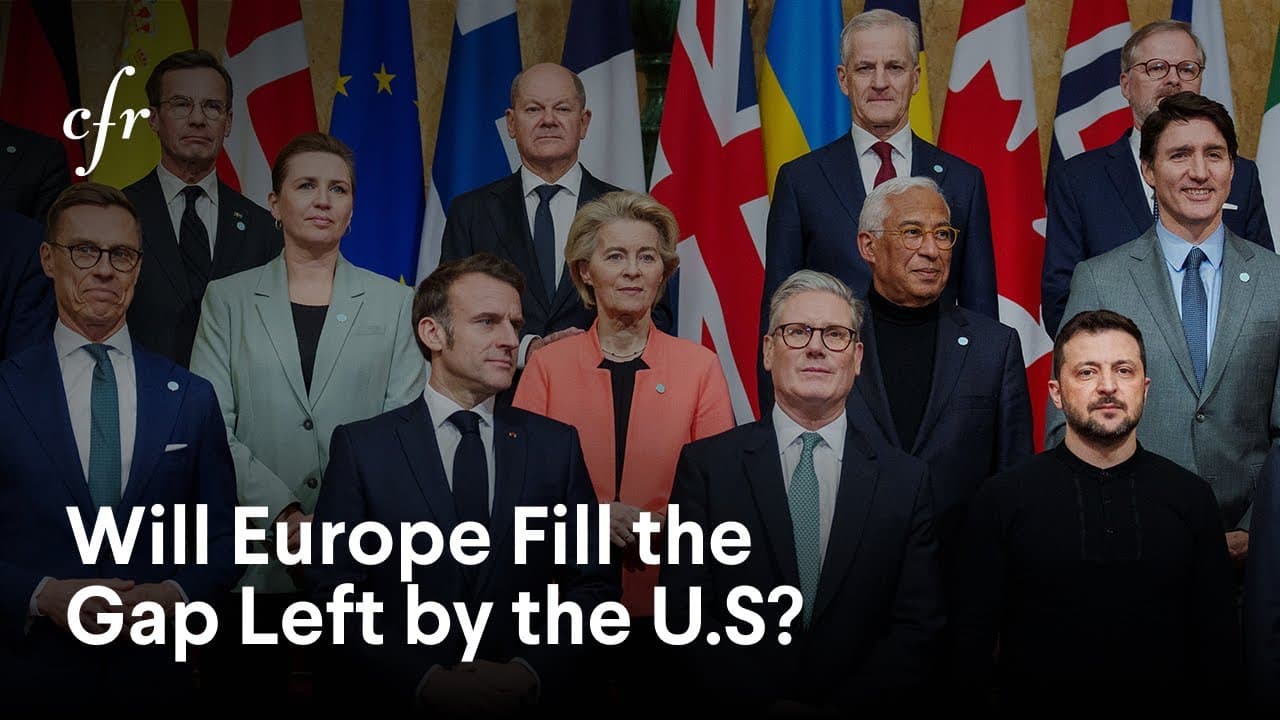
The symposium discusses the evolving role of NATO in the context of the Ukraine conflict, highlighting shifts in U.S. strategy and the geopolitical landscape. Key speakers include former Ukrainian officials and European policy experts, who analyze the pressures faced by Ukraine and the implications for European security.
-
China's involvement in the Ukraine conflict is underscored, with its economic ties to Russia and potential influence on European security frameworks. The discussion also touches on the strategic reorientation of U.S. foreign policy under the Trump administration, emphasizing economic over geopolitical considerations.
-
The panel explores the effectiveness of sanctions against Russia, the debate over frozen assets, and the broader global impact of the conflict, including the potential for increased Chinese influence in Europe and the implications for Asian geopolitics.
Read in Other Languages (beta)
Share This Summary 📚
Summarize YouTube Videos and Get Video Transcripts with 1-Click
Try YouTube Summary with ChatGPT & Claude or YouTube Transcript Generator
Explore More Summaries from Council on Foreign Relations 📚


Summarize YouTube Videos and Get Video Transcripts with 1-Click
Try YouTube Summary with ChatGPT & Claude or YouTube Transcript Generator