The Economy of Germany
TL;DR
Germany's economy evolved through resilience and innovation despite historical challenges.
Transcript
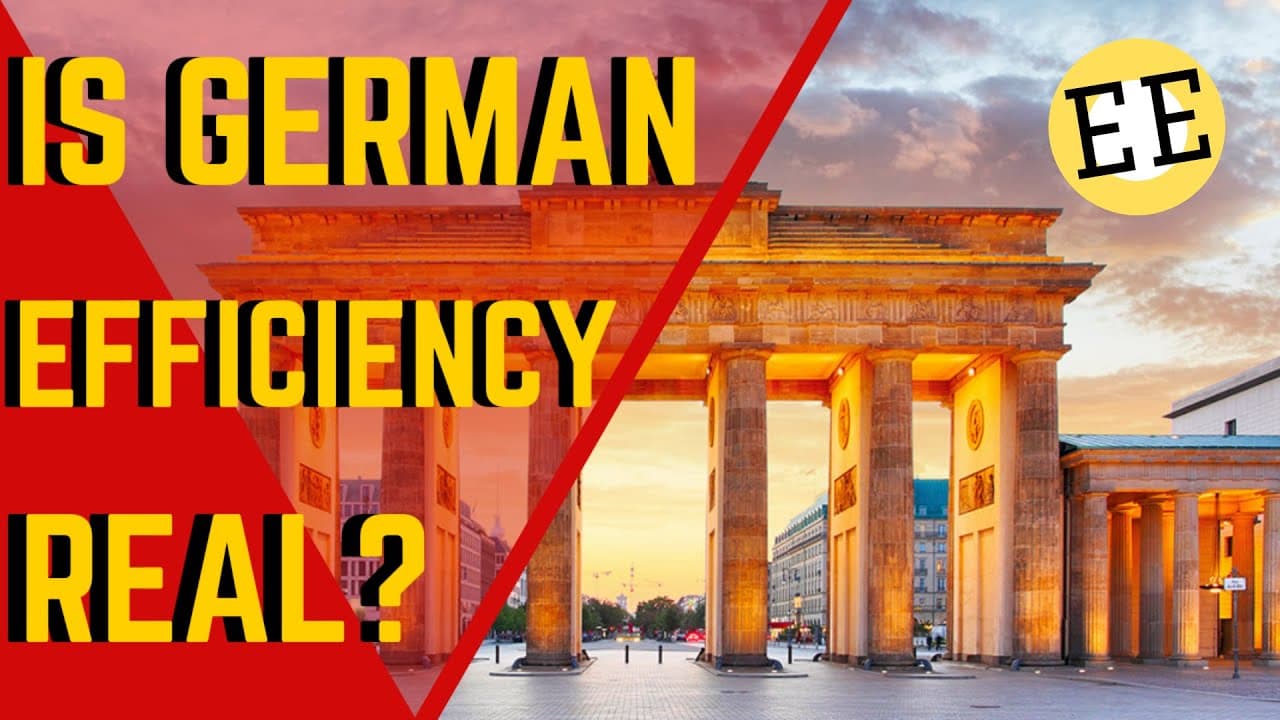
this is Germany the largest economy in all of Europe by a significant margin and the fourth largest in the world falling just behind Japan the economy of Germany is so interesting not just because of its sheer size but more because of its tenuous and surprisingly short history Germany is a hugely influential economy in the world today and even more... Read More
Key Insights
- Germany's economy is the largest in Europe and fourth largest globally, reflecting its significant influence and resilience.
- The social market economy, or Rhine capitalism, has been Germany's guiding economic policy since post-World War II reconstruction.
- Germany's late industrialization allowed it to incorporate advanced technologies, leading to rapid economic growth known as the 'German Miracle.'
- World War I and II, followed by reparations and hyperinflation, severely impacted Germany's economy, necessitating multiple reconstructions.
- Post-World War II, the Marshall Plan aided West Germany's recovery, contrasting with East Germany's struggles under Soviet influence.
- The reunification of East and West Germany posed economic challenges due to disparities in industrial capacity and social policies.
- Germany's economic resilience is attributed to its innovative and industrious culture, overcoming numerous historical adversities.
- The social market economy balances capitalism's incentives with strong social safety nets, contributing to Germany's economic stability.
Install to Summarize YouTube Videos and Get Transcripts
Explore YouTube Video Summarizer or Get YouTube Transcript Extractor
Questions & Answers
Q: What is the significance of Germany's social market economy?
Germany's social market economy, also known as Rhine capitalism, combines the best aspects of capitalism with strong social welfare policies. This economic model has been instrumental in maintaining Germany's economic stability and competitiveness, providing incentives for entrepreneurship while ensuring social safety nets, universal education, and healthcare.
Q: How did Germany's late industrialization benefit its economy?
Germany's late industrialization allowed it to adopt advanced technologies from countries that had already industrialized. This enabled Germany to develop its economy rapidly, leading to significant growth known as the 'German Miracle.' By importing technical knowledge, Germany could innovate and modernize at an impressive rate, surpassing other industrial nations in steel production by the early 20th century.
Q: What impact did World War I and II have on Germany's economy?
World War I and II had devastating impacts on Germany's economy. After World War I, Germany faced crippling reparations and hyperinflation, while World War II left the nation divided and in ruins. These challenges necessitated multiple reconstructions, with the post-World War II Marshall Plan aiding West Germany's recovery, contrasting with East Germany's struggles under Soviet influence.
Q: How did the reunification of Germany affect its economy?
The reunification of East and West Germany posed significant economic challenges due to disparities in industrial capacity and social policies. West Germany, economically stronger, had to support the weaker East, leading to a period of stagnation. Despite these challenges, Germany managed to integrate the two regions, blurring past separations and achieving national prosperity over time.
Q: What role did the Marshall Plan play in Germany's recovery post-World War II?
The Marshall Plan played a crucial role in West Germany's recovery after World War II by providing financial aid to rebuild infrastructure. This support improved living standards, reduced the appeal of nationalist ideologies, and facilitated economic growth, helping West Germany become a strong trading partner and a counterbalance to Soviet influence in Eastern Europe.
Q: How does Germany maintain competitiveness in its economy?
Germany maintains competitiveness through a combination of innovation and strict regulatory controls. The social market economy encourages entrepreneurship and innovation while ensuring that businesses adhere to environmental and labor standards. This creates a competitive marketplace where companies cannot become complacent, fostering continuous improvement and economic resilience.
Q: What challenges did East Germany face under Soviet influence?
Under Soviet influence, East Germany faced economic challenges such as nationalized industries, rationing, and limited access to trade. Geographically disadvantaged compared to West Germany, it struggled with lower living standards and productivity. Despite being a showcase for the Eastern Bloc, East Germany could not match the prosperity seen in the West, highlighting the inefficiencies of the Soviet economic model.
Q: How has Germany's economic history shaped its current global standing?
Germany's economic history, marked by resilience and adaptation, has shaped its current global standing as a leading economy. Overcoming wars, division, and economic crises, Germany's commitment to innovation and industriousness has enabled it to become the largest economy in Europe and fourth globally. Its social market economy continues to ensure stability and competitiveness on the world stage.
Summary & Key Takeaways
-
Germany, the largest economy in Europe, has a history marked by resilience and innovation. Despite being a young nation, it rapidly industrialized, overcoming numerous adversities, including wars and economic crises. Its social market economy balances capitalism with social welfare, fostering stability and growth.
-
The German economy's evolution is characterized by its ability to adapt and innovate. From the 'German Miracle' of rapid industrial growth to overcoming division post-reunification, Germany's economic policies and industrious culture have enabled it to become a global economic powerhouse.
-
Germany's economic journey reflects a blend of historical challenges and strategic policies. The social market economy has been pivotal in maintaining economic stability, allowing Germany to remain competitive while ensuring social welfare, ultimately making it a key player in the global economy.
Read in Other Languages (beta)
Share This Summary 📚
Summarize YouTube Videos and Get Video Transcripts with 1-Click
Try YouTube Summary with ChatGPT & Claude or YouTube Transcript Generator
Explore More Summaries from Economics Explained 📚

Summarize YouTube Videos and Get Video Transcripts with 1-Click
Try YouTube Summary with ChatGPT & Claude or YouTube Transcript Generator