10 Interesting Observations of the James Webb Space Telescope For 2023

TL;DR
"The James Webb Space Telescope (JWST) has made several fascinating discoveries, including a small brown dwarf, a ringed asteroid, and evidence of organic chemistry in deep space."
Transcript
It’s no secret that the James Webb Space Telescope has been a resounding success delivering, so far, even better images, science and even new mysteries than was expected. The long wait for that telescope was worth it. And while not a comprehensive list, here are 10 interesting observations JWST has performed so far, and what they might mean. Number... Read More
Key Insights
- 💁 JWST's discoveries challenge current models of star formation and provide new insights into the formation of brown dwarfs and exoplanets.
- 😋 The telescope's observations of ringed asteroids and their origin expand our understanding of planetary systems.
- ❓ Webb's observations of exoplanet atmospheres provide valuable data on their composition and atmospheric dynamics.
- 🪐 The telescope's measurements of Trappist 1b provide valuable insights into the atmospheric conditions of planets in the habitable zone.
- 💥 JWST's observations of dusty environments and collision remnants help unravel the mysteries surrounding the formation and evolution of planetary systems.
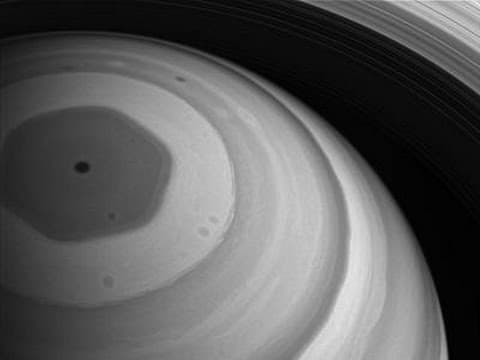
- 😋 The telescope's study of Enceladus plumes provides valuable data on the extent of water vapor ejection and its contribution to Saturn's ring system.
- 🙂 Webb's observations of distant galaxies and carbon compounds shed light on organic chemistry in deep space and challenge existing theories.
Install to Summarize YouTube Videos and Get Transcripts
Explore YouTube Video Summarizer or Get YouTube Transcript Extractor
Questions & Answers
Q: How has JWST contributed to our understanding of star formation?
By discovering a small brown dwarf in a star cluster, JWST has raised questions about current models of star formation and the possibility of ejection of giant exoplanets from star systems.
Q: What is unique about the ringed asteroid discovered by JWST?
The asteroid, named Chariklo, has rings, which are typically found only in planets. The telescope's observations will help determine the thickness, color, and particle size of the rings, as well as their origin.
Q: What insights did JWST provide about exoplanet atmospheres?
Webb detected water vapor, methane, carbon monoxide, carbon dioxide, and silicate clouds on exoplanets like VHS 1256b. These findings expand our knowledge of exoplanet atmospheres and their composition.
Q: What did JWST discover about the temperature of Trappist 1b?
The observations showed that Trappist 1b is a hot planet without an atmosphere, with a temperature of 230 degrees Celsius. This marks the first analysis of an exoplanet in a similar context to our inner solar system.
Summary & Key Takeaways
-
The JWST discovered a young brown dwarf in a star cluster that challenges current models of star formation.
-
Webb observed a centaur asteroid with rings, a phenomenon typically seen only in planets.
-
The telescope detected silicate clouds on exoplanet VHS 1256b, providing valuable insights into exoplanet atmospheres.
-
JWST measured the temperature of Trappist 1b, revealing a hot, atmosphere-less planet.
Read in Other Languages (beta)
Share This Summary 📚
Summarize YouTube Videos and Get Video Transcripts with 1-Click
Try YouTube Summary with ChatGPT & Claude or YouTube Transcript Generator
Explore More Summaries from John Michael Godier 📚

Summarize YouTube Videos and Get Video Transcripts with 1-Click
Try YouTube Summary with ChatGPT & Claude or YouTube Transcript Generator