EPSTEIN BARR VIRUS----Testing🧪🧪
TL;DR
Dr. Jin Sung explains Epstein-Barr virus testing and its implications.
Transcript
welcome back this is Dr Jin sung we're a clinical Excellence meets excellent results today we're going to talk about Epstein-Barr virus testing how do we determine if you have an acute infection past infection or you have a re-activation of the Epstein-Barr virus this is very important because some people will have chronic Epstein-B... Read More
Key Insights
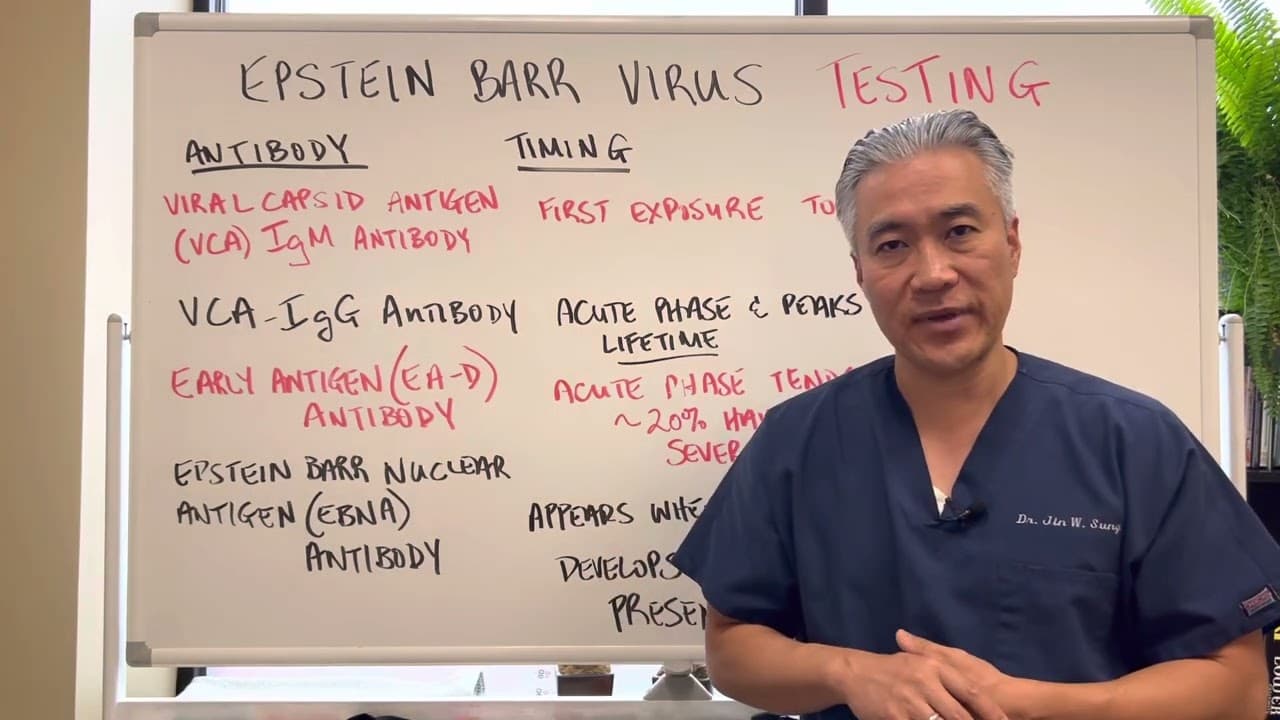
- Epstein-Barr virus testing involves detecting various antibodies: VCA-IgM, VCA-IgG, EA-D, and EBNA, each indicating different infection stages.
- VCA-IgM antibodies appear first post-exposure and disappear after 4-6 weeks, indicating a recent infection.
- VCA-IgG antibodies appear during acute infection, peak at 2-4 weeks, and persist for life, indicating past exposure.
- EA-D antibodies appear during acute infection and may persist in 20% of people, complicating reactivation diagnosis.
- EBNA antibodies develop 2-4 months after acute infection resolution and persist for life, indicating past infection.
- Negative results for all antibodies suggest no prior infection, making the individual susceptible to EBV.
- Positive VCA-IgM and VCA-IgG with negative EA-D and EBNA suggest an early or primary infection.
- Positive VCA-IgG, EA-D, and EBNA may indicate virus reactivation, requiring clinical symptom evaluation.
Install to Summarize YouTube Videos and Get Transcripts
Explore YouTube Video Summarizer or Get YouTube Transcript Extractor
Questions & Answers
Q: What is the significance of VCA-IgM antibodies in Epstein-Barr virus testing?
VCA-IgM antibodies are significant because they appear first after exposure to the Epstein-Barr virus and indicate a recent infection. These antibodies typically disappear after about four to six weeks, helping differentiate between recent and past infections. Their presence suggests the individual is in the early stages of infection.
Q: How do VCA-IgG antibodies differ from VCA-IgM in Epstein-Barr virus testing?
VCA-IgG antibodies differ from VCA-IgM as they appear during the acute phase of infection, peaking around two to four weeks. Unlike VCA-IgM, VCA-IgG antibodies persist for life, indicating past exposure to the virus. Their presence helps confirm that an individual has been previously infected with Epstein-Barr virus.
Q: What challenges arise from the persistence of EA-D antibodies in some individuals?
The persistence of EA-D antibodies in about 20% of individuals poses diagnostic challenges, as these antibodies may remain detectable long after the acute infection has resolved. This persistence can complicate the interpretation of reactivation tests, making it necessary to consider clinical symptoms alongside antibody results to accurately diagnose reactivation.
Q: What does the presence of EBNA antibodies indicate in Epstein-Barr virus testing?
The presence of EBNA antibodies indicates that the acute phase of the Epstein-Barr virus infection has resolved. These antibodies typically develop two to four months after the initial infection and persist for life. Their presence confirms that the individual has been infected in the past and is no longer in the acute phase.
Q: How can lifestyle changes support the immune system in managing Epstein-Barr virus?
Lifestyle changes can significantly support the immune system in managing Epstein-Barr virus. Key changes include ensuring adequate sleep, reducing stress, and eliminating harmful habits like smoking and alcohol consumption. These factors help strengthen the immune response, making it more effective in combating chronic viral infections and preventing reactivation.
Q: What does a negative result for all Epstein-Barr virus antibodies suggest?
A negative result for all Epstein-Barr virus antibodies suggests that the individual has never been infected with the virus and is currently not experiencing an acute infection. This result indicates susceptibility to Epstein-Barr virus infection, meaning the person can contract the virus in the future if exposed.
Q: How is a reactivation of Epstein-Barr virus identified through antibody testing?
Reactivation of Epstein-Barr virus is identified through antibody testing by detecting positive VCA-IgG, EA-D, and EBNA antibodies. This combination suggests a possible reactivation, but due to EA-D's persistence in some individuals, clinical symptoms must also be evaluated to confirm reactivation accurately.
Q: Why is it important to consider clinical symptoms alongside antibody results in Epstein-Barr virus testing?
Considering clinical symptoms alongside antibody results in Epstein-Barr virus testing is crucial because antibody persistence, like EA-D's, can complicate diagnosis. Symptoms provide additional context to differentiate between past infection, active infection, or reactivation, ensuring accurate diagnosis and appropriate management of the virus.
Summary & Key Takeaways
-
Dr. Jin Sung discusses the importance of Epstein-Barr virus testing in diagnosing acute, past, or reactivated infections. The presence of specific antibodies helps in identifying the infection stage. Understanding these stages is crucial for managing health issues like chronic fatigue and thyroid problems.
-
VCA-IgM antibodies indicate recent infection, while VCA-IgG suggests past exposure. EA-D antibodies may persist in some, complicating diagnosis. EBNA antibodies appear after acute infection resolution. These tests help determine susceptibility, active infection, or reactivation.
-
Managing chronic virus issues involves more than targeting the virus; it's about strengthening the immune system through lifestyle changes. Dr. Sung emphasizes the importance of sleep, stress reduction, and eliminating harmful habits like smoking and alcohol to support immune health.
Read in Other Languages (beta)
Share This Summary 📚
Summarize YouTube Videos and Get Video Transcripts with 1-Click
Try YouTube Summary with ChatGPT & Claude or YouTube Transcript Generator
Explore More Summaries from Dr. Jin W. Sung 📚




Summarize YouTube Videos and Get Video Transcripts with 1-Click
Try YouTube Summary with ChatGPT & Claude or YouTube Transcript Generator