What Happens When the Fed Raises Interest Rates?
TL;DR
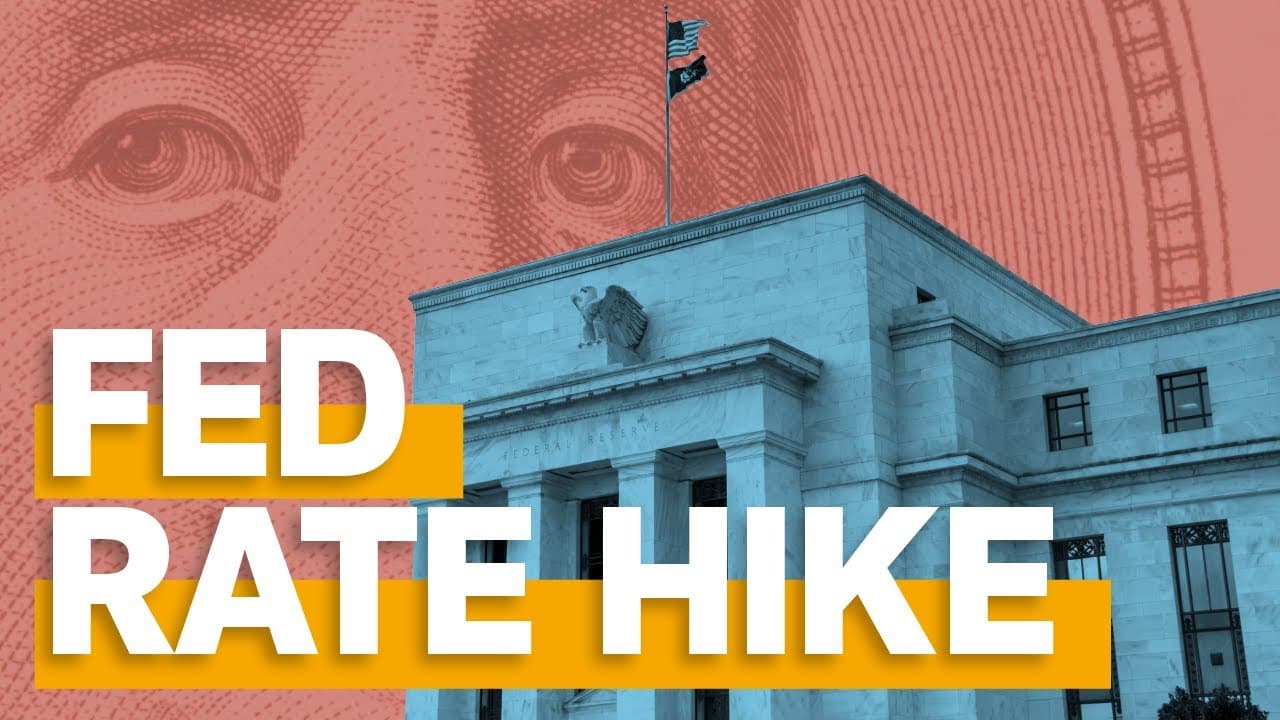
When the Fed raises interest rates, it aims to control inflation by making borrowing more expensive, which can slow economic spending. The impact on investments varies; while rising rates may negatively affect bond prices and growth stocks, they can benefit financial sectors like banks. Market volatility often increases as investors adjust to these changes.
Transcript
The Federal Reserve, or “Fed,” is the central bank of the United States. Its goal is to keep the U.S. economy stable in two ways: maximizing employment and stabilizing inflation. One of the Fed’s primary tools is decreasing or increasing the federal funds rate, which is the rate banks charge each other for overnight loans. It is considered the base... Read More
Key Insights
- 🥅 The Federal Reserve's goal is to maintain economic stability by managing inflation and employment levels.
- ☠️ Rate hikes are intended to curb inflation by making borrowing more expensive, reducing spending and price levels.
- ☠️ The impact of rate hikes on investments is complex, with stocks, bonds, and sectors responding differently.
- 😮 Rising interest rates can affect individual stock valuations, with growth stocks being more sensitive due to their reliance on future profits.
- 😮 Financial stocks, particularly banks, tend to benefit from rising rates, while bond prices generally decline.
- ☠️ Investors may adjust their allocations in anticipation of rate hikes, potentially causing market movements.
- 🚄 The speed and aggressiveness of rate hikes can influence market volatility, especially in areas with high leverage or low liquidity.
Install to Summarize YouTube Videos and Get Transcripts
Explore YouTube Video Summarizer or Get YouTube Transcript Extractor
Questions & Answers
Q: Why does the Federal Reserve raise interest rates?
The Fed raises rates to control inflation by making borrowing more expensive, which reduces spending and lowers price levels.
Q: How do rate hikes impact individual stocks?
Rising rates can affect stock valuations, particularly growth stocks, as higher rates decrease the value of expected future profits.
Q: Which sectors tend to perform better during rate hikes?
Financial stocks, particularly bank stocks, tend to benefit from rising rates as they can charge borrowers more.
Q: Are rising interest rates negative for bond prices?
Yes, higher rates lead to lower bond prices as yields and prices move in opposite directions.
Q: How can investors prepare for rate hikes?
Investors may adjust their allocations by selling bonds and buying stocks or moving to cash to capitalize on potential market movements.
Q: What is the historical relationship between rate hikes and the stock market?
While the relationship is complex, a study found that the S&P 500 generally rose when the 10-year Treasury yield increased.
Q: How can the speed of rate hikes impact investments?
Aggressive rate hikes, as seen in 2022, can induce market volatility, particularly in areas with high leverage or low liquidity.
Q: Are rate hikes an investment opportunity?
Yes, rate hikes can provide higher yields for lower-risk investments like bonds and cash, making them attractive to some investors.
Summary & Key Takeaways
-
The Federal Reserve's primary goal is to maintain economic stability by maximizing employment and stabilizing inflation.
-
Rate hikes by the Fed increase the cost of borrowing for businesses and individuals, aiming to reduce spending and tame inflation.
-
Rising interest rates can affect stock and bond prices, with different sectors and asset classes responding differently.
Read in Other Languages (beta)
Share This Summary 📚
Summarize YouTube Videos and Get Video Transcripts with 1-Click
Try YouTube Summary with ChatGPT & Claude or YouTube Transcript Generator
Explore More Summaries from Charles Schwab 📚





Summarize YouTube Videos and Get Video Transcripts with 1-Click
Try YouTube Summary with ChatGPT & Claude or YouTube Transcript Generator