Why Is Biodiversity Important for Our Ecosystems?
TL;DR
Biodiversity is vital for ecosystems, encompassing genetic, species, and ecosystem diversity. Each level contributes uniquely to ecosystem health, but human activities are significantly decreasing biodiversity, leading to a higher extinction rate than new species formation. This decline poses risks to our survival and the health of our environment.
Transcript
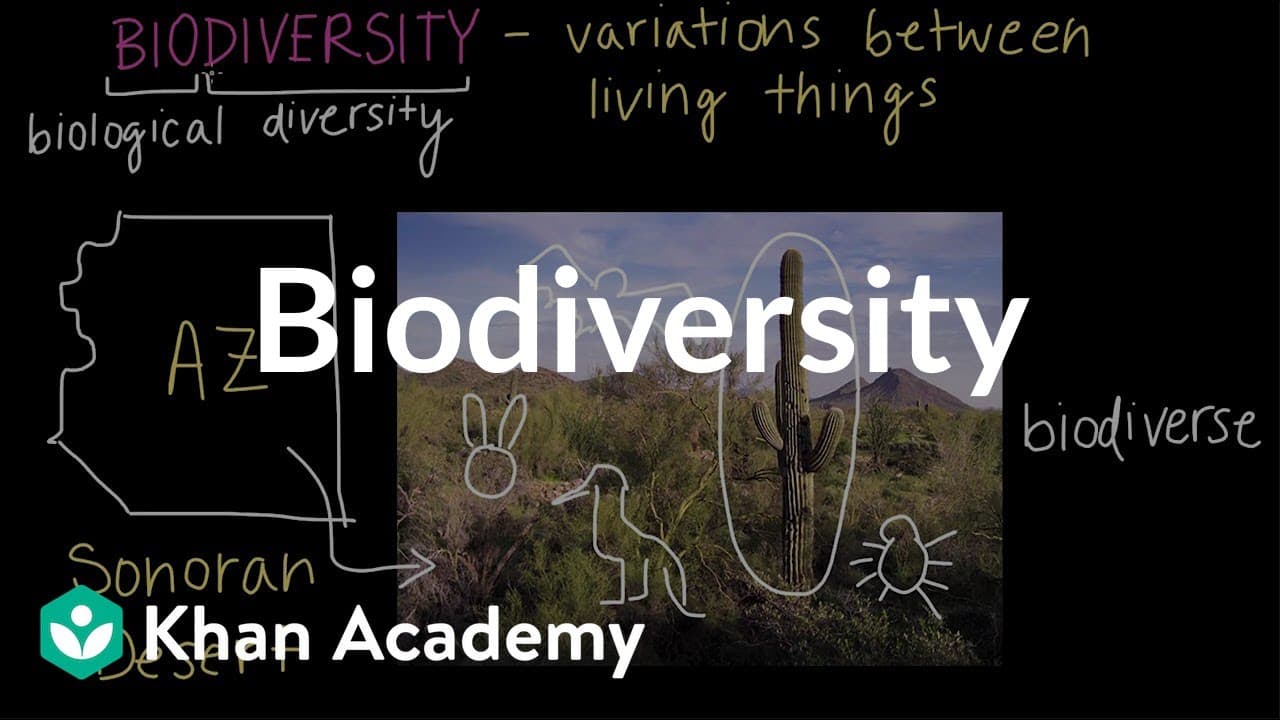
- [Instructor] Today, we're going to talk about biodiversity. So biodiversity as you might've guessed comes from two words, biological and diversity. And essentially, it's the variations or the diversity present between living things. Now, I grew up in the sunny state of Arizona. And at first glance, there doesn't seem to be much variety in such a ... Read More
Key Insights
- 🖐️ Biodiversity encompasses genetic, species, and ecosystem diversity, each playing a crucial role in maintaining healthy ecosystems.
- 👻 Genetic biodiversity, as seen in the rock pocket mouse, allows organisms to adapt to changing environments through natural selection.
- ❓ Species biodiversity increases the resilience and functionality of ecosystems by filling different ecological roles.
- 🐕🦺 Ecosystem biodiversity is essential for providing humans with vital resources and services.
- ❓ Speciation events increase biodiversity, while extinctions decrease it.
- 💱 Human actions, such as climate change and habitat destruction, are causing a rapid decline in biodiversity.
- ☠️ The current extinction rate is significantly higher than the natural speciation rate.
Install to Summarize YouTube Videos and Get Transcripts
Explore YouTube Video Summarizer or Get YouTube Transcript Extractor
Questions & Answers
Q: What is biodiversity?
Biodiversity refers to the diversity and variations of living things, including genetic, species, and ecosystem diversity. It is essential for healthy ecosystems and our long-term survival.
Q: How does genetic biodiversity manifest in the rock pocket mouse population?
The rock pocket mouse species exhibits genetic biodiversity through the presence of both tan and black-colored mice. This variation is attributed to natural selection, with each coat color being advantageous in different habitats.
Q: Why is species biodiversity important?
Species biodiversity is crucial because it allows for a greater range of ecological roles to be filled within an ecosystem. The more species present, the healthier and more resilient the ecosystem becomes.
Q: What is ecosystem biodiversity?
Ecosystem biodiversity refers to the variety of different ecosystems on Earth, such as deserts, forests, and coral reefs. These diverse ecosystems provide vital resources and services that are essential for our survival.
Q: How does speciation contribute to biodiversity?
Speciation occurs when one species evolves into multiple species over time. It increases biodiversity by creating new genetic variations and species that contribute to the overall diversity of life on Earth.
Q: What causes a decrease in biodiversity?
Human actions, including climate change, habitat destruction, and overexploitation of resources, are causing a significant loss of biodiversity. This extinction rate is currently much higher than the natural speciation rate.
Q: How fast is species extinction occurring?
Species extinction is currently happening at a rate 100 to 1000 times faster than the natural background rate recorded in fossil records. This rapid decline in biodiversity poses a significant threat to ecosystems and our own survival.
Q: Why is biodiversity important for humans?
Biodiversity is crucial for our survival because diverse ecosystems provide us with essential resources and services. The loss of biodiversity puts our quality of life and long-term survival at risk.
Summary & Key Takeaways
-
Biodiversity encompasses genetic, species, and ecosystem diversity, with each level playing a unique role in maintaining healthy ecosystems.
-
Genetic biodiversity is exemplified by the rock pocket mouse, which shows how natural selection and genetic variation allow organisms to adapt to changing environments.
-
Species biodiversity, such as the numerous bat species in the Sonoran Desert, contributes to ecosystem health by filling different ecological roles.
-
Ecosystem biodiversity is the variety of ecosystems on Earth, including deserts, forests, and coral reefs, which provide essential resources and services for human survival.
Read in Other Languages (beta)
Share This Summary 📚
Summarize YouTube Videos and Get Video Transcripts with 1-Click
Try YouTube Summary with ChatGPT & Claude or YouTube Transcript Generator
Explore More Summaries from Khan Academy 📚



Summarize YouTube Videos and Get Video Transcripts with 1-Click
Try YouTube Summary with ChatGPT & Claude or YouTube Transcript Generator