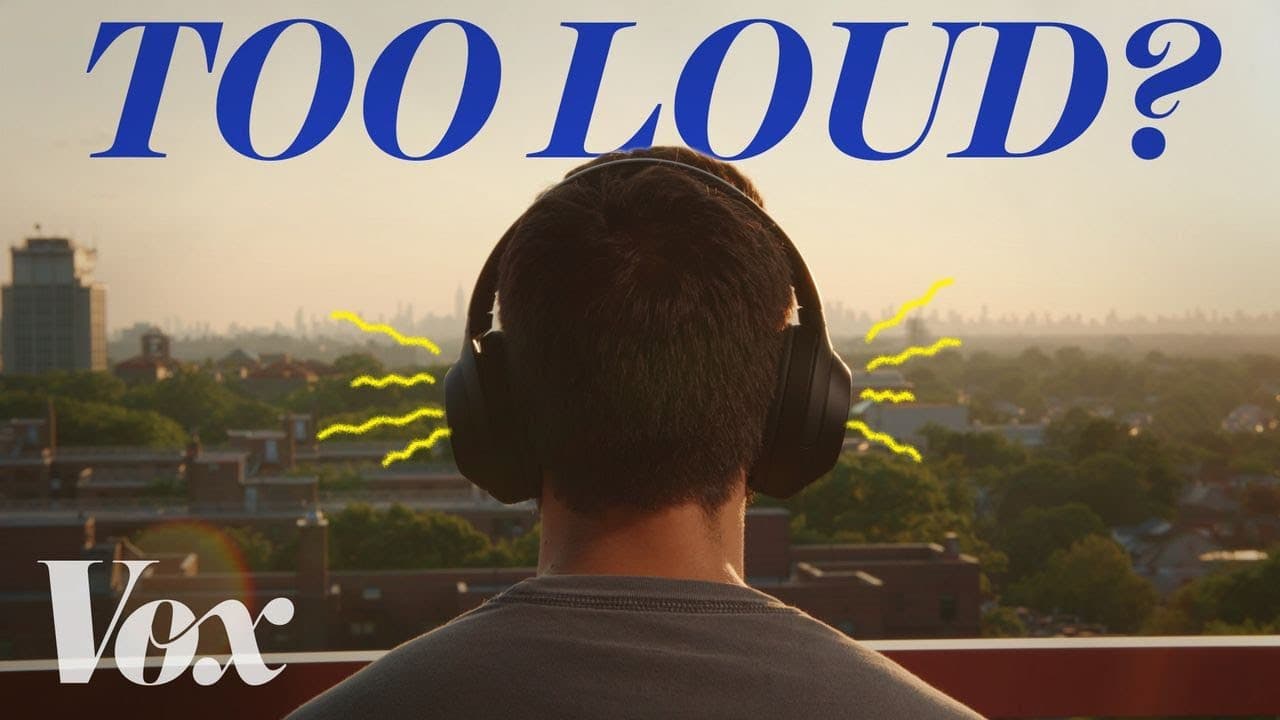
Are headphones destroying our hearing?
TL;DR
Over a billion young adults are at risk of hearing loss due to headphone use.
Transcript
I wear headphones all the time recently I've been wondering if all that listening is bad for me and this led to a full-on spiral where I learned the horrifying statistic that over a billion young adults are at risk of permanent avoidable hearing loss am I one of those billion in a time where we're giving our ears less of a break than ever before ho... Read More
Key Insights
- 🦻 The delicate structure of hair cells in the inner ear is crucial for hearing, and damage to them results in permanent hearing loss.
- 👂 Prolonged exposure to sounds louder than 85 dB can significantly increase the risk of sustaining hearing damage.
- 🛟 Noise-canceling technology is not merely a luxury; it serves as an essential protective measure in environments with persistent noise.
- 🔊 The perception of sound differs between environments, with noise-canceling headphones effectively filtering out low-frequency sounds better than sudden, high-frequency noises.
- 👂 Many individuals underestimate the loudness of sounds they are exposed to daily, heightening the risk of unintentional hearing damage.
- 🥰 Not all headphones provide the same level of hearing protection; the effectiveness of noise cancellation varies by brand and model.
- 🦻 Raising awareness about the importance of hearing protection is critical, especially when considering that noise-induced hearing loss is not immediately visible or apparent.
Install to Summarize YouTube Videos and Get Transcripts
Explore YouTube Video Summarizer or Get YouTube Transcript Extractor
Questions & Answers
Q: What causes permanent damage to our hearing?
Permanent hearing damage occurs when the tiny hair cells in the inner ear become bent or broken due to excessively loud sounds or prolonged exposure to noise. When these hair cells are damaged, they cannot regenerate, leading to irreversible hearing loss. The damage level is influenced by both the loudness of sound measured in decibels (dB) and the duration of exposure, making it critical to pay attention to volume levels.
Q: How loud is too loud when it comes to sound exposure?
According to the U.S. Department of Labor, exposure to sound levels above 85 dB for more than eight hours can be hazardous to hearing. To put this in perspective, many everyday sounds are already at risk levels; for instance, a lawnmower can reach 90 dB, while music from headphones can easily exceed those levels without the listener realizing it.
Q: What role do noise-canceling headphones play in hearing protection?
Noise-canceling headphones can significantly aid in hearing protection by reducing ambient noise, enabling users to listen at lower, safer volumes. They employ technology that cancels out specific sound frequencies, primarily low-frequency hums, thus preventing listeners from needing to crank up the volume excessively to drown out distractions.
Q: Do noise-canceling headphones affect how we perceive sound?
When noise-canceling headphones function correctly, they do not introduce sound; they eliminate it. This process reduces sound waves before they reach the ear, allowing for a quieter experience without the detrimental effect on hair cells. As a result, listeners can enjoy audio without the harmful impact often associated with loud environments.
Summary & Key Takeaways
-
Over a billion young adults are susceptible to hearing loss, primarily due to prolonged exposure to high-volume audio through headphones, which can damage fragile hair cells in the ears.
-
Sound loudness is measured in decibels (dB), and even small increases in volume can significantly impact hearing health, emphasizing the importance of monitoring sound levels while listening.
-
Noise-canceling headphones serve as an effective tool for protecting hearing by reducing loud ambient sounds, allowing users to listen at safer volumes without straining to overpower external noise.
Read in Other Languages (beta)
Share This Summary 📚
Summarize YouTube Videos and Get Video Transcripts with 1-Click
Try YouTube Summary with ChatGPT & Claude or YouTube Transcript Generator
Explore More Summaries from Vox 📚



Summarize YouTube Videos and Get Video Transcripts with 1-Click
Try YouTube Summary with ChatGPT & Claude or YouTube Transcript Generator