How Do Sensory Rooms Help Students with Autism Learn?
TL;DR
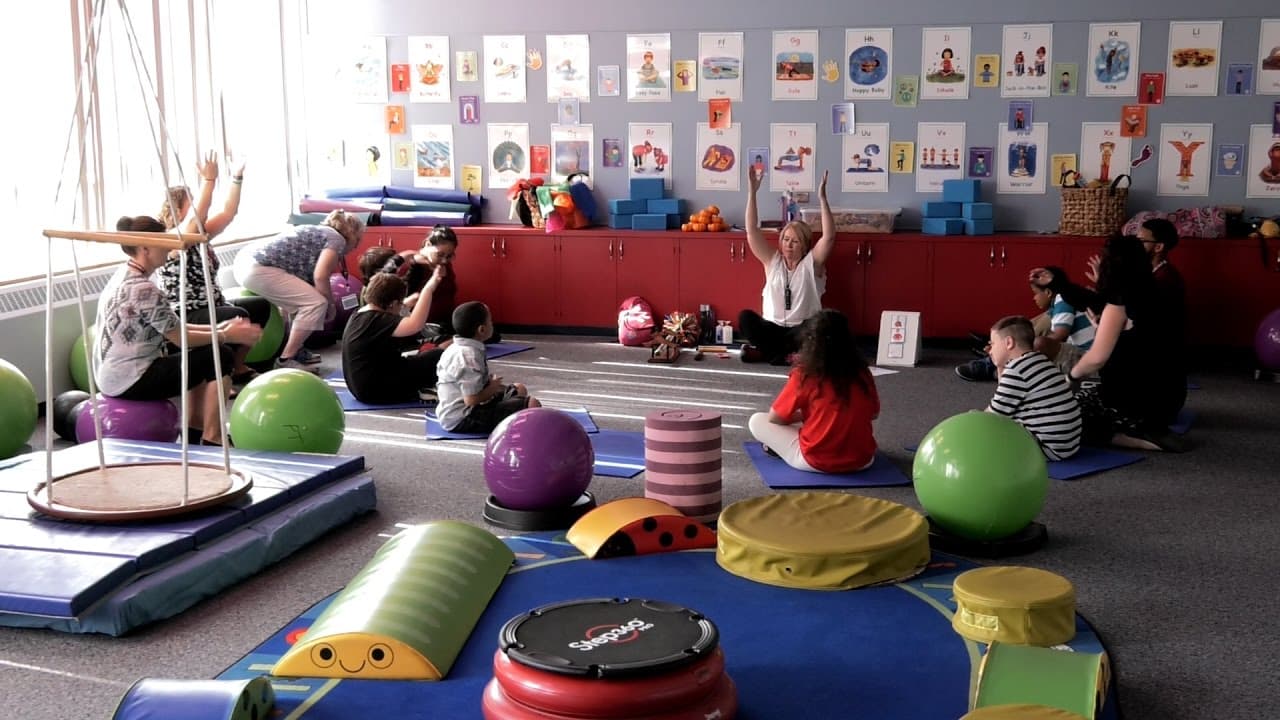
Sensory rooms support students with autism by meeting their sensory needs, helping them calm down and stabilize emotionally, which leads to improved focus and learning. Features like crash pads, light walls, and various activity stations are designed to cater to different sensory requirements, allowing students to prepare for a productive learning environment.
Transcript
Cheryl: Research shows that if the student's in the right mindset and they get their sensory needs met, they're going to be much better learners. >>Heather: Hands to your heart space. Take a deep breath in. [ inhale, exhale ] >>Cheryl: The sensory room is probably my most important piece of the day. Students go to the sensory room in order to cal... Read More
Key Insights
- 🗯️ Students in the right mindset and with their sensory needs met are better learners.
- 👾 Sensory rooms provide a space for students to calm themselves and stabilize their emotions before learning.
- 🧑🎓 The design of the sensory room, such as carpets and changed lighting, creates a different sensory experience for students.
- 💀 Different stations in the sensory room cater to specific needs of students, such as anger release or calming movements.
- 👾 The crash pad in the sensory room provides a safe space for students to crash into.
- 🙂 The light wall in the sensory room offers various programmed games for students to engage with.
- 🤵 Sensory rooms also focus on promoting balance, coordination, and body awareness through activities like walking paths.
Install to Summarize YouTube Videos and Get Transcripts
Explore YouTube Video Summarizer or Get YouTube Transcript Extractor
Questions & Answers
Q: How does the sensory room benefit students' learning?
The sensory room helps students meet their sensory needs, calm their bodies, and stabilize their emotions, making them more focused and ready to learn.
Q: What are some features of a sensory room?
Sensory rooms may have carpeted floors to absorb sound, changed lighting to create a different atmosphere, and various stations with activities like bouncing on a ball or swinging.
Q: How does the sensory room address different students' needs?
The sensory room offers different stations for students to choose based on their needs, such as punching bags for releasing anger, swings for calming movements, and crash pads for safety.
Q: How does the sensory room promote balance and coordination?
The sensory room includes activities like walking paths that require students to work on their balance and coordination and correct their body in space.
Summary & Key Takeaways
-
Research shows that sensory rooms help students get their sensory needs met, leading to improved learning outcomes.
-
Sensory rooms provide a space for students to calm their bodies and stabilize their emotions, making them ready and happy to learn.
-
The design of the sensory room includes features like carpeted floors, changed lighting, and various stations to meet different students' needs.
Read in Other Languages (beta)
Share This Summary 📚
Summarize YouTube Videos and Get Video Transcripts with 1-Click
Try YouTube Summary with ChatGPT & Claude or YouTube Transcript Generator
Explore More Summaries from Edutopia 📚





Summarize YouTube Videos and Get Video Transcripts with 1-Click
Try YouTube Summary with ChatGPT & Claude or YouTube Transcript Generator