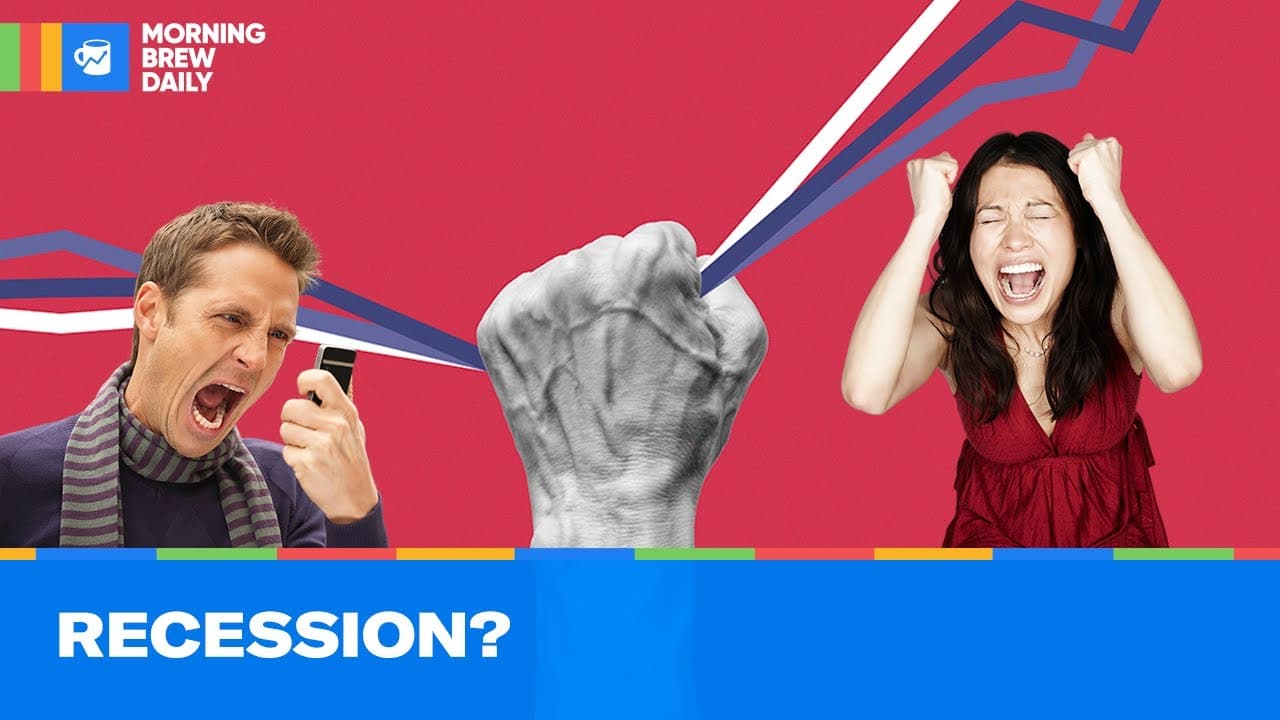
Why the Poor Jobs Report is Fueling Recession Fears
TL;DR
Experts fear recession amid market fall and consumer shifts.
Transcript
Good Morning Brew Daily Show. I'm Neal Freyman, and I'm Kyle Hagge. Today, markets are cratering after a spooky jobs report. Do not I repeat, do not open your brokerage account today. And we're going to talk about how retailers strategy of locking up your toothpaste has backfired spectacularly. It's Monday, August 5th. Let's ride The man, the myth,... Read More
Key Insights
- The July jobs report showed lower-than-expected job additions, with only 114,000 jobs added compared to the predicted 175,000, raising recession fears.
- The unemployment rate rose to 4.3% from 3.7% earlier in the year, contributing to economic concerns.
- The Federal Reserve's decision not to cut interest rates has been criticized, with many believing it should have acted sooner to prevent economic downturn.
- Stock markets are experiencing significant volatility, with global indices like the Nikkei 225 and European stocks facing major declines.
- Consumers are increasingly turning to Amazon due to frustration with locked products in physical stores, which are meant to prevent theft but reduce sales.
- Chevron's move from California to Texas highlights a trend of companies leaving California due to high costs and regulatory challenges.
- There is a growing trend towards smaller car purchases in the U.S., driven by affordability and economic factors.
- Olympic victories and upcoming events, such as Kamala Harris's choice for a running mate, are notable highlights for the week.
Install to Summarize YouTube Videos and Get Transcripts
Explore YouTube Video Summarizer or Get YouTube Transcript Extractor
Questions & Answers
Q: What was the main concern with the July jobs report?
The main concern with the July jobs report was the lower-than-expected job additions, with only 114,000 jobs added compared to the predicted 175,000. This, coupled with a rising unemployment rate, has fueled fears of an impending recession and highlighted potential cracks in the U.S. economy.
Q: Why are consumers turning to Amazon instead of physical stores?
Consumers are turning to Amazon because many physical stores have implemented anti-theft measures, such as locking products behind barriers, which frustrates customers. These measures, while intended to reduce theft, have inadvertently driven consumers to the convenience of online shopping, particularly Amazon.
Q: What is the significance of Chevron moving to Texas?
Chevron's move to Texas is significant as it highlights a trend of companies relocating from California due to high operational costs and strict regulatory environments. Texas offers a more business-friendly climate, which has attracted several Fortune 500 companies seeking better economic conditions.
Q: Why are smaller cars becoming more popular in the U.S.?
Smaller cars are becoming more popular in the U.S. due to their affordability, especially as vehicle prices have risen significantly. Economic pressures and the need for cost-effective transportation solutions are driving consumers to opt for compact and subcompact vehicles, reversing a trend towards larger, more expensive cars.
Q: How has the Federal Reserve's inaction impacted the economy?
The Federal Reserve's decision not to cut interest rates has been criticized for potentially exacerbating economic challenges. Critics argue that the Fed should have acted sooner to mitigate the effects of a slowing economy and prevent further market instability, as indicated by the recent jobs report and rising unemployment.
Q: What are the implications of the rising unemployment rate?
The rising unemployment rate, now at 4.3%, suggests potential weaknesses in the labor market and broader economy. It raises concerns about consumer spending, which is a major driver of U.S. GDP, and indicates that the economy may be heading towards a recession if not addressed promptly.
Q: What role does consumer spending play in the U.S. economy?
Consumer spending is crucial to the U.S. economy, accounting for 70% of GDP. A healthy job market supports consumer confidence and spending. However, with rising unemployment and economic uncertainty, consumer spending could decline, impacting economic growth and stability.
Q: What are the potential outcomes of the Federal Reserve's next meeting?
The Federal Reserve's next meeting could result in an interest rate cut to address economic concerns. The standard cut would be 25 basis points, but given recent market volatility, there is speculation that a larger cut of 50 basis points might be necessary to preemptively counteract recessionary pressures.
Summary & Key Takeaways
-
The July jobs report indicated significant economic challenges, with fewer jobs added than expected and a rising unemployment rate, leading to increased recession fears and market volatility.
-
Retailers' anti-theft measures, such as locking products, are driving consumers to Amazon, highlighting a shift in consumer behavior and challenges for physical stores.
-
Chevron's relocation from California to Texas reflects a broader trend of companies moving away from California due to regulatory and economic pressures, while smaller cars gain popularity among consumers.
Read in Other Languages (beta)
Share This Summary 📚
Summarize YouTube Videos and Get Video Transcripts with 1-Click
Try YouTube Summary with ChatGPT & Claude or YouTube Transcript Generator
Explore More Summaries from Morning Brew Daily 📚



Summarize YouTube Videos and Get Video Transcripts with 1-Click
Try YouTube Summary with ChatGPT & Claude or YouTube Transcript Generator