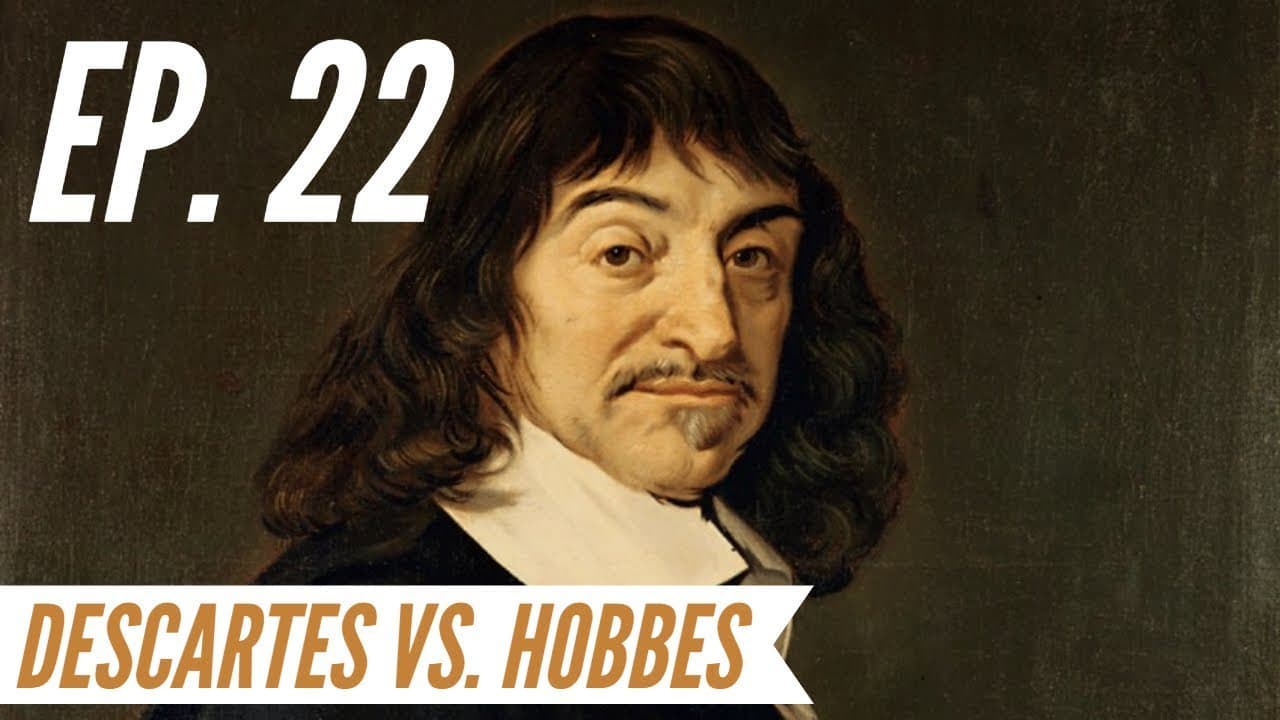
Ep. 22 - Awakening from the Meaning Crisis - Descartes vs. Hobbes
TL;DR
Descartes and Hobbes' conflicting views on the relationship between mind and matter contribute to the existential and cultural challenges of the meaning crisis.
Transcript
you welcome back to awakening from the meeting crisis last time we took a look at Martin Luther and the deep impact in our culture of grammar made by the Protestant Reformation and we talked about things like cultural training for narcissism Sapientia obsolescence the division of church and state which furthers secularism and the rise of the Protes... Read More
Key Insights
- 🤯 The clash between Descartes and Hobbes reveals the tension between mind and matter, leading to philosophical and existential challenges.
- 💨 Descartes' emphasis on consciousness and Hobbes' proposed artificial intelligence both contribute to the meaning crisis in different ways.
- 🤯 The loss of contact with reality and the isolation of the individual mind are central themes in the existential challenges of the meaning crisis.
- 🫱 The debate between faith as radical acceptance and knowledge as derived certainty is a significant element in cultural wars.
- 🤳 The clash between Luther's grammar and Descartes' grammar highlights the interconnectedness between faith, knowledge, and the isolated individual self.
- ❓ The pursuit of certainty and the rejection of the human soul in the Scientific Revolution deepen the existential challenges of the meaning crisis.
- 🤯 Artificial intelligence plays a significant role in the transformation of society and our understanding of the mind, contributing to the meaning crisis.
Install to Summarize YouTube Videos and Get Transcripts
Explore YouTube Video Summarizer or Get YouTube Transcript Extractor
Questions & Answers
Q: How does Descartes' view of mind and matter differ from Hobbes'?
Descartes argues that mind and matter are fundamentally different, with mind possessing properties such as purpose, meaning, and normativity that matter lacks. Hobbes, on the other hand, attempts to create artificial intelligence through material computation.
Q: How does the clash between Descartes and Luther's grammars influence cultural wars?
The clash between Descartes' emphasis on consciousness and Luther's emphasis on conscience highlights the tension between faith as radical acceptance and knowledge as the pursuit of logically derived certainty, which is a major theme in cultural conflicts.
Q: How does the meaning crisis relate to Descartes and Hobbes' views?
Descartes' pursuit of certainty and the loss of contact with reality due to the isolation of the individual mind contribute to the existential challenges of the meaning crisis. Hobbes' denial of the human soul exacerbates cultural narcissism and further intensifies the crisis.
Q: What is the significance of artificial intelligence in the Scientific Revolution and the meaning crisis?
Hobbes suggests that artificial intelligence is a result of the Scientific Revolution and the rejection of the human soul. This proposal deepens the meaning crisis by challenging the concept of uniqueness and the search for a true self in a purposeless and meaningless cosmos.
Key Insights:
- The clash between Descartes and Hobbes reveals the tension between mind and matter, leading to philosophical and existential challenges.
- Descartes' emphasis on consciousness and Hobbes' proposed artificial intelligence both contribute to the meaning crisis in different ways.
- The loss of contact with reality and the isolation of the individual mind are central themes in the existential challenges of the meaning crisis.
- The debate between faith as radical acceptance and knowledge as derived certainty is a significant element in cultural wars.
- The clash between Luther's grammar and Descartes' grammar highlights the interconnectedness between faith, knowledge, and the isolated individual self.
- The pursuit of certainty and the rejection of the human soul in the Scientific Revolution deepen the existential challenges of the meaning crisis.
- Artificial intelligence plays a significant role in the transformation of society and our understanding of the mind, contributing to the meaning crisis.
- The loss of the psycho technologies of finesse and the absence of transformative practices and traditions result in a lack of deep fundamental transformations in cognition, consciousness, culture, and community.
Summary & Key Takeaways
-
Descartes proposes the idea that reality can be computed through equations, providing a method for achieving certainty in an uncertain world.
-
Hobbes suggests that artificial intelligence is a product of the Scientific Revolution and attempts to eliminate the concept of the human soul, leading to issues of uniqueness and identity.
-
The clash between Descartes' emphasis on consciousness and Luther's emphasis on conscience reveals tensions in our culture in terms of faith and knowledge.
Read in Other Languages (beta)
Share This Summary 📚
Summarize YouTube Videos and Get Video Transcripts with 1-Click
Try YouTube Summary with ChatGPT & Claude or YouTube Transcript Generator
Explore More Summaries from John Vervaeke 📚

Summarize YouTube Videos and Get Video Transcripts with 1-Click
Try YouTube Summary with ChatGPT & Claude or YouTube Transcript Generator