Why Are We Addicted to Our Phones?
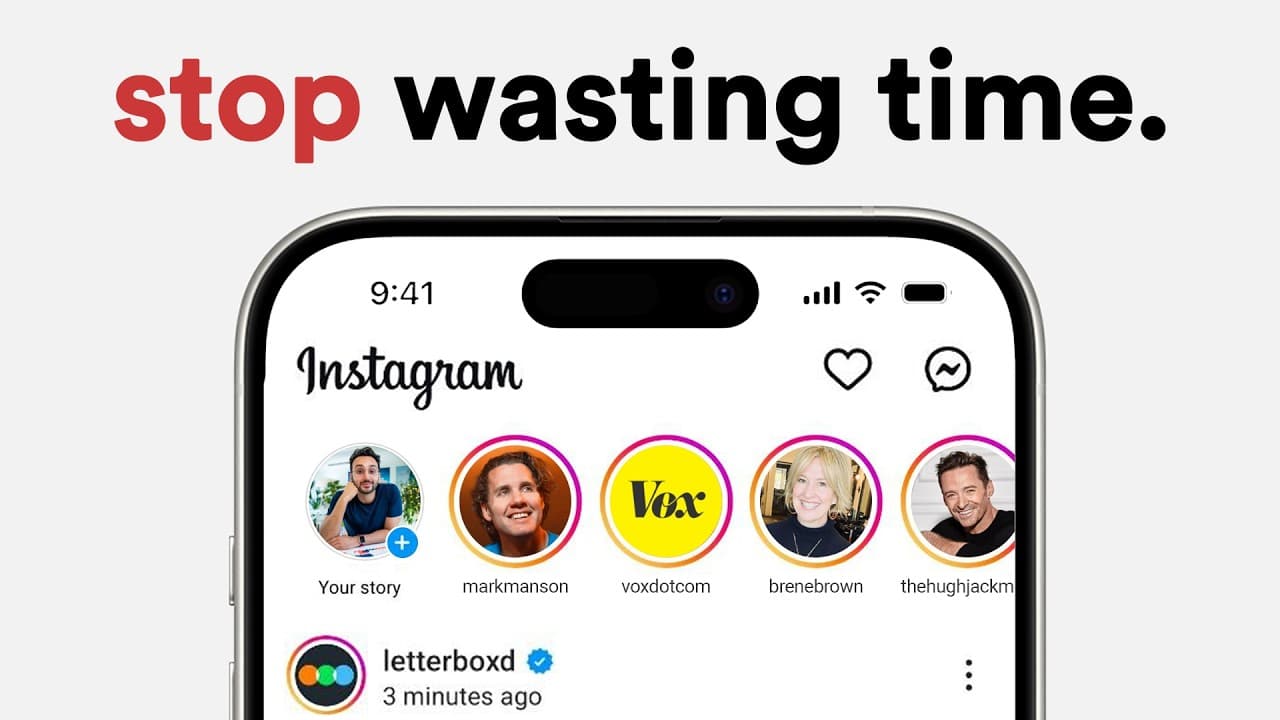
TL;DR
Phone addiction affects many, with the average person spending nearly seven hours daily on their devices. This dependency often arises from features designed to capture attention and can lead to anxiety, depression, and procrastination. However, implementing strategies like app-blocking, focus modes, and reducing social media time can help regain control and improve overall well-being.
Transcript
okay so according to worldwide screen time statistics the average person spends 6 hours and 40 minutes in front of screens which is mostly their phone every single day that is 40% of our waking hours and so if you imagine yourself being alive for at least the next 50 years of the next 50 years you are spending 20 years looking at screens which is p... Read More
Key Insights
- 📣 The average person spends a significant amount of time on their phone each day, contributing to phone addiction.
- 👤 Technology companies use tactics like dopamine triggers and infinite scrolling to keep users engaged and generate advertising revenue.
- 🥺 Phone addiction can lead to anxiety, depression, procrastination, and loneliness.
- 😮 The rise of smartphones and social media has coincided with an increase in mental health issues, particularly among the younger generation.
- 😀 Strategies like app-blocking, focus modes, and rearranging app layouts can help control phone addiction.
- 😒 Limiting social media use can improve well-being.
- 😪 Keeping phones away from the bedside and using grayscale mode can aid in better sleep.
Install to Summarize YouTube Videos and Get Transcripts
Explore YouTube Video Summarizer or Get YouTube Transcript Extractor
Questions & Answers
Q: Why are phones so addictive?
Phones are designed to be addictive through the use of dopamine triggers, infinite scrolling, and random intermittent rewards, which keep us constantly engaged and craving more interaction.
Q: How does phone addiction contribute to mental health issues?
Excessive phone use can increase anxiety, depression, and paranoia. Studies show correlations between phone addiction and higher rates of mental health problems in the younger generation.
Q: What are some strategies to break phone addiction?
Strategies include using app-blocking apps, setting automatic focus modes, keeping phones away from the bedside, rearranging app layouts, using grayscale mode, and replying to messages from a computer instead of a phone.
Q: Can limiting social media use improve well-being?
Research suggests that limiting social media use to approximately 30 minutes per day can lead to improvements in loneliness and depression.
Summary & Key Takeaways
-
The average person spends 40% of their waking hours, or 6 hours and 40 minutes, on screens, mostly on their phones.
-
Phone addiction is prevalent due to brain hacking by technology companies in the attention economy, where our limited attention is traded for advertising revenue.
-
Phone addiction can lead to anxiety, depression, procrastination, loneliness, and other negative impacts on mental health.
Read in Other Languages (beta)
Share This Summary 📚
Summarize YouTube Videos and Get Video Transcripts with 1-Click
Try YouTube Summary with ChatGPT & Claude or YouTube Transcript Generator
Explore More Summaries from Ali Abdaal 📚



Summarize YouTube Videos and Get Video Transcripts with 1-Click
Try YouTube Summary with ChatGPT & Claude or YouTube Transcript Generator