Is it Possible to Ban Encryption?
TL;DR
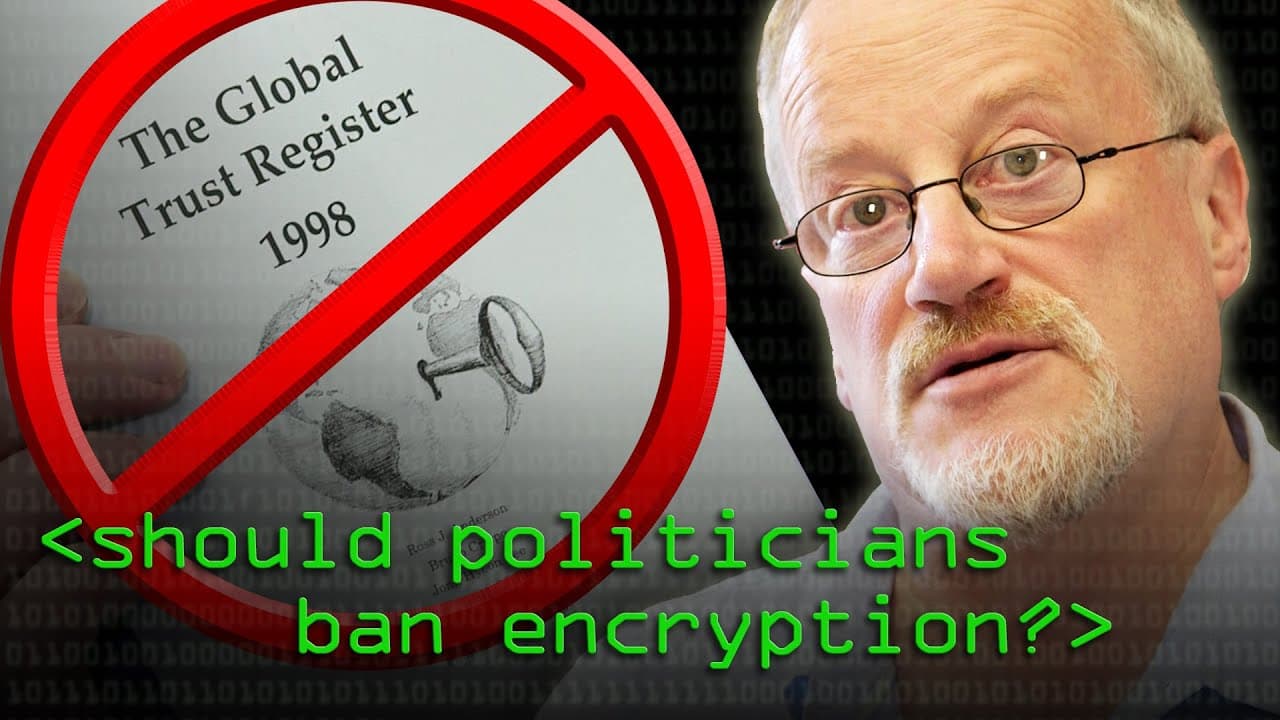
Banning encryption isn't feasible as it safeguards critical online communications and transactions. Despite historical attempts, such as the controversial key escrow initiatives, these regulations have faced considerable pushback. Current laws allow authorities limited access to encrypted data, but the overarching reliance on encryption for privacy and security renders a ban impractical.
Transcript
well you can't realistically ban encryption because it's that tape that holds online systems together um it's how you protect your communications from your browser on your laptop or on your mobile phone to your bank or to a shop where you're shopping it's not just that if you use a pre-payment electricity meter for example and you put in a 20-digit... Read More
Key Insights
- ❓ Encryption is essential for protecting online communications and transactions.
- 🥳 Past attempts to regulate encryption, such as key escrow and trusted third-party certification, have faced opposition.
- 🤩 The Regulation of Investigatory Powers Act 2000 allows police to decrypt information with a signed order if they believe the key is in possession.
- 🧑💻 Recent debates surrounding encryption involve tech companies' resistance to compromising user privacy.
- 🧑💻 Encryption enables tech companies to protect user data from global law enforcement agencies.
- 🖐️ Encryption plays a vital role in preventing unauthorized access to sensitive information.
- 🤕 Attempts to ban encryption are largely driven by political agendas and posturing.
Install to Summarize YouTube Videos and Get Transcripts
Explore YouTube Video Summarizer or Get YouTube Transcript Extractor
Questions & Answers
Q: Can encryption realistically be banned?
No, encryption is crucial for online systems and transactions and attempts to ban it have not been successful in the past. It is widely used and relied upon in various ways.
Q: What were some past attempts to regulate encryption?
In the past, proposals such as key escrow and trusted third-party certification were made, but they faced opposition and were not implemented. The clipper chip, which included a government backdoor key, caused embarrassment to the NSA.
Q: Why are law enforcement agencies pushing for access to encrypted data?
Law enforcement agencies desire access to encrypted data for investigatory purposes. They argue that it will aid in combating crime and terrorism. However, tech companies prioritize user privacy and are resistant to compromising encryption.
Q: How do tech companies handle requests for user data?
Tech companies like Google, Apple, and Facebook encrypt traffic end-to-end, making it impossible for them to comply with warrants or requests for user data. This protects user privacy and prevents surreptitious access by multiple global law enforcement agencies.
Summary & Key Takeaways
-
Encryption is the tape that holds online systems together, protecting communications and transactions from browsers to banks.
-
Past attempts to ban encryption, such as the proposed key escrow system and trusted third-party certification, have been met with opposition and resistance.
-
The Regulation of Investigatory Powers Act 2000 in the UK allows police to decrypt information with a signed order if they believe the key is in possession.
Read in Other Languages (beta)
Share This Summary 📚
Summarize YouTube Videos and Get Video Transcripts with 1-Click
Try YouTube Summary with ChatGPT & Claude or YouTube Transcript Generator
Explore More Summaries from Computerphile 📚





Summarize YouTube Videos and Get Video Transcripts with 1-Click
Try YouTube Summary with ChatGPT & Claude or YouTube Transcript Generator