Why is this art? Andy Warhol, Campbell's Soup Cans | Art History | Khan Academy
TL;DR
Andy Warhol's Campbell Soup Cans challenge the traditional notions of art by transforming mundane objects into focal points, prompting viewers to question the meaning and value of art.
Transcript
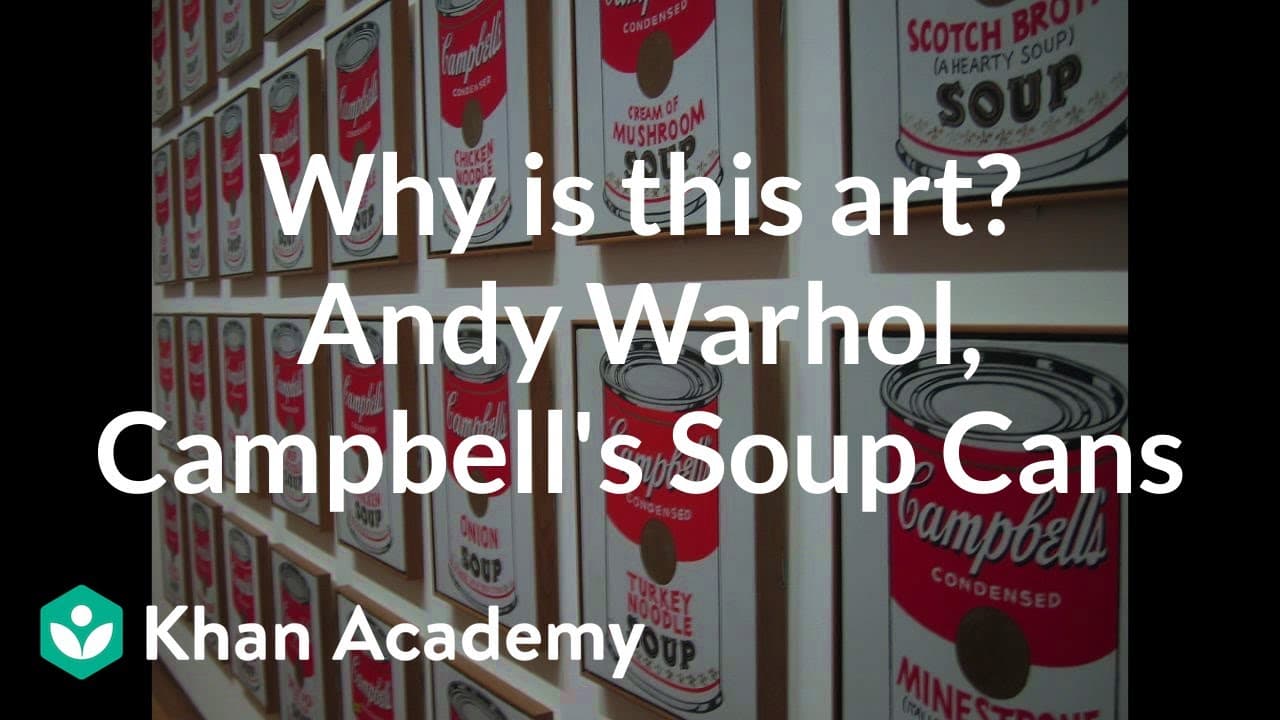
(piano playing) Steven: We're looking at one of the single canvases from a series of canvases of the Campbell Soup Cans by Andy Warhol from 1962 at the Museum of Modern Art. And one of the really important questions that comes up about, especially modern art, is well, why is this art? Sal: When you ask me that a bunch of things kind of surface in m... Read More
Key Insights
- 🥰 Modern art challenges traditional notions of art by recontextualizing everyday objects.
- 🥰 The role of the museum in transforming the meaning and perception of art is crucial.
- 💆 Warhol's choice to focus on mass-produced objects reflects the cultural significance of mass production.
- 💅 Artists like Marcel Duchamp and Warhol highlight the importance of looking at the world differently and finding beauty in unconventional subjects.
- 🥰 The avant-garde nature of Warhol's artwork pushed the boundaries of what was considered fine art.
- 🥰 Warhol's art, though now accepted, was once considered shocking and radical.
- 💨 The difficulty of finding new ways to make the audience see the world differently in our current visual culture.
Install to Summarize YouTube Videos and Get Transcripts
Explore YouTube Video Summarizer or Get YouTube Transcript Extractor
Questions & Answers
Q: Why is Andy Warhol's Campbell Soup Cans considered art?
Warhol's Campbell Soup Cans are considered art because they evoke a response from viewers and prompt them to think about the meaning and value of everyday objects. By placing them in a museum, Warhol transforms them into focal points and challenges traditional notions of what constitutes art.
Q: How does the context in which we view an object impact its artistic value?
The context in which we view an object can greatly impact its artistic value. By placing a mundane object, like a soup can, in a museum, it forces viewers to see it in a different light and consider its significance outside of its original context. This recontextualization is a central idea in modern art.
Q: Can something as simple as a lunch tray be considered art?
Something as simple as a lunch tray can potentially be considered art, depending on the intent and context behind it. If someone places a lunch tray in an art exhibit and prompts viewers to think about it in a different way, it can be viewed as a form of artistic expression that challenges traditional ideas of what art should be.
Q: What distinguishes Warhol's approach to art from earlier artists?
Warhol's approach to art distinguishes him from earlier artists because he focused less on technical skill and more on the recontextualization and refocusing of ideas. He challenged the traditional aspects of art-making, such as brushwork and composition, and instead highlighted the importance of mass production and the construction of our visual world.
Summary & Key Takeaways
-
Andy Warhol's Campbell Soup Cans, painted in 1962, raise important questions about the nature of art and its context.
-
By placing everyday objects in a museum setting, Warhol recontextualizes them, transforming their meaning and prompting viewers to think differently about them.
-
Warhol's choice to focus on commercial and mass-produced objects, like soup cans, challenges traditional art standards and highlights the cultural significance of mass production.
Read in Other Languages (beta)
Share This Summary 📚
Summarize YouTube Videos and Get Video Transcripts with 1-Click
Try YouTube Summary with ChatGPT & Claude or YouTube Transcript Generator
Explore More Summaries from Khan Academy 📚



Summarize YouTube Videos and Get Video Transcripts with 1-Click
Try YouTube Summary with ChatGPT & Claude or YouTube Transcript Generator