How Does the Sarcoplasmic Reticulum Control Muscle Action?
TL;DR
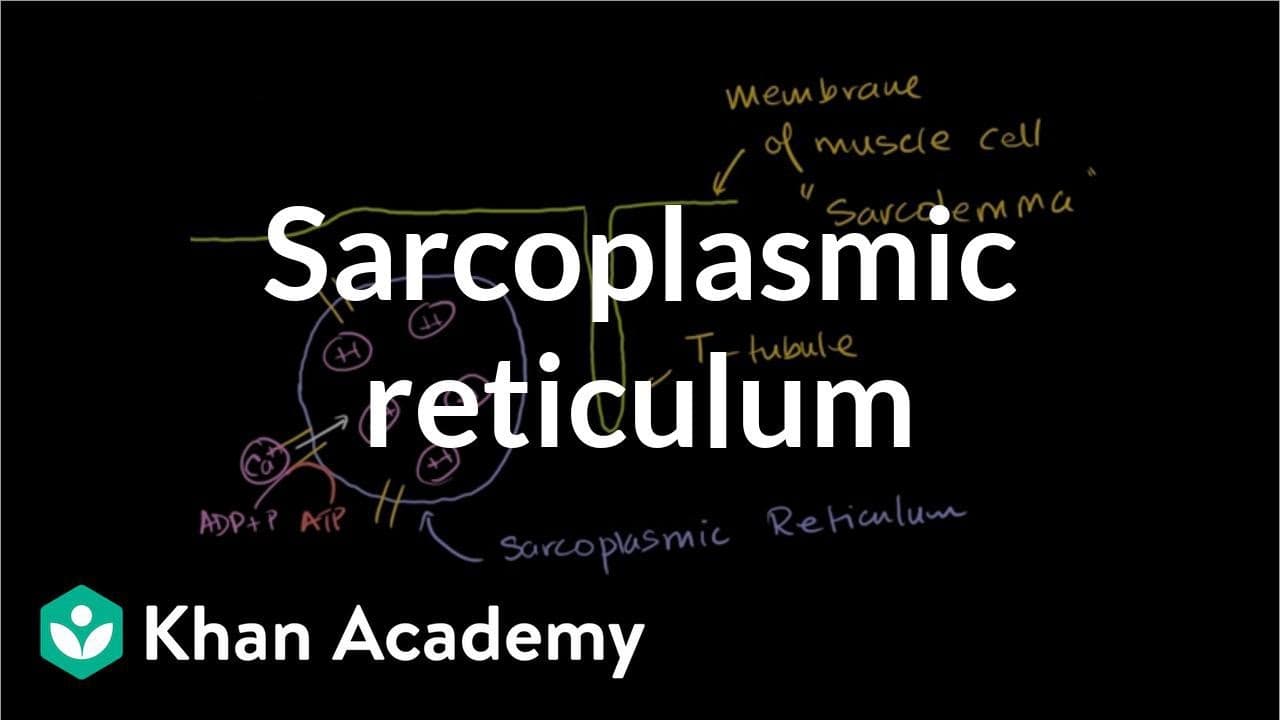
The sarcoplasmic reticulum regulates muscle contraction by controlling calcium ion concentrations. When stimulated by the nervous system, it releases calcium ions into the muscle cell, enabling contraction. Conversely, low calcium levels lead to relaxation, demonstrating the critical role of this organelle in muscle function.
Transcript
We know from the last video that if we have a high calcium ion concentration inside of the muscle cell, those calcium ions will bond to the troponin proteins which will then change their shape in such a way that the tropomyosin will be moved out of the way and so then the myosin heads can crawl along the actin filaments and them we'll actually have... Read More
Key Insights
- 💪 High calcium ion concentration inside the muscle cell is necessary for muscle contractions, while low concentrations lead to muscle relaxation.
- 💪 The nervous system controls muscle contraction by signaling the release of neurotransmitters, which trigger an action potential in the muscle cell.
- 😑 The release of calcium ions from the sarcoplasmic reticulum is essential for muscle contraction.
- 😑 The protein complex involving triadin, junctin, calsequestrin, and ryanodine bridges the sarcoplasmic reticulum and T-tubules, facilitating the release of calcium ions during muscle contraction.
- 😑 Research is still ongoing to fully understand the mechanisms involved in regulating the release of calcium ions and muscle contraction.
- 🥺 Malfunctioning proteins in the sarcoplasmic reticulum may lead to potential diseases or disorders.
Install to Summarize YouTube Videos and Get Transcripts
Explore YouTube Video Summarizer or Get YouTube Transcript Extractor
Questions & Answers
Q: How does the concentration of calcium ions in a muscle cell affect muscle contraction?
High calcium ion concentration allows the calcium ions to bond to troponin proteins, moving tropomyosin out of the way and enabling muscle contractions. Low calcium ion concentration causes the proteins to return to their standard confirmation, blocking the myosin heads and preventing muscle contraction.
Q: How does the nervous system regulate the concentration of calcium ions in a muscle cell?
The nervous system signals the release of neurotransmitters, such as acetylcholine, from the motor neuron to the muscle cell. Acetylcholine binds to receptors on the muscle cell's membrane, opening sodium channels and triggering an action potential. The action potential travels down the T-tubules, leading to the release of calcium ions from the sarcoplasmic reticulum.
Q: What role does the sarcoplasmic reticulum play in muscle contraction?
The sarcoplasmic reticulum is an organelle inside the muscle cell responsible for storing calcium ions. It pumps calcium ions into the sarcoplasmic reticulum using ATP. When the muscle needs to contract, the calcium ions are released from the sarcoplasmic reticulum, leading to muscle contraction.
Q: What happens to the calcium ions after muscle contraction?
Once the muscle signal disappears, the calcium ion pumps on the sarcoplasmic reticulum membrane reduce the concentration of calcium ions in the muscle cell. This stops muscle contraction and allows the muscle to relax.
Summary & Key Takeaways
-
High calcium ion concentration inside the muscle cell leads to muscle contractions, while low calcium ion concentration results in muscle relaxation.
-
The nervous system controls muscle contraction by signaling the release of neurotransmitters, such as acetylcholine, which triggers an action potential in the muscle cell.
-
The action potential travels down the T-tubules and triggers the release of calcium ions from the sarcoplasmic reticulum, leading to muscle contraction.
Read in Other Languages (beta)
Share This Summary 📚
Summarize YouTube Videos and Get Video Transcripts with 1-Click
Try YouTube Summary with ChatGPT & Claude or YouTube Transcript Generator
Explore More Summaries from Khan Academy 📚



Summarize YouTube Videos and Get Video Transcripts with 1-Click
Try YouTube Summary with ChatGPT & Claude or YouTube Transcript Generator