How zip codes helped organize America
TL;DR
Zip codes revolutionized mail delivery in the U.S. since 1963.
Transcript
Between 1940 and 1960, the amount of mail doubled in The United States. That’s largely because companies began using computers to send automated mailings. Soon, the flood of mail sent by banks, advertisers, and other businesses was overwhelming postal workers. The Postal Service needed a solution. In 1963, the Zone Improvement Plan divided the coun... Read More
Key Insights
- The introduction of zip codes in 1963 was a response to the overwhelming volume of mail due to automated mailings by businesses.
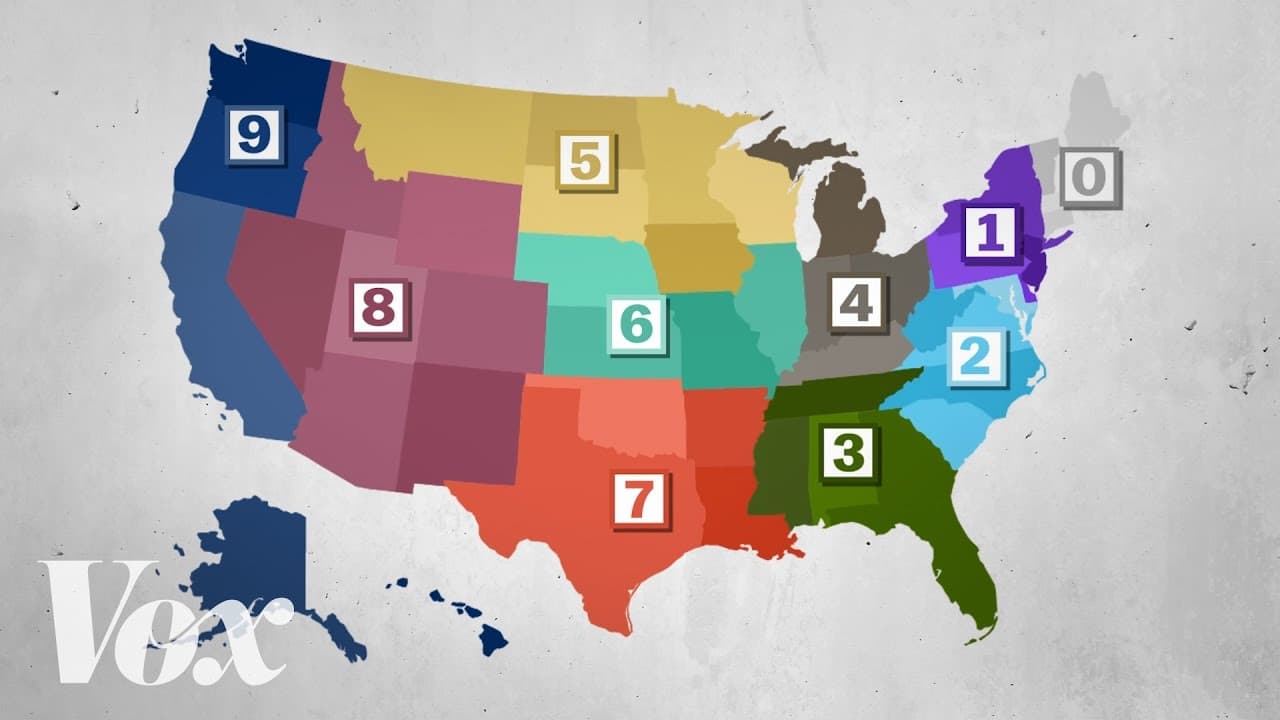
- The Zone Improvement Plan (ZIP) divided the U.S. into ten regions, simplifying mail sorting and delivery through a five-digit code.
- Promotional efforts for zip codes included a cartoon character, Mr. ZIP, and a song by The Swingin’ Six, increasing public adoption.
- By 1969, 83% of Americans used zip codes, leading to a significant increase in mail processing efficiency.
- The original zip code system was limited, prompting an update in 1983 with a four-digit suffix for more precise addressing.
- Geocoding technology offers the potential for even more specific addressing, beneficial for industries beyond mail delivery.
- Systems like What3Words provide an alternative by using memorable word combinations to denote specific geographic locations.
- Despite advancements, zip codes remain crucial due to their simplicity for humans and compatibility with machine processing.
Install to Summarize YouTube Videos and Get Transcripts
Explore YouTube Video Summarizer or Get YouTube Transcript Extractor
Questions & Answers
Q: Why were zip codes introduced in the United States?
Zip codes were introduced in the United States in 1963 as a response to the overwhelming volume of mail resulting from automated mailings by businesses. The Zone Improvement Plan (ZIP) organized the country into ten regions, assigning a five-digit code to simplify mail sorting and delivery, thereby increasing efficiency.
Q: How did the USPS promote the adoption of zip codes?
The USPS promoted the adoption of zip codes through a series of publicity materials, including the creation of a cartoon character named Mr. ZIP and a song by The Swingin’ Six. These efforts were designed to educate the public on the benefits of using zip codes and encourage widespread adoption.
Q: What changes were made to zip codes in 1983?
In 1983, the USPS updated the zip code system by adding a four-digit suffix to the original five-digit code. This change allowed for more precise addressing by denoting specific locations such as city blocks or large buildings, enhancing the accuracy and efficiency of mail delivery.
Q: What is geocoding technology, and how does it relate to zip codes?
Geocoding technology assigns specific geographic coordinates to locations, offering even more precise addressing than traditional zip codes. It is beneficial for industries that require detailed location data, such as real estate or logistics, and represents a potential future evolution of the postal addressing system.
Q: What is the What3Words system, and how does it differ from traditional zip codes?
The What3Words system divides the world into 57 trillion squares, each identified by a unique combination of three words. This method is more memorable for humans compared to numeric zip codes and provides precise geographic location data, offering an innovative alternative to traditional postal addressing.
Q: Why might zip codes continue to be important despite advancements in technology?
Zip codes are likely to remain important due to their simplicity and ease of use for humans, as well as their compatibility with machine processing. While geocoding and systems like What3Words offer more precision, zip codes provide a straightforward, established method for organizing mail delivery.
Q: How did the introduction of zip codes impact mail processing efficiency?
The introduction of zip codes significantly improved mail processing efficiency by providing a systematic way to sort and deliver mail. By 1969, 83% of Americans were using zip codes, which facilitated a smoother flow of mail and contributed to a 17 billion increase in processed mail pieces between 1971 and 1980.
Q: What challenges do zip codes face as the U.S. population and infrastructure grow?
As the U.S. population and infrastructure grow, zip codes face challenges in maintaining accuracy and relevance. The need for more specific addressing has led to updates like the four-digit suffix in 1983, and ongoing management is required to reflect changes in delivery routes and destinations.
Summary & Key Takeaways
-
Zip codes were introduced in 1963 to manage the increasing volume of mail due to automated business mailings. The ZIP system divided the U.S. into ten regions with a five-digit code, simplifying mail sorting and delivery. Promotional efforts included a cartoon character, Mr. ZIP, and a song by The Swingin’ Six.
-
By 1969, 83% of Americans used zip codes, significantly improving mail processing efficiency. In 1983, a four-digit suffix was added to zip codes to provide more precise addressing, such as specific city blocks or large buildings. This update required ongoing management to reflect changing delivery routes.
-
Geocoding technology offers even more precise addressing, beneficial for industries beyond mail delivery. Systems like What3Words use memorable word combinations for specific geographic locations. Despite advancements, zip codes remain vital due to their simplicity for humans and compatibility with machine processing.
Read in Other Languages (beta)
Share This Summary 📚
Summarize YouTube Videos and Get Video Transcripts with 1-Click
Try YouTube Summary with ChatGPT & Claude or YouTube Transcript Generator
Explore More Summaries from Vox 📚



Summarize YouTube Videos and Get Video Transcripts with 1-Click
Try YouTube Summary with ChatGPT & Claude or YouTube Transcript Generator