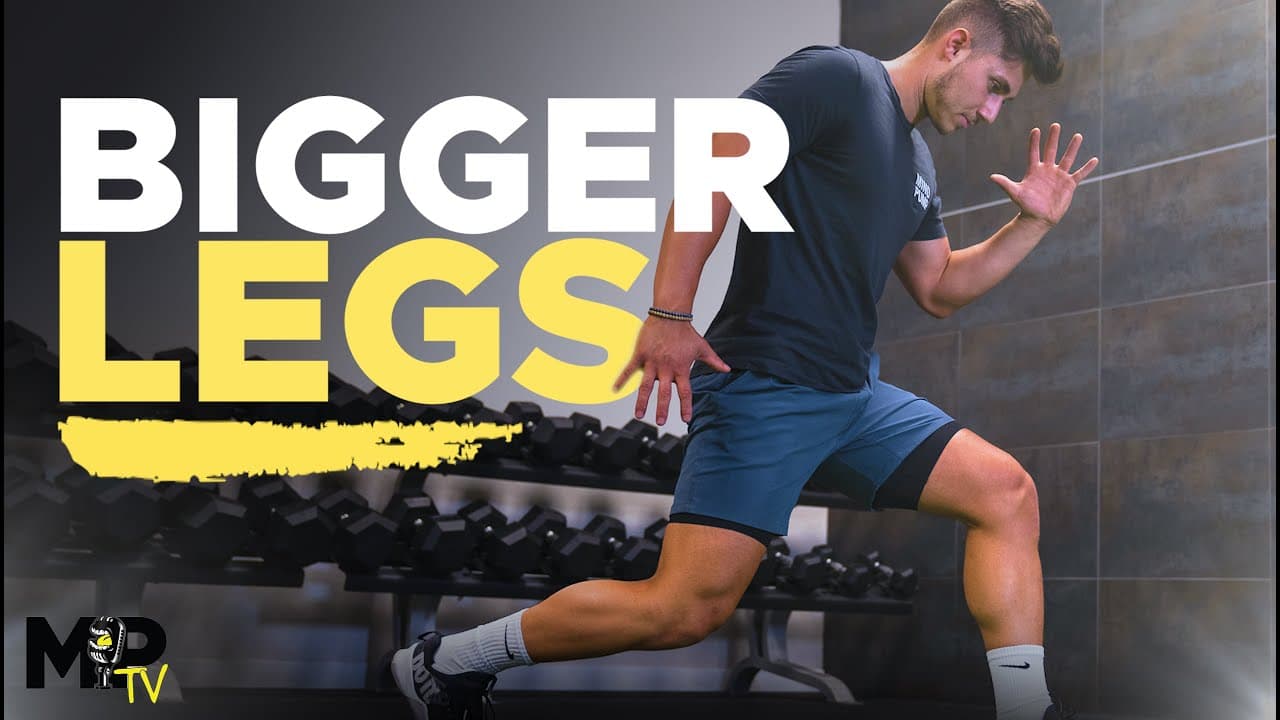
How To Reverse Lunge
TL;DR
Reverse lunges are a highly effective exercise for developing lower body strength and addressing imbalances, making them a great addition to any workout routine.
Transcript
welcome back to mindful MTV guys I'm your host Annie Matranga and today we are going to take a look at the reverse lunge lunges in general who they're for why you should be doing them and how to program them so without further ado let's get into it now in my years as a trainer I've long said that the lunge is probably the single most underrated exe... Read More
Key Insights
- 😘 Lunges are an underrated exercise that offers unique benefits for lower body strength and muscle development.
- 😘 Reverse lunges are a beginner-friendly variation that can be used to improve lower body mechanics and address imbalances.
- 🏈 Proper form is essential, including stepping back comfortably, driving through the heel and ball of the foot, and maintaining stability.
- 🪠 Reverse lunges can be progressed to more advanced variations, such as forward lunges, walking lunges, and split squats.
- 😫 It is recommended to perform 8 to 10 repetitions per leg and 2 to 3 sets of reverse lunges.
Install to Summarize YouTube Videos and Get Transcripts
Explore YouTube Video Summarizer or Get YouTube Transcript Extractor
Questions & Answers
Q: Why are lunges considered to be an underrated exercise?
Lunges are often overlooked in favor of exercises like squats and deadlifts, but they provide instability and can target imbalances in the lower body.
Q: How can lunges help individuals struggling with squatting and deadlifting?
Lunges can be helpful for improving lower body strength and mechanics, providing an opportunity to work on mobility while still building muscle.
Q: What makes the reverse lunge a good starting point for beginners?
The reverse lunge is easier to perform compared to the traditional forward lunge and reduces the risk of putting unnecessary stress on the knees.
Q: How can the reverse lunge be progressed or regressed?
Once the reverse lunge is mastered, individuals can progress to forward lunges, walking lunges, or split squats. Regressions can be done by using something for support, such as a TRX or railing.
Key Insights:
- Lunges are an underrated exercise that offers unique benefits for lower body strength and muscle development.
- Reverse lunges are a beginner-friendly variation that can be used to improve lower body mechanics and address imbalances.
- Proper form is essential, including stepping back comfortably, driving through the heel and ball of the foot, and maintaining stability.
- Reverse lunges can be progressed to more advanced variations, such as forward lunges, walking lunges, and split squats.
- It is recommended to perform 8 to 10 repetitions per leg and 2 to 3 sets of reverse lunges.
- Incorporating reverse lunges after squats and deadlifts allows for adequate energy and focus on the larger, more loaded movements.
Summary & Key Takeaways
-
The lunge is an underrated exercise that provides unilateral movement, instability, and the opportunity to load lower body tissues.
-
Reverse lunges are a beginner-friendly variation that can help improve lower body strength and mechanics.
-
Common errors include stepping back too far, collapsing immediately, and stepping back too shallow.
Read in Other Languages (beta)
Share This Summary 📚
Summarize YouTube Videos and Get Video Transcripts with 1-Click
Try YouTube Summary with ChatGPT & Claude or YouTube Transcript Generator
Explore More Summaries from Mind Pump TV 📚
Summarize YouTube Videos and Get Video Transcripts with 1-Click
Try YouTube Summary with ChatGPT & Claude or YouTube Transcript Generator