Step-Up Variations
TL;DR
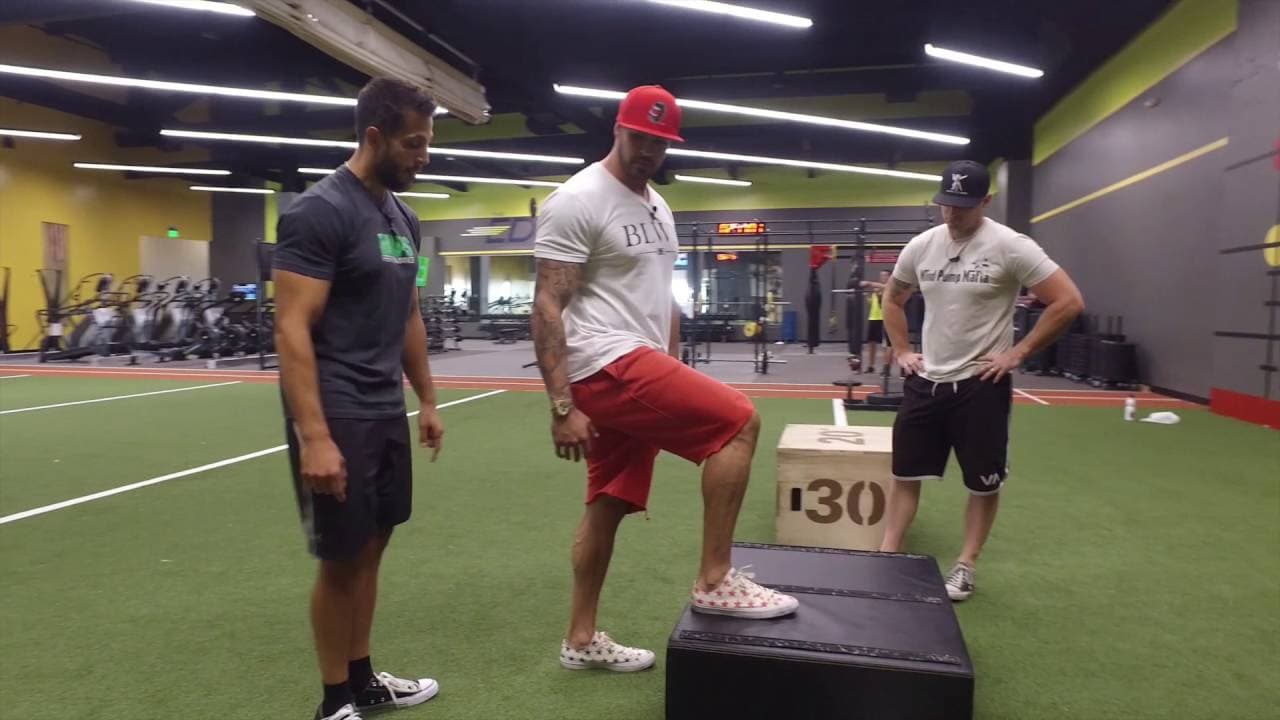
Step-ups are a functional and effective alternative to squats, offering a unilateral and stabilizing hip movement that mimics everyday activities.
Transcript
Madame it was got to be eating or drinking or something already and I'm always doing this every single time sure to do the clap for her sound yeah we're good so what I want to do you did a post on step ups yes I just recited just recently did a post on step ups and I wanted to do this because although we talk about squad is queen of the squad is qu... Read More
Key Insights
- ♀️ Step ups are a functional and effective alternative to squats for clients with certain limitations. They work the hips and stabilizer muscles, mimicking daily movements like climbing stairs.
- ♀️ Correct form is crucial for step ups, with an emphasis on chest up, shoulders back, and driving off the working leg. Avoid using momentum and maintain good posture throughout the movement.
- ♂️ Adjusting the height of the step can target different muscle groups. A lower step focuses more on the glutes, while a higher step engages the quads. Reverse step ups are advanced and heavily target the quadriceps.
- 👣 Sidestep variations add a frontal plane movement and work the adductor muscles. This is a great alternative to machine exercises like leg extensions and abductors.
- 🔄 Rotating steps in the transverse plane further increases the potential exercises that can be performed with a simple step. The options for effective workouts are limitless.
- 🦵 Slowing down the descent and focusing on deceleration can prevent clients from slamming their knees on the ground. Encourage clients to touch their toes to promote proper form and engage the muscles responsible for landing softly.
Install to Summarize YouTube Videos and Get Transcripts
Explore YouTube Video Summarizer or Get YouTube Transcript Extractor
Questions & Answers
Q: What are the benefits of step-ups compared to squats?
Step-ups provide a functional movement that mimics everyday activities such as climbing stairs, while also targeting stabilizer muscles and offering unilateral hip movement.
Q: How can beginners start incorporating step-ups into their workout routine?
Beginners can start with a low step and focus on proper form, such as driving off the leg on the step and maintaining good posture throughout the movement.
Q: Can step-ups be modified to target different muscle groups?
Yes, step-ups can be modified by altering the height of the step or emphasizing different movement planes, such as adding lateral or rotational step variations.
Q: Are step-ups suitable for individuals with knee or hip limitations?
Step-ups can be a suitable alternative for individuals with knee or hip limitations, as the movement can be adjusted to accommodate their specific needs and abilities.
Q: How does proper form impact the effectiveness of step-ups?
Proper form, such as avoiding leaning forward and using momentum, ensures that the targeted muscles are engaged and maximizes the benefits of the exercise.
Summary & Key Takeaways
-
Step-ups are a great alternative to squats for individuals with limitations, offering functional and unilateral hip movements.
-
Proper form is essential to maximize the benefits of step-ups, avoiding common mistakes such as using momentum or leaning forward.
-
Step-ups can be modified and varied to target different muscle groups and planes of movement, making it a versatile exercise option.
Read in Other Languages (beta)
Share This Summary 📚
Summarize YouTube Videos and Get Video Transcripts with 1-Click
Try YouTube Summary with ChatGPT & Claude or YouTube Transcript Generator
Explore More Summaries from Mind Pump TV 📚

Summarize YouTube Videos and Get Video Transcripts with 1-Click
Try YouTube Summary with ChatGPT & Claude or YouTube Transcript Generator